Results by title
5 books match the query 'Children's stories'
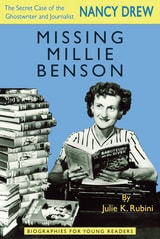
Missing Millie Benson
The Secret Case of the Nancy Drew Ghostwriter and JournalistJulie K. Rubini
Ohio University Press, 2015
Growing up in Ladora, Iowa, Mildred “Millie” Benson had ample time to develop her imagination and sense of adventure. While still a journalism graduate student at the University of Iowa, Millie began writing for the Stratemeyer Syndicate, which published the phenomenally popular Hardy Boys series, among others. Soon, Millie was tapped for a new series starring amateur sleuth Nancy Drew, a young, independent woman not unlike Millie herself. Under the pen name Carolyn Keene, Millie wrote the first book, The Secret of the Old Clock, and twenty-two other Nancy Drew Mystery Stories. In all, Millie wrote more than a hundred novels for young people.
Millie was also a journalist for the Toledo Times and the Toledo Blade. At sixty-two, she obtained her pilot’s license. Follow the clues throughout Missing Millie to discover the story of this ghostwriter, journalist, and adventurer.
Open Sesame
Understanding American English and Culture through Folktales and StoriesPlanaria J. Price
University of Michigan Press, 1997
Included are such classic tales as "Cinderella," "The Three Pigs," "Johnny Appleseed," and "Rip Van Winkle," and excerpts from more recent stories such as Charlotte's Web and The Wizard of Oz.
The goals of Open Sesame are to teach reading skills, build vocabulary, stimulate discussion, and develop critical-thinking skills. The text may also be of interest in the disciplines of children's literature, folklore, and cross-cultural studies.
The text is accompanied by cassettes that "tell" the stories for learners who have not yet acquired all the vocabulary needed to read these original stories and folktales on their own.

Preschool Favorites
35 Storytimes Kids LoveDiane Briggs
American Library Association, 2007
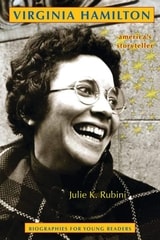
Virginia Hamilton
America’s StorytellerJulie K. Rubini
Ohio University Press, 2017
A Bank Street College of Education Best Children’s Book of 2018 (Outstanding Merit selection) • Finalist, 2018 Ohioana Book Award
Long before she wrote The House of Dies Drear, M. C. Higgins, the Great, and many other children’s classics, Virginia Hamilton grew up among her extended family near Yellow Springs, Ohio, where her grandfather had been brought as a baby through the Underground Railroad. The family stories she heard as a child fueled her imagination, and the freedom to roam the farms and woods nearby trained her to be a great observer. In all, Hamilton wrote forty-one books, each driven by a focus on “the known, the remembered, and the imagined”—particularly within the lives of African Americans.
Over her thirty-five-year career, Hamilton received every major award for children’s literature. This new biography gives us the whole story of Virginia’s creative genius, her passion for nurturing young readers, and her clever way of crafting stories they’d love.
Waking Sleeping Beauty
Feminist Voices in Children's NovelsRoberta S. Trites
University of Iowa Press, 1997
The Sleeping Beauty in Roberta Seelinger Trites' intriguing text is no silent snoozer passively waiting for Prince Charming to energize her life. Instead she wakes up all by herself and sets out to redefine the meaning of “happily ever after.” Trites investigates the many ways that Sleeping Beauty's newfound voice has joined other strong female voices in feminist children's novels to generate equal potentials for all children.
Waking Sleeping Beauty explores issues of voice in a wide range of children's novels, including books by Virginia Hamilton, Patricia MacLachlan, and Cynthia Voight as well as many multicultural and international books. Far from being a limiting genre that praises females at the expense of males, the feminist children's novel seeks to communicate an inclusive vision of politics, gender, age, race, and class. By revising former stereotypes of children's literature and replacing them with more complete images of females in children's books, Trites encourages those involved with children's literature—teachers, students, writers, publishers, critics, librarian, booksellers, and parents—to be aware of the myriad possibilities of feminist expression.
Roberta Trites focuses on the positive aspects of feminism: on the ways females interact through family and community relationships, on the ways females have revised patriarchal images, and on the ways female writers use fictional constructs to transmit their ideologies to readers. She thus provides a framework that allows everyone who enters a classroom with a children's book in hand to recognize and communicate—with an optimistic, reality-based sense of “happily ever after”—the politics and the potential of that book.