Results by title

13 books match the query 'Children & Adolescents'

cover of An Alternative History of Hyperactivity: Food Additives and the Feingold Diet

An Alternative History of Hyperactivity

Food Additives and the Feingold Diet

Smith, Matthew

Rutgers University Press, 2011

In 1973, San Francisco allergist Ben Feingold created an uproar by claiming that synthetic food additives triggered hyperactivity, then the most commonly diagnosed childhood disorder in the United States. He contended that the epidemic should not be treated with drugs such as Ritalin but, instead, with a food additive-free diet. Parents and the media considered his treatment, the Feingold diet, a compelling alternative. Physicians, however, were skeptical and designed dozens of trials to challenge the idea. The resulting medical opinion was that the diet did not work and it was rejected.

Matthew Smith asserts that those scientific conclusions were, in fact, flawed. An Alternative History of Hyperactivity explores the origins of the Feingold diet, revealing why it became so popular, and the ways in which physicians, parents, and the public made decisions about whether it was a valid treatment for hyperactivity. Arguing that the fate of Feingold's therapy depended more on cultural, economic, and political factors than on the scientific protocols designed to test it, Smith suggests the lessons learned can help resolve medical controversies more effectively.
[more]
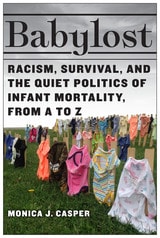
cover of Babylost: Racism, Survival, and the Quiet Politics of Infant Mortality, from A to Z

Babylost

Racism, Survival, and the Quiet Politics of Infant Mortality, from A to Z

Monica J. Casper

Rutgers University Press, 2021
The U.S. infant mortality rate is among the highest in the industrialized world, and Black babies are far more likely than white babies to die in their first year of life. Maternal mortality rates are also very high. Though the infant mortality rate overall has improved over the past century with public health interventions, racial disparities have not. Racism, poverty, lack of access to health care, and other causes of death have been identified, but not yet adequately addressed. The tragedy is twofold: it is undoubtedly tragic that babies die in their first year of life, and it is both tragic and unacceptable that most of these deaths are preventable. Despite the urgency of the problem, there has been little public discussion of infant loss. The question this book takes up is not why babies die; we already have many answers to this question. It is, rather, who cares that babies, mostly but not only Black and Native American babies, are dying before their first birthdays? More importantly, what are we willing to do about it? This book tracks social and cultural dimensions of infant death through 58 alphabetical entries, from Absence to ZIP Code. It centers women’s loss and grief, while also drawing attention to dimensions of infant death not often examined. It is simultaneously a sociological study of infant death, an archive of loss and grief, and a clarion call for social change.
[more]
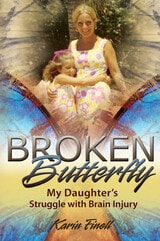
cover of Broken Butterfly: My Daughter's Struggle with Brain Injury

Broken Butterfly

My Daughter's Struggle with Brain Injury

Karin Finell

University of Missouri Press, 2012

“It all began with the bite of a mosquito. Yes, with a bite of this pesky, but seemingly so innocuous little insect that had been sucking her blood. Not just one, but hundreds had punctured her arms and legs with red marks which later swelled to small welts. Who would ever have thought that our family's life would become derailed, that its tightly woven fabric would eventually fray and break—all from the bite of a mosquito?”

In November of 1970, the Finell family’s lives were changed forever by a family vacation to Acapulco. Seven-year-old Stephanie fell ill soon after their return to the United States, but her mother, Karin, thinking it was an intestinal disorder, kept her home from school for a few days. She was completely unprepared when Stephanie went into violent convulsions on a Friday morning. Following a series of tests at the hospital, doctors concluded she had contracted viral equine encephalitis while in Mexico.
After a string of massive seizures—one leading to cardiac arrest—Stephanie fell into a six-week coma. When she awoke, her world had changed from predictable and comforting to one where the ground was shaking. Due to the swelling of her brain from encephalitis, she suffered serious brain damage. Doctors saw little hope of recovery for Stephanie and encouraged her parents to place her in an institution, but they refused.
In Broken Butterfly, Karin Finell recounts the struggles faced by both her and her daughter, as well as the small victories won over the ensuing years. Little was known about brain injuries during that time, and Karin was forced to improvise, relying on her instincts, to treat Stephanie. Despite the toll on the family—alcoholism, divorce, and estrangement—Karin never gave up hope for Stephanie’s recovery. By chance, Karin heard of the Marianne Frostig Center of Educational Therapy, where Dr. Frostig herself took over the “reprogramming” of Stephanie’s brain. This, in time, led her to regain her speech and some motor skills.
Unfortunately, Stephanie’s intermittent seizures hung like the proverbial “Sword of Damocles” over their lives. And while Stephanie grew into a lovely young woman, her lack of judgment resulting from her injury led her into situations of great danger that required Karin to rescue her.
Karin’s love for her daughter guided her to allow Stephanie to fill her life with as many positive experiences as possible. Stephanie learned and matured through travel and exposure to music and plays,acquiring a knowledge she could not learn from books.
Stephanie wished above all to teach other brain injured individuals to never look down on themselves but to live their lives to the fullest. Through Stephanie’s story, her mother has found a way to share that optimism and her lessons with the world.
[more]
cover of Children and Drug Safety: Balancing Risk and Protection in Twentieth-Century America

Children and Drug Safety

Balancing Risk and Protection in Twentieth-Century America

Connolly, Cynthia A

Rutgers University Press, 2018

Winner of the 2018 Arthur J. Viseltear Award from the Medical Care Section of the American Public Health Association​

Children and Drug Safety traces the development, use, and marketing of drugs for children in the twentieth century, a history that sits at the interface of the state, business, health care providers, parents, and children. This book illuminates the historical dimension of a clinical and policy issue with great contemporary significance—many of the drugs administered to children today have never been tested for safety and efficacy in the pediatric population.
 
Each chapter of Children and Drug Safety engages with major turning points in pediatric drug development; themes of children’s risk, rights, protection and the evolving context of childhood; child-rearing; and family life in ways freighted with nuances of race, class, and gender. Cynthia A. Connolly charts the numerous attempts by Congress, the Food and Drug Administration, the American Academy of Pediatrics, and leading pediatric pharmacologists, scientists, clinicians, and parents to address a situation that all found untenable. 


Open access edition funded by the National Endowment for the Humanities.

The text of this book is licensed under a Creative Commons Attribution NonCommercial-NoDerivatives 4.0 International License: https://creativecommons.org/licenses/by-nc-nd/4.0/ 

[more]
cover of Dads, Kids, and Fitness: A Father's Guide to Family Health

Dads, Kids, and Fitness

A Father's Guide to Family Health

Marsiglio, William

Rutgers University Press, 2016

Now more than ever, American dads act as hands-on caregivers who are devoted to keeping themselves and their families healthy. Yet, men are also disproportionately likely to neglect their own health care, diets, and exercise routines—bad habits that they risk passing on to their children. 

In Dads, Kids, and Fitness, William Marsiglio challenges dads to become more health-conscious in how they live and raise their children. His conclusions are drawn not only from his revealing interviews with a diverse sample of dads and pediatric healthcare professionals, but also from his own unique personal experiences—as a teenage father who, thirty-one years later, became a later-life dad to a second son. Marsiglio’s research highlights the value of treating dads as central players in what he calls the social health matrix, which can serve both healthy children and those with special needs. He also outlines how schools, healthcare facilities, religious groups, and other organizations can help dads make a positive imprint on their families’ health, fitness, and well-being.  

Anchored in compelling life stories of joy, tragedy, and resilience, Dads, Kids, and Fitness extends and deepens public conversation about health at a pivotal historical moment. Its progressive message breathes new life into discussions about fathering, manhood, and health.
[more]
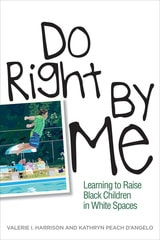
cover of Do Right by Me: Learning to Raise Black Children in White Spaces

Do Right by Me

Learning to Raise Black Children in White Spaces

Valerie I. Harrison and Kathryn Peach D'Angelo

Temple University Press, 2021

For decades, Katie D’Angelo and Valerie Harrison engaged in conversations about race and racism. However, when Katie and her husband, who are white, adopted Gabriel, a biracial child, Katie’s conversations with Val, who is black, were no longer theoretical and academic. The stakes grew from the two friends trying to understand each other’s perspectives to a mother navigating, with input from her friend, how to equip a child with the tools that will best serve him as he grows up in a white family. 

Through lively and intimate back-and-forth exchanges, the authors share information, research, and resources that orient parents and other community members to the ways race and racism will affect a black child’s life—and despite that, how to raise and nurture healthy and happy children. These friendly dialogues about guarding a child’s confidence and nurturing positive racial identity form the basis for Do Right by Me. Harrison and D’Angelo share information on transracial adoption, understanding racism, developing a child’s positive racial identity, racial disparities in healthcare and education, and the violence of racism. 

Do Right by Me also is a story about friendship and kindness, and how both can be effective in the fight for a more just and equitable society.

[more]
cover of It's Not Your Fault!: Strategies for Solving Toilet Training and Bedwetting Problems

It's Not Your Fault!

Strategies for Solving Toilet Training and Bedwetting Problems

Joseph Barone, M.D.

Rutgers University Press, 2015

Millions of children over the age of five wet their beds every night. Many parents think they must be doing something wrong when their five-year-old is still in diapers while their friends’ children are perfectly trained by eighteen months of age. This undoubtedly is a very embarrassing and frustrating problem for both the parent and child, and can interfere with family dynamics and a child’s ability to enjoy ordinary social situations.  

It’s Not Your Fault! offers evidence-based strategies for parents who need assistance with toilet training and helping their child with urinary control issues. Dr. Joseph Barone, M.D., provides proven techniques that bring bedwetting to a happy conclusion. Frequently, parents are misguided by bad advice from friends, TV talk shows, the Internet, or parenting books. With many years of clinical experience, Dr. Barone shares valuable, practical information for parents to guide them through the basics of toilet training and bedwetting, and presents management plans to resolve any difficulties that occur. A comprehensive guide, this book covers everything parents need to know about normal toilet training and bedwetting, as well as step-by-step solutions based on testing and research in a real-world setting to help children suffering from delayed toilet training, bed wetting, and daytime urinary wetting.

It’s Not Your Fault! provides hope and guidance to those desperate to help their children overcome urinary control and toilet training problems. Dr. Barone sets parents on a course that makes things better for both themselves and their children.
[more]
cover of Letting Play Bloom: Designing Nature-Based Risky Play for Children

Letting Play Bloom

Designing Nature-Based Risky Play for Children

Lolly Tai

Temple University Press, 2022

Children love to play in risky—often misunderstood to mean unsafe—ways. It is often how they learn. Research shows that activities like climbing on trees and boulders, hiking in nature, and playing in a creek are excellent ways for kids to develop their creativity and their senses, because playing outdoors evokes different sights, sounds, smells, and textures. 

Letting Play Bloom analyzes five outstanding case studies of children’s nature-based risky play spaces—the Slide Hill at Governors Island in New York, the Berkeley (CA) Adventure Playground, and Wildwoods at Fernbank Museum in Atlanta, as well as sites in the Netherlands and Australia. Author Lolly Tai provides detailed explanations of their background and design, and what visitors can experience at each site. 

She also outlines the six categories of risky—not hazardous—play, which involve great heights, rapid speeds, dangerous tools, dangerous elements, rough-and-tumble play, and wandering or getting lost. These activities allow children to explore and challenge themselves (testing their limits) to foster greater self-worth while also learning valuable risk-management skills such as dealing with fear-inducing situations.

Filled with more than 200 photographs, Letting Play Bloom advocates for a thoughtful landscape design process that incorporates the specific considerations children need to fully experience the thrill that comes from playing in nature.

[more]
cover of Pink and Blue: Gender, Culture, and the Health of Children

Pink and Blue

Gender, Culture, and the Health of Children

Elena Conis

Rutgers University Press, 2021
In modern pediatric practice, gender matters. From the pink-and-blue striped receiving blankets used to swaddle newborns, to the development of sex-specific nutrition plans based on societal expectations of the stature of children, a gendered culture permeates pediatrics and children’s health throughout the twentieth and early twenty-first centuries. This book provides a look at how gender has served as one of the frameworks for pediatric care in the U.S. since the specialty’s inception. Pink and Blue deploys gender—often in concert with class and race—as the central critical lens for understanding the function of pediatrics as a cultural and social project in modern U.S. history.
[more]
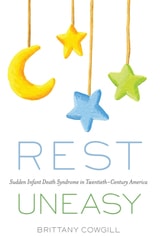
cover of Rest Uneasy: Sudden Infant Death Syndrome in Twentieth-­Century America

Rest Uneasy

Sudden Infant Death Syndrome in Twentieth-­Century America

Cowgill, Brittany

Rutgers University Press, 2018
Tracing the Sudden Infant Death Syndrome (SIDS) diagnosis from its mid-century origins through the late 1900s, Rest Uneasy investigates the processes by which SIDS became both a discrete medical enigma and a source of social anxiety construed differently over time and according to varying perspectives. American medicine reinterpreted and reconceived of the problem of sudden infant death multiple times over the course of the twentieth century. Its various approaches linked sudden infant deaths to all kinds of different causes—biological, anatomical, environmental, and social. In the context of a nation increasingly skeptical, yet increasingly expectant, of medicine, Americans struggled to cope with the paradoxes of sudden infant death; they worked to admit their powerlessness to prevent SIDS even while they tried to overcome it. Brittany Cowgill chronicles and assesses Americans’ fraught but consequential efforts to explain and conquer SIDS, illuminating how and why SIDS has continued to cast a shadow over doctors and parents.
[more]
cover of The Science of Play: How to Build Playgrounds That Enhance Children's Development

The Science of Play

How to Build Playgrounds That Enhance Children's Development

Susan G. Solomon

University Press of New England, 2014
Poor design and wasted funding characterize today’s American playgrounds. A range of factors—including a litigious culture, overzealous safety guidelines, and an ethos of risk aversion—have created uniform and unimaginative playgrounds. These spaces fail to nurture the development of children or promote playgrounds as an active component in enlivening community space. Solomon’s book demonstrates how to alter the status quo by allying data with design. Recent information from the behavioral sciences indicates that kids need to take risks; experience failure but also have a chance to succeed and master difficult tasks; learn to plan and solve problems; exercise self-control; and develop friendships. Solomon illustrates how architects and landscape architects (most of whom work in Europe and Japan) have already addressed these needs with strong, successful playground designs. These innovative spaces, many of which are more multifunctional and cost effective than traditional playgrounds, are both sustainable and welcoming. Having become vibrant hubs within their neighborhoods, these play sites are models for anyone designing or commissioning an urban area for children and their families. The Science of Play, a clarion call to use playground design to deepen the American commitment to public space, will interest architects, landscape architects, urban policy makers, city managers, local politicians, and parents.
[more]
cover of Weighty Problems: Embodied Inequality at a Children’s Weight Loss Camp

Weighty Problems

Embodied Inequality at a Children’s Weight Loss Camp

Laura Backstrom

Rutgers University Press, 2019
Many parents, teachers, and doctors believe that childhood obesity is a social problem that needs to be solved. Yet, missing from debates over what caused the rise in childhood obesity and how to fix it are the children themselves. By investigating how contemporary cultural discourses of childhood obesity are experienced by children, Laura Backstrom illustrates how deeply fat stigma is internalized during the early socialization experiences of children. Weighty Problems details processes of embodied inequality: how the children came to recognize inequalities related to their body size, how they explained the causes of those differences, how they responded to micro-level injustices in their lives, and how their participation in a weight loss program impacted their developing self-image. The book finds that embodied inequality is constructed and negotiated through a number of interactional processes including resocialization, stigma management, social comparisons, and attribution.
[more]
cover of Worlds of Autism: Across the Spectrum of Neurological Difference

Worlds of Autism

Across the Spectrum of Neurological Difference

Joyce Davidson

University of Minnesota Press, 2013

Since first being identified as a distinct psychiatric disorder in 1943, autism has been steeped in contestation and controversy. Present-day skirmishes over the potential causes of autism, how or even if it should be treated, and the place of Asperger’s syndrome on the autism spectrum are the subjects of intense debate in the research community, in the media, and among those with autism and their families. Bringing together innovative work on autism by international scholars in the social sciences and humanities, Worlds of Autism boldly challenges the deficit narrative prevalent in both popular and scientific accounts of autism spectrum disorders, instead situating autism within an abilities framework that respects the complex personhood of individuals with autism.

A major contribution to the emerging, interdisciplinary field of critical autism studies, this book is methodologically and conceptually broad. Its authors explore the philosophical questions raised by autism, such as how it complicates neurotypical understandings of personhood; grapple with the politics that inform autism research, treatment, and care; investigate the diagnosis of autism and the recognition of difference; and assess representations of autism and stories told by and about those with autism.

From empathy, social circles, and Internet communities to biopolitics, genetics, and diagnoses, Worlds of Autism features a range of perspectives on autistic subjectivities and the politics of cognitive difference, confronting society’s assumptions about those with autism and the characterization of autism as a disability.

Contributors: Dana Lee Baker, Washington State U; Beatrice Bonniau, Paris Descartes U; Charlotte Brownlow, U of Southern Queensland, Australia; Kristin Bumiller, Amherst College; Brigitte Chamak, Paris Descartes U; Kristina Chew, Saint Peter’s U, New Jersey; Patrick McDonagh, Concordia U, Montreal; Stuart Murray, U of Leeds; Majia Holmer Nadesan, Arizona State U; Christina Nicolaidis, Portland State U; Lindsay O'Dell, Open U, London; Francisco Ortega, State U of Rio de Janeiro; Mark Osteen, Loyola U, Maryland; Dawn Eddings Prince; Dora Raymaker; Sara Ryan, U of Oxford; Lila Walsh.

[more]