Results by title
56 books match the query 'Chinese Americans' and 3 start with a
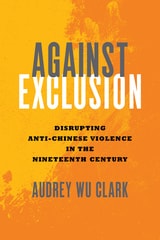
Against Exclusion
Disrupting Anti-Chinese Violence in the Nineteenth CenturyAudrey Wu Clark
The Ohio State University Press, 2024
In Against Exclusion, Audrey Wu Clark dramatically reframes Asian American resistance via the lives of five early Chinese American public figures. In contrast to later activists who sought to defy stereotypes, Ah Toy, Mary Tape, Wong Chin Foo, Yan Phou Lee, and Yung Wing deployed the model minority and yellow peril tropes to make themselves visible during a period of rampant anti-Chinese violence and legal exclusion. In making themselves visible, they sought to expose and dismantle the contradictory exceptionalism of nineteenth-century US liberalism that both required and “disavowed” the deaths of Chinese Americans. In examining these figures and the ways in which they fought their exclusion as Chinese Americans—via court cases, autobiographical writings, journalism, and other forms of activism—Clark contributes to prevailing scholarly conversations about stereotypes of Asian Americans but contextualizes them in the nineteenth century. She traces the twinned emergences of the model minority and the yellow peril, excavating the exceptionalism with which Chinese Americans were racialized and subject to death—whether by lynching, other forms of driving out, or loss of citizenship or rights—and mapping its reverberations into the present day.
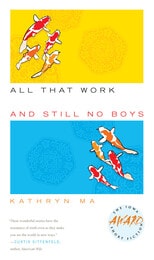
All That Work and Still No Boys
Ma, Kathryn
University of Iowa Press, 2009
How do we survive our family, stay bound to our community, and keep from losing ourselves? In All That Work and Still No Boys, Kathryn Ma exposes the deepest fears and longings that we mask in family life and observes the long shadows cast by history and displacement.
Here are ten stories that wound and satisfy in equal measure. Ma probes the immigrant experience, most particularly among northern California’s Chinese Americans, illuminating for us the confounding nature of duty, transformation, and loss. A boy exposed to racial hatred finds out the true difference between his mother and his father. Two old rivals briefly lay down their weapons, but loneliness and despair won’t let them forget the past. A young Beijing tour guide with a terrible family secret must take an adopted Chinese girl and her American family to visit an orphanage. And in the prize-winning title story, a mother refuses to let her son save her life, insisting instead on a sacrifice by her daughter.
Intimate in detail and universal in theme, these stories give us the compelling voice of an exciting new author whose intelligence, insight, and wit impart a sense of grace to the bitter resentments and enduring ties that comprise family love. Even through the tensions Ma creates so deftly, the peace and security that come from building and belonging to one’s own community shine forth.
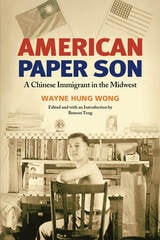
American Paper Son
A Chinese Immigrant in the MidwestWayne Hung Wong
University of Illinois Press, 2005
In the early and mid-twentieth century, Chinese migrants evaded draconian anti-immigrant laws by entering the US under false papers that identified them as the sons of people who had returned to China to marry. Wayne Hung Wong tells the story of his life after emigrating to Wichita, Kansas, as a thirteen-year-old paper son. After working in his father’s restaurant as a teen, Wong served in an all-Chinese Air Force unit stationed in China during World War II. His account traces the impact of race and segregation on his service experience and follows his postwar life from finding a wife in Taishan through his involvement in the government’s amnesty program for Chinese immigrants and career in real estate. Throughout, Wong describes the realities of life as part of a small Chinese American community in a midwestern town.
Vivid and rich with poignant insights, American Paper Son explores twentieth-century Asian American history through one person’s experiences.