Results by title
5 books match the query 'Chinese Revolution'
Labor and the Chinese Revolution
Class Strategies and Contradictions of Chinese Communism, 1928–1948S. Bernard Thomas
University of Michigan Press, 1983
In the two-decade period from 1928 to 1948, the proletarian themes and issues underlying the Chinese Communist Party’s ideological utterances were shrouded in rhetoric designed, perhaps, as much to disguise as to chart actual class strategies. Rhetoric notwithstanding, a careful analysis of such pronouncements is vitally important in following and evaluating the party’s changing lines during this key revolutionary period. The function of the “proletariat” in the complex of policy issues and leadership struggles which developed under the precarious circumstances of those years had an importance out of all proportion to labor’s relatively minor role in the post-1927 Communist led revolution. [1, 2]
[more]
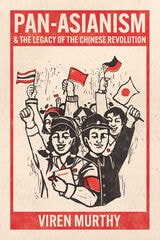
Pan-Asianism and the Legacy of the Chinese Revolution
Viren Murthy
University of Chicago Press, 2023
An intellectual history of pan-Asianist discourse in the twentieth century.
Recent proposals to revive the ancient Silk Road for the contemporary era and ongoing Western interest in China’s growth and development have led to increased attention to the concept of pan-Asianism. Most of that discussion, however, lacks any historical grounding in the thought of influential twentieth-century pan-Asianists. In this book, Viren Murthy offers an intellectual history of the writings of theorists, intellectuals, and activists—spanning leftist, conservative, and right-wing thinkers—who proposed new ways of thinking about Asia in their own historical and political contexts. Tracing pan-Asianist discourse across the twentieth century, Murthy reveals a stronger tradition of resistance and alternative visions than the contemporary discourse on pan-Asianism would suggest. At the heart of pan-Asianist thinking, Murthy shows, were the notions of a unity of Asian nations, of weak nations becoming powerful, and of the Third World confronting the “advanced world” on equal terms—an idea that grew to include non-Asian countries into the global community of Asian nations. But pan-Asianists also had larger aims, imagining a future beyond both imperialism and capitalism. The fact that the resurgence of pan-Asianist discourse has emerged alongside the dominance of capitalism, Murthy argues, signals a profound misunderstanding of its roots, history, and potential.
Recent proposals to revive the ancient Silk Road for the contemporary era and ongoing Western interest in China’s growth and development have led to increased attention to the concept of pan-Asianism. Most of that discussion, however, lacks any historical grounding in the thought of influential twentieth-century pan-Asianists. In this book, Viren Murthy offers an intellectual history of the writings of theorists, intellectuals, and activists—spanning leftist, conservative, and right-wing thinkers—who proposed new ways of thinking about Asia in their own historical and political contexts. Tracing pan-Asianist discourse across the twentieth century, Murthy reveals a stronger tradition of resistance and alternative visions than the contemporary discourse on pan-Asianism would suggest. At the heart of pan-Asianist thinking, Murthy shows, were the notions of a unity of Asian nations, of weak nations becoming powerful, and of the Third World confronting the “advanced world” on equal terms—an idea that grew to include non-Asian countries into the global community of Asian nations. But pan-Asianists also had larger aims, imagining a future beyond both imperialism and capitalism. The fact that the resurgence of pan-Asianist discourse has emerged alongside the dominance of capitalism, Murthy argues, signals a profound misunderstanding of its roots, history, and potential.
[more]

Precious Fire
Maud Russell and the Chinese RevolutionKaren Garner
University of Massachusetts Press, 0
When Maud Russell (1893–1989) first sailed for China in 1917, she traveled as one of a number of "foreign secretaries" dispatched by the YWCA to do "Woman's Work for Woman." A product of the Progressive Era, she sought to bring the benefits of Christianity and Western civilization to a new generation of Chinese women struggling to find their own path to modernity in the wake of the 1911 Republican Revolution. Instead, over the next twenty-six years, Russell was herself transformed—from Christian liberal reformer to committed Marxist revolutionary. According to Karen Garner, Russell's personal political trajectory paralleled that of the YWCA in China, which evolved during the 1920s and 1930s from a Western-led, middle-class-oriented institution into a Chinese-led organization that addressed the needs of revolutionary working women. Crossing class, race, and cultural boundaries to learn from their Chinese associates, Russell and a few other western YWCA secretaries developed a shared vision of feminist social change that included support for the Chinese Communist Party and its leadership. Returning to the United States during World War II, Russell joined American liberals and leftists in promoting government cooperation with the Soviet Union and other Communist Party-led states and movements. After the war her views, including her advocacy of a "one world" Progressive Party, collided with the anticommunist imperatives of the emerging Cold War. In response, Russell adopted a defensive and dogmatic pro-communist stance from which she would never retreat. During a long and at times lonely career as a radical activist and publisher of the Far East Reporter (1952–1989), Russell was defamed and investigated by the anticommunist right and embraced by the antiwar New Left. Her notoriety as a proponent of friendship with the People's Republic of China soared during the restoration of U.S–China diplomatic relations in the 1970s, only to dissolve in the 1980s as she denounced the revival of capitalist economics in China on ideological grounds. Although Russell's own political vision may have narrowed over the years, Garner's reconstruction of her life broadens our understanding of U.S.–China relations during the twentieth century. Not only did Russell come to see her own country through the eyes of an ideological antagonist, she also brought to that vantage point the experiences of a modern American woman. As Garner shows, even if one did not agree with Russell's views, one could not deny the fervor of her commitment to gender equality, social justice, and internationalism.
[more]

Reporting the Chinese Revolution
The Letters of Rayna ProhmeGregor Benton and Arthur J. Knodel
Pluto Press, 2007
Rayna and her husband Bill edited the Kuomintang's English-language newspaper in Wuhan. Rayna's account of her intimate involvement in the Chinese Revolution brings to life the eventful Wuhan years of 1926-27, which shaped the revolution's course. Her letters illuminate from a personal angle the battle for China's future and include remarkable portraits of some of the people who shaped the Communist and Nationalist movements of the time.
The book consists of letters Prohme wrote to her closest friend and her husband in the period immediately before, during and after the Wuhan interlude. Her reporting brought her into contact with many major political figures including Madam Sun Yat-sen (a prominent figure in the opposition to Chiang Kai-shek) and Mikhail Borodin (a chief Soviet advisor in China).
This book provides an unusual and often moving insight into a fascinating period in modern Chinese history.
[more]
“Proletarian Hegemony” in the Chinese Revolution and the Canton Commune of 1927
S. Bernard Thomas
University of Michigan Press, 1975
The Communist aim of proletarian hegemony in the Chinese revolution was given concrete expression through the Canton Commune—reflected in the policies and strategies that led to the uprising, in the makeup and program of the Soviet setup in Canton, and in the subsequent assessment of the revolt by the Comintern and the Chinese Communist Party.
“Proletarian Hegemony” in the Chinese Revolution and the Canton Commune of 1927 describes these developments and, with the further ideological treatment given the Commune serving as a backdrop, will then examine the continuing evolution and ultimate transformation of the proletarian line and the concept of proletarian leadership in the post-1927 history of Chinese Communism. [3]
[more]