Results by title
22 books match the query 'Chinese literature'
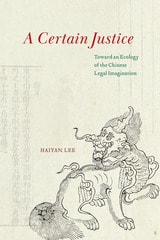
A Certain Justice
Toward an Ecology of the Chinese Legal ImaginationHaiyan Lee
University of Chicago Press, 2023
To many outsiders, China has an image as a realm of Oriental despotism where law is at best window dressing and at worst an instrument of coercion and tyranny. In this highly original contribution to the interdisciplinary field of law and humanities, Haiyan Lee contends that this image arises from a skewed understanding of China’s political-legal culture, particularly the failure to distinguish what she calls high justice and low justice.
In the Chinese legal imagination, Lee shows, justice is a vertical concept, with low justice between individuals firmly subordinated to the high justice of the state. China’s political-legal culture is marked by a mistrust of law’s powers, and as a result, it privileges substantive over procedural justice. Calling on a wide array of narratives—stories of crime and punishment, subterfuge and exposé, guilt and redemption—A Certain Justice helps us recognize the fight for justice outside the familiar arenas of liberal democracy and the rule of law.
A Guide to Chinese Literature
Wilt L. Idema and Lloyd L. Haft
University of Michigan Press, 1997
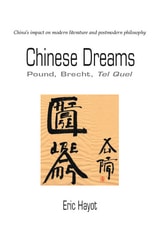
Chinese Dreams
Pound, Brecht, Tel QuelEric Hayot
University of Michigan Press, 2011
China’s profound influence on the avant-garde in the 20th century was nowhere more apparent than in the work of Ezra Pound, Bertolt Brecht, and the writers associated with the Parisian literary journal Tel quel. Chinese Dreams explores the complex, intricate relationship between various “Chinas”—as texts—and the nation/culture known simply as “China”—their context—within the work of these writers. Eric Hayot calls into question the very means of representing otherness in the history of the West and ultimately asks if it might be possible to attend to the political meaning of imagining the other, while still enjoying the pleasures and possibilities of such dreaming. The latest edition of this critically acclaimed book includes a new preface by the author.
“Lucid and accessible . . . an important contribution to the field of East-West comparative studies, Asian studies, and modernism.”
—Comparative Literature Studies
“Instead of trying to decipher the indecipherable ‘China’ in Western literary texts and critical discourses, Hayot chose to show us why and how ‘China’ has remained, and will probably always be, an enchanting, ever-elusive dream. His approach is nuanced and refreshing, his analysis rigorous and illuminating.”
—Michelle Yeh, University of California, Davis
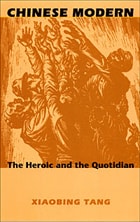
Chinese Modern
The Heroic and the QuotidianXiaobing Tang
Duke University Press, 2000
Tang uncovers crucial clues to modern Chinese literary and cultural practices through readings of Wu Jianren’s 1906 novel The Sea of Regret and works by canonical writers Lu Xun, Ding Ling, and Ba Jin. For the midcentury, he broadens his investigation by considering theatrical, cinematic, and visual materials in addition to literary texts. His reading of the 1963 play The Young Generation reveals the anxiety and terror underlying the exhilarating new socialist life portrayed on the stage. This play, enormously influential when it first appeared, illustrates the utopian vision of China’s lyrical age and its underlying discontents—both of which are critical for understanding late-twentieth-century China. Tang closes with an examination of post–Cultural Revolution nostalgia for the passion of the lyrical age.
Throughout Chinese Modern Tang suggests a historical and imaginative affinity between apparently separate literatures and cultures. He thus illuminates not only Chinese modernity but also the condition of modernity as a whole, particularly in light of the postmodern recognition that the market and commodity culture are both angel and devil.
This elegantly written volume will be invaluable to students of China, Asian studies, literary criticism, and cultural studies, as well as to readers who study modernity.

Chinese Modernism in the Era of Reforms
Cultural Fever, Avant-Garde Fiction, and the New Chinese CinemaXudong Zhang
Duke University Press, 1997
In examining the aesthetic and philosophical formulations of the New Era’s intellectual elites, Zhang first analyzes the intense cultural and intellectual debates, known as the “Great Cultural Discussion” or “Cultural Fever” that took place in Chinese urban centers in the mid- and late 1980s. Chinese literary modernism is then explored, specifically in relation to Deng Xiaoping’s sweeping reforms and with a focus on the changing literary sensibility and avant-garde writers such as Yu Hua, Ge Fei, and Su Tong. Lastly, Zhang looks at the the making of New Chinese Cinema and films such as Yellow Earth, Horse Thief, and King of the Children—films through which Fifth Generation filmmakers first developed a style independent from socialist realism. By tracing the origins and contemporary elaboration of the idea of Chinese modernism, Zhang identifies the discourse of modernism as one of the decisive formal articulations of the social dynamism and cultural possibilities of post-Mao China.
Capturing the historical experience and the cultural vision of China during a crucial decade in its emergence as a world power, Chinese Modernism in the Era of Reforms will interest students and scholars of modernism, Chinese literature and history, film studies, and cultural studies.
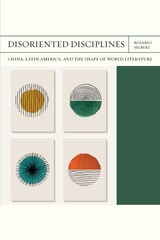
Disoriented Disciplines
China, Latin America, and the Shape of World LiteratureRosario Hubert
Northwestern University Press, 2024
In the absence of specialized programs of study, abstract discussions of China in Latin America took shape in contingent critical infrastructures built at the crossroads of the literary market, cultural diplomacy, and commerce. As Rosario Hubert reveals, modernism flourishes comparatively, in contexts where cultural criticism is a creative and cosmopolitan practice.
Disoriented Disciplines: China, Latin America, and the Shape of World Literature understands translation as a material act of transfer, decentering the authority of the text and connecting seemingly untranslatable cultural traditions. In this book, chinoiserie, “coolie” testimonies, Maoist prints, visual poetry, and Cold War memoirs compose a massive archive of primary sources that cannot be read or deciphered with the conventional tools of literary criticism. As Hubert demonstrates, even canonical Latin American authors, including Jorge Luis Borges, Octavio Paz, and Haroldo de Campos, write about China from the edges of philology, mediating the concrete as well as the sensorial.
Advocating for indiscipline as a core method of comparative literary studies, Disoriented Disciplines challenges us to interrogate the traditional contours of the archives and approaches that define the geopolitics of knowledge.
Jin Ping Mei – A Wild Horse in Chinese Literature
Essays on Texts, Illustrations and Translations of a Late Sixteenth-Century MasterpieceEdited by Vibeke Børdahl and Lintao Qi
National University of Singapore Press, 2022
Literary Authority and the Modern Chinese Writer
Ambivalence and AutobiographyWendy Larson
Duke University Press, 1991
Larson focuses on the most famous writers associated with the May Fourth Movement, a group most active in the 1920s and 1930s, and their fundamental ambivalence about writing. She analyzes how their writing paradoxically characterized textual labor as passive, negative, and inferior to material labor and the more physical political work of social progress, and she describes the ways they used textual means to devalue literary labor.
The impact of China’s increasing contact with the West—particularly the ways in which Western notions of “individualism” and “democracy” influenced Chinese ideologies of self and work—is considered. Larson also studies the changes in China’s social structure, notably those linked to the abolition in 1905 of the educational exam system, which subsequently broke the link between the mastery of certain texts and the attainment of political power, further denigrating the cultural role of the writer.
Masculinity Besieged?
Issues of Modernity and Male Subjectivity in Chinese Literature of the Late Twentieth CenturyXueping Zhong
Duke University Press, 2000
Before the 1990s onslaught of popular culture decentered the role of intellectuals within the nation, they had come to embody Chinese masculinity during the previous decade. The focus on masculinity in literature had become unprecedented in scale and the desire for “real men” began to permeate Chinese popular culture, making icons out of Rambo and Takakura Ken. Stories by Zhang Xianliang and Liu Heng portraying male anxiety about masculine sexuality are employed by Zhong to show how “marginal” males negotiate their sexual identities in relation to both women and the state. Looking at writers popular among not only the well-educated but also the working and middle classes, she discusses works by Han Shaogong, Yu Hua, and Wang Shuo and examines instances of self-loathing male voices, particularly as they are articulated in Mo Yan’s well-known work Red Sorghum. In her last chapter Zhong examines “roots literature,” which speaks of the desire to create strong men as a part of the effort to create a geopolitically strong Chinese nation. In an afterword, Zhong situates her study in the context of the 1990s.
This book will be welcomed by scholars of Chinese cultural studies, as well as in literary and gender studies.
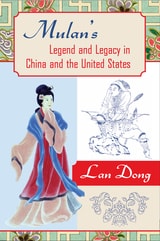
Mulan's Legend and Legacy in China and the United States
Authored by Lan Dong
Temple University Press, 2010
Mulan, the warrior maiden who performed heroic deeds in battle while dressed as a male soldier, has had many incarnations from her first appearance as a heroine in an ancient Chinese folk ballad. Mulan’s story was retold for centuries, extolling the filial virtue of the young woman who placed her father's honor and well-being above her own. With the publication of Maxine Hong Kingston’s The Woman Warrior in the late 1970s, Mulan first became familiar to American audiences who were fascinated with the extraordinary Asian American character. Mulan’s story was recast yet again in the popular 1998 animated Disney film and its sequel.
In Mulan’s Legend and Legacy in China and the United States, Lan Dong traces the development of this popular icon and asks, "Who is the real Mulan?" and "What does authenticity mean for the critic looking at this story?" Dong charts this character’s literary voyage across historical and geographical borders, discussing the narratives and images of Mulan over a long time span—from premodern China to the contemporary United States to Mulan’s counter-migration back to her homeland.
As Dong shows, Mulan has been reinvented repeatedly in both China and the United States so that her character represents different agendas in each retelling—especially after she reached the western hemisphere. The dutiful and loyal daughter, the fierce, pregnant warrior, and the feisty teenaged heroine—each is Mulan representing an idea about female virtue at a particular time and place.
Politics, Ideology, and Literary Discourse in Modern China
Theoretical Interventions and Cultural CritiqueKang Liu and Xiaobing Tang, eds.
Duke University Press, 1993
With chapters by writers, scholars, and critics from mainland China, Hong Kong, and the United States, this volume explores the complexity of representing modernity within the Chinese context. Addressing the problem of finding a proper language for articulating fundamental issues in the historical experience of twentieth-century China, the authors critically re-examine notions of realism, the self/subject, and modernity and draw on perspectives from feminist criticism, ideological analysis, and postmodern theory. Among the many topics explored are subjectivity in Chinese cultural theory, Chinese gender relations, the viability of a Lacanian approach to Chinese identity, the politics of subversion in Chinese reportage, and the ambivalent status of the icon of paternity since Mao.
At the same time this book offers a probing look into the transformation that Chinese culture as well as the study of that culture is currently undergoing, it also reconfirms private discourse as an ideal site for an investigation into a real and imaginary, private and collective encounter with history.
Contributors. Liu Kang, Xiaobing Tang, Liu Zaifu, Stephen Chan, Lydia H. Liu, Wendy Larson, Theodore Huters, David Wang, Tonglin Lu, Yingjin Zhang, Yuejin Wang, Li Tuo, Leo Ou-fan Lee
Postsocialism and Cultural Politics
China in the Last Decade of the Twentieth CenturyXudong Zhang
Duke University Press, 2008
Zhang examines the reactions of intellectuals, authors, and filmmakers to the cultural and political conflicts in China during the 1990s. He offers a nuanced assessment of the changing divisions and allegiances within the intellectual landscape, and he analyzes the postsocialist realism of the era through readings of Mo Yan’s fiction and the films of Zhang Yimou. With Postsocialism and Cultural Politics, Zhang applies the same keen insight to China’s long 1990s that he brought to bear on the 1980s in Chinese Modernism in the Era of Reforms.
Revolution and Its Narratives
China's Socialist Literary and Cultural Imaginaries, 1949-1966Cai Xiang
Duke University Press, 2016
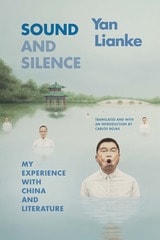
Sound and Silence
My Experience with China and LiteratureYan Lianke
Duke University Press, 2024
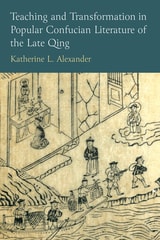
Teaching and Transformation in Popular Confucian Literature of the Late Qing
Katherine L. Alexander
University of Michigan Press, 2025
Yu’s works complicate the picture of socio-moral reform, particularly the Confucian mission of jiaohua (teaching and transformation). Though he viewed the disasters of the late Qing as the natural consequence of jiaohua’s failure to compete against socially disruptive media, such as vernacular fiction and theatrical productions, he also wanted reformers to engage closely with these genres. Yu became a vocal advocate of teaching with moral vernacular literature that he believed met commoners at their level. He emphasized the hope that by writing, printing, and performing such texts, every member of his audience could be transformed into teachers themselves, restoring society from the bottom up.
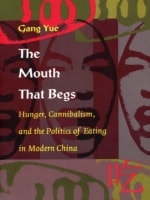
The Mouth That Begs
Hunger, Cannibalism, and the Politics of Eating in Modern ChinaGang Yue
Duke University Press, 1999
Yue’s discussion begins with a brief look at ancient Chinese alimentary writing and then moves on to its main concern: the exploration and textual analysis of themes of eating in modern Chinese literature from the May Fourth period through the post-Tiananmen era. The broad historical scope of this volume illustrates how widely applicable eating-related metaphors can be. For instance, Yue shows how cannibalism symbolizes old China under European colonization in the writing of Lu Xun. In Mo Yan’s 1992 novel Liquorland, however, cannibalism becomes the symbol of overindulgent consumerism. Yue considers other writers as well, such as Shen Congwen, Wang Ruowang, Lu Wenfu, Zhang Zianliang, Ah Cheng, Zheng Yi, and Liu Zhenyun. A special section devoted to women writers includes a chapter on Xiao Hong, Wang Anyi, and Li Ang, and another on the Chinese-American women writers Jade Snow Wong, Maxine Hong Kingston, and Amy Tan. Throughout, the author compares and contrasts the work of these writers with similarly themed Western literature, weaving a personal and political semiotics of eating.
The Mouth That Begs will interest sinologists, literary critics, anthropologists, cultural studies scholars, and everyone curious about the semiotics of food.
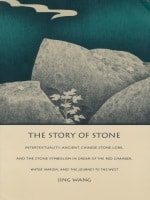
The Story of Stone
Intertextuality, Ancient Chinese Stone Lore, and the Stone Symbolism in <i>Dream of the Red Chamber</i>, <i>Water Margin</i>, and <i>The Journey to the West</i>Jing Wang
Duke University Press, 1992
Bringing together Chinese myth, religion, folklore, art, and literature, this book is the first in any language to amass the sources of stone myth and stone lore in Chinese culture. Uniting classical Chinese studies with contemporary Western theoretical concerns, Wang examines these stone narratives by analyzing intertextuality within Chinese traditions. She offers revelatory interpretations to long-standing critical issues, such as the paradoxical character of the monkey in The Journey to the West, the circularity of narrative logic in The Dream of the Red Chamber, and the structural necessity of the stone tablet in Water Margin.
By both challenging and incorporating traditional sinological scholarship, Wang’s The Story of Stone reveals the ideological ramifications of these three literary works on Chinese cultural history and makes the past relevant to contemporary intellectual discourse. Specialists in Chinese literature and culture, comparative literature, literary theory, and religious studies will find much of interest in this outstanding work, which is sure to become a standard reference on the subject.
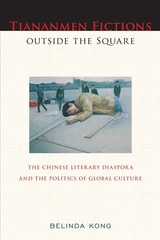
Tiananmen Fictions outside the Square
The Chinese Literary Diaspora and the Politics of Global CultureBelinda Kong
Temple University Press, 2012
An exciting analysis of the myriad literary effects of Tiananmen, Belinda Kong's Tiananmen Fictions Outside the Square is the first full-length study of fictions related to the 1989 movement and massacre. More than any other episode in recent world history, Tiananmen has brought a distinctly politicized Chinese literary diaspora into stark relief.
Kong redefines Tiananmen's meaning from an event that ended in local political failure to one that succeeded in producing a vital dimension of contemporary transnational writing today. She spotlights key writers-Gao Xingjian, Ha Jin, Annie Wang, and Ma Jian-who have written and published about the massacre from abroad. Their outsider/distanced perspectives inform their work, and reveal how diaspora writers continually reimagine Tiananmen's relevance to the post-1989 world at large.
Compelling us to think about how Chinese culture, identity, and politics are being defined in the diaspora, Tiananmen Fictions Outside the Square candidly addresses issues of political exile, historical trauma, global capital, and state biopower.
Transpacific Cartographies
Narrating the Contemporary Chinese Diaspora in the United StatesMelody Yunzi Li
Rutgers University Press, 2024
Troubadours, Trumpeters, Troubled Makers
Lyricism, Nationalism, and Hybridity in China and Its OthersGregory B. Lee
Duke University Press, 1996
Lee’s broad definition of lyric includes the work of poets, amateur versifiers, and all manner of popular songwriters, and his inclusive sense of nation refers to all Chinese communities regardless of geographic location. Whether examining the globalized consumption of satellite-broadcast pop music or the heroic efforts of little-known poets on the margins of the Chinese diaspora, he finds a questioning and contesting of both the Orientalist construction of a mythic monolithic China invented by the West and the Chinese obsession with ideas of authenticity and purity of nationhood. Lee explores the lyrical transgression of these ideological boundaries in China, in the Chinese communities of America and Britain, and in other marginalized communities, before using the examples of Hong Kong and other non-nationalistic sites to discuss the creative possibilities of hybrid cultures and societies.
Woman and Chinese Modernity
The Politics of Reading between West and EastRey Chow
University of Minnesota Press, 1991
Examines the relationship of “woman” to issues of non-western culture.
Examines the relationship of "woman" to issues of non-Western culture: ethnic spectatorship, popular literature, the construction of literary history, and the revolutionary production and emotional reception of national literature.
Writing Taiwan
A New Literary HistoryDavid Der-wei Wang and Carlos Rojas, eds.
Duke University Press, 2007
Because the island of Taiwan spent the first half of the century as a colony of Japan and the second half in an umbilical relationship to China, its literature challenges basic assumptions about what constitutes a “national literature.” Several contributors directly address the methodological and epistemological issues involved in writing about “Taiwan literature.” Other contributors investigate the cultural and political grounds from which specific genres and literary movements emerged. Still others explore themes of history and memory in Taiwan literature and tropes of space and geography, looking at representations of boundaries as well as the boundary-crossing global flows of commodities and capital. Like Taiwan’s history, modern Taiwan literature is rife with conflicting legacies and impulses. Writing Taiwan reveals a sense of its richness and diversity to English-language readers.
Contributors. Yomi Braester, Sung-sheng Yvonne Chang, Fangming Chen, Lingchei Letty Chen, Chaoyang Liao, Ping-hui Liao, Joyce C. H. Liu, Kim-chu Ng, Carlos Rojas, Xiaobing Tang, Ban Wang, David Der-wei Wang, Gang Gary Xu, Michelle Yeh, Fenghuang Ying