Results by title
3 books match the query 'Chitnis, Rajendra A.'
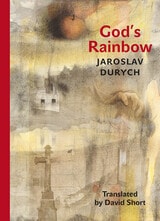
God's Rainbow
Jaroslav Durych
Karolinum Press, 2016
This is a book about collective guilt, individual fate, and repentance, a tale that explores how we can come to be responsible for crimes we neither directly commit nor have the power to prevent. Set in the Czechoslovakian borderland shortly after WWII amid the sometimes violent expulsion of the region’s German population, Jaroslav Durych’s poetic, deeply symbolic novel is a literary touchstone for coming to terms with the Czech Republic’s difficult and taboo past of state-sanctioned violence.
A leading Catholic intellectual of the early twentieth century, Durych became a literary and political throwback to the prewar Czechoslovak Republic and faced censorship under the Stalinist regime of the 1950s. As such, he was a man not unfamiliar with the ramifications of a changing society in which the minority becomes the rule-making political authority, only to end up condemned as criminals. Though Durych finished writing God’s Rainbow in 1955, he could not have hoped to see it published in his lifetime. Released in a still-censored form in 1969, God’s Rainbow is available here in full for the first time in English.
A leading Catholic intellectual of the early twentieth century, Durych became a literary and political throwback to the prewar Czechoslovak Republic and faced censorship under the Stalinist regime of the 1950s. As such, he was a man not unfamiliar with the ramifications of a changing society in which the minority becomes the rule-making political authority, only to end up condemned as criminals. Though Durych finished writing God’s Rainbow in 1955, he could not have hoped to see it published in his lifetime. Released in a still-censored form in 1969, God’s Rainbow is available here in full for the first time in English.
[more]
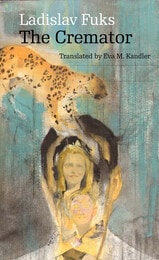
The Cremator
Ladislav Fuks
Karolinum Press, 2016
“The devil’s neatest trick is to persuade us that he doesn’t exist.”—Giovanni Papini
It is a maxim that both rings true in our contemporary world and pervades this tragicomic novel of anxiety and evil set amid the horrors of World War II. As a gay man living in a totalitarian, patriarchal society, noted Czech writer Ladislav Fuks identified with the tragic fate of his Jewish countrymen during the Holocaust. The Cremator arises from that shared experience. Fuks presents a grotesque, dystopian world in which a dutiful father, following the strict logic of his time, liberates the souls of his loved ones by destroying their bodies—first the dead, then the living. As we watch this very human character—a character who never ceases to believe that he is doing good—become possessed by an inhuman ideology, the evil that initially permeates the novel’s atmosphere concretizes in this familiar family man. A study of the totalitarian mindset with stunning resonance for today, The Cremator is a disturbing, powerful work of literary horror.
It is a maxim that both rings true in our contemporary world and pervades this tragicomic novel of anxiety and evil set amid the horrors of World War II. As a gay man living in a totalitarian, patriarchal society, noted Czech writer Ladislav Fuks identified with the tragic fate of his Jewish countrymen during the Holocaust. The Cremator arises from that shared experience. Fuks presents a grotesque, dystopian world in which a dutiful father, following the strict logic of his time, liberates the souls of his loved ones by destroying their bodies—first the dead, then the living. As we watch this very human character—a character who never ceases to believe that he is doing good—become possessed by an inhuman ideology, the evil that initially permeates the novel’s atmosphere concretizes in this familiar family man. A study of the totalitarian mindset with stunning resonance for today, The Cremator is a disturbing, powerful work of literary horror.
[more]
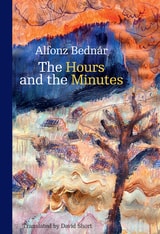
The Hours and the Minutes
Alfonz Bednár
Karolinum Press, 2025
With their courageous and engaging critique of Communism in the 1950s, these critically acclaimed Slovak classics demask one of the founding myths of modern Slovakia.
The Hours and The Minutes was first published in Bratislava in 1956, the year of Nikita Khrushchev’s “secret speech,” in which the Soviet leader formally acknowledged Stalin’s tyranny and opened the way for political reform throughout the Eastern Bloc. Alfonz Bednár’s writing was one of the first free of nationalist and communist propaganda, rejecting earlier ideologization of life by both the fascist right and Stalinist left and finding more empathetic ways to explore the complexity of human experience. His novellas defy traditional heroic depictions and portray the human individual, his relations, and morality as the subject of history rather than a utopian, collectivist ideology.
In these five novellas, Bednár is preoccupied with the insensitive, even inhuman, rootless, and amoral modernity that the war and Communist Party import into traditional Slovak life. The destruction of the traditional Slovak countryside during the twentieth century through modernization and urbanization, and with it a particular approach to life, forms his central theme. His spare, epic style and devotion to plot and dynamic narration render The Hours and The Minutes a genuine and gripping read.
[more]