Results by title
11 books match the query 'Chocolate'
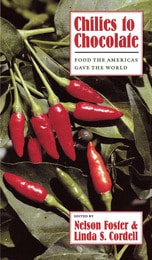
Chilies to Chocolate
Food the Americas Gave the WorldNelson Foster and Linda S. Cordell
University of Arizona Press, 1992
Chilies to Chocolate traces the biological and cultural history of some New World crops that have worldwide economic importance. Drawing on disciplines as diverse as anthropology, ethnobotany, and agronomy, it focuses on the domestication and use of these plants by native peoples and their dispersion into the fields and kitchens of the Old World: tomatoes to Italy, chili peppers throughout Asia, cacao wherever a sweet tooth craves chocolate. Indeed, potatoes and maize now rank with wheat and rice as the world's principal crops.
"The sweetness of corn on the cob is sweeter for knowing the long, winding way by which it has come into one's hands," observe Foster and Cordell. Featuring contributions by Gary Nabhan, Alan Davidson, and others, Chilies to Chocolate will increase readers' appreciation of the foods we all enjoy, of the circuitous routes by which they have become part of our diets, and of the vital role that Native Americans have played in this process.
Chocolate and Blackness
A Cultural HistorySilke Hackenesch
Campus Verlag, 2017
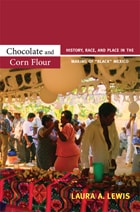
Chocolate and Corn Flour
History, Race, and Place in the Making of "Black" MexicoLaura A. Lewis
Duke University Press, 2012
Drawing on more than a decade of fieldwork, Lewis offers a richly detailed and subtle ethnography of the lives and stories of the people of San Nicolás, including community residents who have migrated to the United States. San Nicoladenses, she finds, have complex attitudes toward blackness—as a way of identifying themselves and as a racial and cultural category. They neither consider themselves part of an African diaspora nor deny their heritage. Rather, they acknowledge their hybridity and choose to identify most deeply with their community.
Chocolate and Other Writings on Male Homoeroticism
Pandey Bechan Sharma
Duke University Press, 2009
The stories depict male homoeroticism in quotidian situations: a man brings a lover to his disapproving friend’s house; a good-looking young man becomes the object of desire at his school. The love never ends well, but the depictions are not always unsympathetic. Although Ugra claimed that the stories were aimed at suppressing homosexuality by exposing it, Vanita highlights the ambivalence of his characterizations. Cosmopolitan, educated, and hedonistic, the Hindu and Muslim men he portrayed quote Hindi and Urdu poetry to express their love, and they justify same-sex desire by drawing on literature, philosophy, and world history. Vanita’s introduction includes anecdotal evidence that Chocolate was enthusiastically received by India’s homosexual communities.
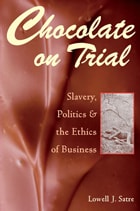
Chocolate on Trial
Slavery, Politics, and the Ethics of BusinessLowell J. Satre
Ohio University Press, 2005
Chocolate on Trial: Cadbury, Slavery and the Economics of Virtue in Imperial Britain gives a lively and highly readable account of the events surrounding the libel trial in which Cadbury Bros. Ltd. sued the London Standard, following the newspaper's accusation that the firm was hypocritical in its use of slave-grown cocoa. As compelling now as at the turn of the previous century, the issues probed by Lowell J. Satre give invaluable historical background to contemporary issues of business ethics, corporate social responsibility, and globalization. The story Satre tells illuminates what a stubbornly persistent institution slavery was and shows how Cadbury, a company with a well-regarded brand name and logo, endured ethical dilemmas and challenges to its record for social responsibility. Chocolate on Trial brings to life the age-old conflict between economic interests and the value of human life.
Satre illuminates the stubborn persistence of the institution of slavery and shows how Cadbury, a company with a well-regarded brand name from the nineteenth century, faced ethical dilemmas and challenges to its record for social responsibility. Chocolate on Trial brings to life the age-old conflict between economic interests and regard for the dignity of human life.

Chocolate, Strawberry, and Vanilla
A History Of American Ice CreamAnne Cooper Funderburg
University of Wisconsin Press, 1995
Chocolate, Strawberry, and Vanilla traces the evolution of ice cream from a rarity to an everyday indulgence. It covers the genesis of ice cream in America, the invention of the hand-cranked ice cream freezer, the natural ice industry, the beginnings of wholesale ice cream manufacturing, and the origins of the ice cream soda, sundae, cone, sandwich, and bar. It also recounts the histories of many brands, including Dairy Queen, Good Humor, Eskimo Pie, Ben and Jerry's, Baskin-Robbins, and Haagen-Dazs. This history of ice cream reflects and reveals changes in social customs, diet and nutrition, class distinctions, leisure activities, and everyday life.
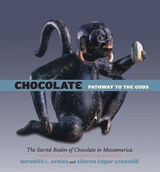
Chocolate
Pathway to the GodsMeredith L. Dreiss and Sharon Edgar Greenhill
University of Arizona Press, 2008
Although it didn’t receive its Western scientific name, Theobroma cacao—“food of the gods”—until the eighteenth century, the cacao tree has been at the center of Mesoamerican mythology for thousands of years. Not only did this “chocolate tree” produce the actual seeds from which chocolate was extracted but it was also symbolically endowed with cosmic powers that enabled a dialogue between humans and their gods. From the pre-Columbian images included in this sumptuous book, we are able to see for ourselves the importance of chocolate to the Maya, Aztecs, Olmecs, Mixtecs, and Zapotecs who grew, produced, traded, and fought over the prized substance.
Through archaeological and other ethnohistoric research, the authors of this fascinating book document the significance of chocolate—to gods, kings, and everyday people—over several millennia. The illustrations allow us to envision the many ancient uses of this magical elixir: in divination ceremonies, in human sacrifices, and even in ball games. And as mythological connections between cacao trees, primordial rainforests, and biodiversity are unveiled, our own quest for ecological balance is reignited. In demonstrating the extraordinary value of chocolate in Mesoamerica, the authors provide new reasons—if any are needed—to celebrate this wondrous concoction.

Coming Out Swiss
In Search of Heidi, Chocolate, and My Other LifeAnne Herrmann
University of Wisconsin Press, 2014
In a work that is part memoir, part history and travelogue, Herrmann explores all our Swiss clichés (chocolate, secret bank accounts, Heidi, Nazi gold, neutrality, mountains, Swiss Family Robinson) and also scrutinizes topics that may surprise (the “invention” of the Alps, the English Colony in Davos, Switzerland’s role during World War II, women students at the University of Zurich in the 1870s). She ponders, as well, marks of Swissness that have lost their identity in the diaspora (Sutter Home, Helvetica, Dadaism) and the enduring Swiss American community of New Glarus, Wisconsin. Coming Out Swiss will appeal not just to the Swiss diaspora but also to those drawn to multi-genre writing that blurs boundaries between the personal and the historical.
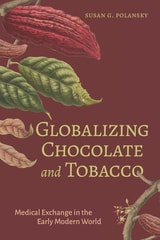
Globalizing Chocolate and Tobacco
Medical Exchange in the Early Modern WorldSusan G. Polansky
Bucknell University Press, 2026
This groundbreaking volume explores two early and opposing Spanish medical perspectives on chocolate and other New World substances. In the early 1600s, doctors Bartolomé Marradón and Antonio Colmenero de Ledesma returned from travels to the Americas with starkly different views: Marradón cautioned against tobacco and offered only limited approval of chocolate, while Colmenero vigorously defended chocolate’s health benefits. Their writings, translated and circulated across Europe, helped transform chocolate from a medicinal drink into a global commodity. Featuring the first bilingual edition of Marradón’s Dialogue (1618)—in full Spanish and English—and a new bilingual presentation of Colmenero’s influential Curious Treatise (1631), this book provides rare insight into early modern medical thought, cultural exchange, and the globalization of taste. Essential for readers of food history, early modern medicine, and transatlantic interchange, it uniquely reveals how debates over health, culture, and commerce brewed in a cup of chocolate.
Published by Bucknell University Press. Distributed worldwide by Rutgers University Press.

Swooning Beauty
A Memoir Of PleasureJoanna Frueh
University of Nevada Press, 2006
When her parents died and her marriage disintegrated within the span of a few months, art historian and performance artist Joanna Frueh entered a painful period of grief and mourning. This book is about how she healed herself and in the process explored the range of her potential as a woman.Swooning Beauty is an intimate memoir of discovery and healing. Frueh’s path to recovery lay through a profound examination of her intuitions, desires, fantasies, dreams, and emotions, her capacity for pleasure—visual, sensual, intellectual, gastronomic, and erotic—and her sense of her own heroic female identity. Hers is the passionate voice of a creative, intelligent woman scrutinizing the nature of love in all its forms and the ways of being that make us free, flexible, more fully real and more fully human. The result is an engaging view into the rich and colorful inner life of a woman at the threshold of middle age, of the blossoming of mind and spirit that comes after suffering and self-realization. Pleasure, she concludes, “is the absence of lack. Self-love is a necessary plenitude. Vigilance in love brings us freedom. Freedom is not an absolute whose attainment is humanly impossible. Yogis say that the self that is not ego is free. That self is the spacious heart, the spacious mind.” Frueh offers us wisdom and comfort for the journey into middle age, and the deep pleasure of encountering a generous, lively spirit and a remarkably spacious mind.

Tea, Coffee & Chocolate
How We Fell in Love with CaffeineMelanie King
Bodleian Library Publishing, 2015
In her mouthwatering new book, Melanie King offers a concise cultural history. All three beverages hail from faraway places: tea came first from China, coffee from the Middle East, and chocolate from Central America. Physicians and politicians alike were quick to comment in newspapers and popular periodicals on their supposed perils or health benefits. Readers learn that coffee was recommended in the seventeenth century as protection against the bubonic plague. Tea was thought to make women unattractive and men “unfit to do their business,” while a cup of chocolate was supposed to have exactly the opposite effect on the drinker’s sex life and physical appearance. As consumption of these newly discovered delicacies grew, merchants seized on the opportunity by setting up coffee houses or encouraging ever-more-elaborate tea-drinking rituals.
Filled with fascinating and often funny anecdotes—from a goatherd whose flock became frisky after eating coffee berries to a duchess with a goblet of poisoned chocolate, Tea, Coffee & Chocolate shows how the rowdy initial reception of these drinks forms the roots of today’s enduring caffeine culture.