Results by title
5 books match the query 'Chorus'
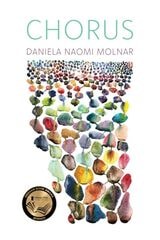
CHORUS
Daniela Naomi Molnar
Omnidawn, 2022
At a time of simultaneous isolation and interconnection, this book is an inquiry into the edges of the self. Pushing back on capitalist messages of individuality, CHORUS instead seeks the multifaceted self that engages with the radical diversity that characterizes any healthy ecosystem or society. Moving between a remote canyon in New Mexico, the Pacific Northwest, New York City, the virtual world, the past, and the unstable future, the author asks, “Whose afterimage am I?”
The sprawling, celebratory, mourning chorus of this book is the sum of many voices; the words of other writers, poets, and artists are interwoven with the author’s words. This is a celebration of language’s capacity to supersede bodily limits, mortality, and existential loneliness. Daniela Naomi Molnar’s chorus encompasses violence, love, empathy, fear, a burning planet, a pandemic, heartbreak, desire, joy, and grief. Rather than seeking resolution, these poems look through the lens of a fragmented self, dwelling in plurality, discord, and harmony.
CHORUS is the winner of Omnidawn’s 1st /2nd Book Prize, judged by Kazim Ali.
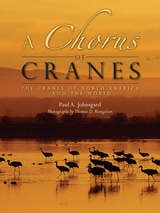
Chorus of Cranes
The Cranes of North America and the WorldPaul A. Johnsgard, Photographs by Thomas D. Mangelsen
University Press of Colorado, 2015
“Since long before medieval times cranes have been considered messengers of the gods, calling annually from on high to remind humans below of the passing years and of their own mortality. Now it is up to humans to take responsibility for controlling our own fate—and also to cry out to protect not only cranes but all the other wonderful creatures that share our increasingly fragile and threatened planetary ecosystem with us."
—Paul A. Johnsgard, from the acknowledgments
Accompanied by the stunning photography of Thomas D. Mangelsen, A Chorus of Cranes details the natural history, biology, and conservation issues surrounding the abundant sandhill crane and the endangered whooping crane in North America. Author Paul A. Johnsgard, one of the leading authorities on cranes and crane biology, describes the fascinating social behaviors, beautiful natural habitats, and grueling seasonal migrations that have stirred the hearts of people as far back as medieval times and garnered the crane a place in folklore and mythology across continents.
Johnsgard has substantially updated and significantly expanded his 1991 work Crane Music, incorporating new information on the biology and status of these two North American cranes and providing abbreviated summaries on the other thirteen crane species of the world. The stories of these birds and their contrasting fates provide an instructive and moving history of bird conservation in North America. A Chorus of Cranes is a gorgeous and invaluable resource for crane enthusiasts, birders, natural historians, and conservationists alike.
The University Press of Colorado gratefully acknowledges the generous support of the Iain Nicholson Audubon Center at Rowe Sanctuary, Audubon Nebraska, Ron and Judy Parks, Wagon Tongue Creek Farm, and the Trull Foundation toward the publication of this book.
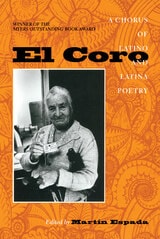
El Coro
A Chorus of Latino and Latina PoetryMartin Espada
University of Massachusetts Press, 1997
Here we find the open expression of anger and grief, self-mocking humor, the music of protest, the quiet assertion of dignity, and the raucous celebration of survival. There are poems about stoop labor and welfare offices and housing projects, but also poems about the Four Horsemen of the Apocalypse and the Minotaur.
Among the poets are former farm workers and gang members, a practicing physician, an ex-tenant lawyer, two professional chefs, and a Vietnam veteran. One poet was a political prisoner for six years; another staged a famous hunger strike; still another was indicted for her work with Central American refugees. In many ways this collection of poets comprises a chorus. Their song humanizes in the face of dehumanization.

The Choral Turn
Performing the Chorus in the Ruins of DemocracyAmy Holzapfel
University of Michigan Press, 2027
The Choral Turn: Performing the Chorus in the Ruins of Democracy examines the recent resurgence of the chorus—a hallmark of ancient Greek tragedy—across contemporary Western theatre, performance, and activism, arguing that this “choral turn” is inseparable from anxieties about the decline of liberal democracy. Drawing on classical studies, theatre and performance studies, and political philosophy, Holzapfel coins the term “choraperformativity” to describe performances that mobilize the formal and collective conventions of the chorus to contest or reshape dominant political narratives. The Choral Turn uses case studies—plays about war and catastrophe featuring Greek-like choruses, refugee performers theatrically reenacting their own displacement, environmental protesters staging collective mourning for a dying planet—to show how groups use choral performance to demand recognition and assert the need for change. Rather than treating the chorus as inherently progressive, the study asks hard questions about who gets included in these choral communities and who gets left out, offering a nuanced, timely look at collective action on stage and in the streets.
The Theatricality of Greek Tragedy
Playing Space and ChorusGraham Ley
University of Chicago Press, 2007
Drawing on evidence from the surviving texts of tragedies by Aeschylus, Sophocles, and Euripides, Ley explains how scenes with actors were played in the open ground of the orchestra, often considered as exclusively the dancing place of the chorus. In reviewing what is known of the music and dance of Greek antiquity, Ley goes on to show that in the original productions the experience of the chorus—expressed in song and dance and in interaction with the characters—remained a vital characteristic in the performance of tragedy.
Combining detailed analysis with broader reflections about the nature of ancient Greek tragedy as an art form, this volume—supplemented with a series of illustrative drawings and diagrams—will be a necessary addition to the bookshelf of anyone interested in literature, theater, or classical studies.