Results by title
14 books match the query 'Christian literature, Early'
Deification in the Latin Patristic Tradition
Jared Ortiz
Catholic University of America Press, 2019
Eighty-three Different Questions
Saint Augustine
Catholic University of America Press, 1982
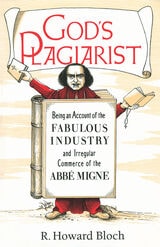
God's Plagiarist
Being an Account of the Fabulous Industry and Irregular Commerce of the Abbe MigneR. Howard Bloch
University of Chicago Press, 1994
How did he do it?
Migne harnessed a deep well of personal energy and a will of iron to the latest innovations in print technology, advertising, and merchandising. His assembly-line production and innovative marketing of the massive editions of the Church Fathers placed him at the forefront of France's new commerce. Characterized by the police as one of the great "schemers" of the century, this priest-entrepreneur put the most questionable of business practices in the service of his devotion to Catholicism.
Part detective novel, part morality tale, Bloch's narrative not only will interest scholars of nineteenth-century French intellectual history but will appeal also to general readers interested in the history of publishing or just a good historical yarn.
"An unforgettable, Daumier-like portrait, sharp and satirical, of this enterprising, austere and somewhat crazed merchandiser of sacred learning. . . . Bloch deserves great credit for the wit and style of his effort to explore the Pedantic Park of nineteenth-century learning, that island of monsters which scholars have found, as yet, no escape."—Anthony Grafton, New Republic
"Bloch is an exhilarating guide to the methods which made Migne the Napoleon of the Prospectus, a publicist of genius, Buffalo Bill and P.T. Barnum rolled into one."—David Coward, Times Literary Supplement
"Mercifully, Bloch's sense of humour has none of that condescending mock-bewilderment commonly applied to the foreign or ancient. . . . It enables Bloch to promote Migne as a forerunner of the department store and to place him on a continuum running from St. Paul to the Tupperware party: the quality of the merchandise is increasingly irrelevant, still more the nature of its contents."—Graham Robb, London Review of Books
God, the Flesh, and the Other
From Irenaeus to Duns ScotusEmmanuel Falque Translated from the French by William Christian Hackett
Northwestern University Press, 2015
In God, the Flesh, and the Other, the philosopher Emmanuel Falque joins the ongoing debate about the role of theology in phenomenology. An important voice in the second generation of French philosophy’s “theological turn,” Falque examines philosophically the fathers of the Church and the medieval theologians on the nature of theology and the objects comprising it. Falque works phenomenology itself into the corpus of theology. Theological concepts thus translate into philosophical terms that phenomenology should legitimately question: concepts from contemporary phenomenology such as onto-theology, appearance, reduction, body/flesh, inter-corporeity, the genesis of community, intersubjectivity, and the singularity of the other find penetrating analogues in patristic and medieval thought forged through millennia of Christological and Trinitarian debate, mystical discourses, and speculative reflection. Through Falque’s wide-ranging interpretive path, phenomenology finds itself interrogated—and renewed.
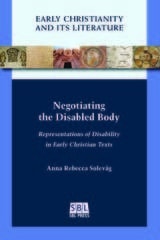
Negotiating the Disabled Body
Representations of Disability in Early Christian TextsAnna Rebecca Solevåg
SBL Press, 2018
An intersectional study of New Testament and noncanonical literature
Anna Rebecca Solevåg explores how nonnormative bodies are presented in early Christian literature through the lens of disability studies. In a number of case studies, Solevåg shows how early Christians struggled to come to terms with issues relating to body, health, and dis/ability in the gospel stories, apocryphal narratives, Pauline letters, and patristic expositions. Solevåg uses the concepts of narrative prosthesis, gaze and stare, stigma, monster theory, and crip theory to examine early Christian material to reveal the multiple, polyphonous, contradictory ways in which nonnormative bodies appear.
Features:
- Case studies that reveal a variety of understandings, attitudes, medical frameworks, and taxonomies for how disabled bodies were interpreted
- A methodology that uses disability as an analytical tool that contributes insights about cultural categories, ideas of otherness, and social groups’ access to or lack of power
- An intersectional perspective drawing on feminist, gender, queer, race, class, and postcolonial studies
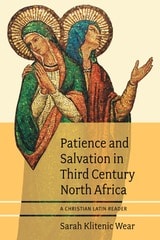
Patience and Salvation in Third Century North Africa
A Christian Latin ReaderSarah Wear
Catholic University of America Press, 2022
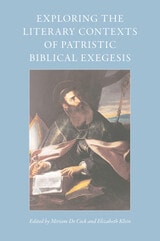
Patristic Exegesis in Context
Exploring the Genres of Early Christian Biblical InterpretationMiriam De Cock
Catholic University of America Press, 2023
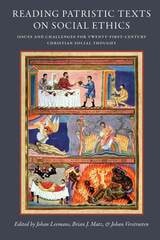
Reading Patristic Texts on Social Ethics
Issues and Challenges for the Twenty-First CenturyJohan Leemans
Catholic University of America Press, 2011
The Ancient Martyrdom Accounts of Peter and Paul
David L. Eastman
SBL Press, 2015
New English translations based upon the most up-to-date critical editions
This book for the first time collects the various ancient accounts of the martydoms of Peter and Paul, which number more than a dozen, along with more than forty references to the martyrdoms from early Christian literature. At last a more complete picture of the traditions about the deaths of Peter and Paul is able to emerge.
Features:
- Greek, Latin, and Syriac accounts from antiquity translated into English
- Introductions and notes for each text
- Original texts are produced on facing pages for specialists
The Early Christian Book (CUA Studies in Early Christianity)
William E. Klingshirn
Catholic University of America Press, 2007
The Idea of the Theater in Latin Christian Thought
Augustine to the Fourteenth CenturyDonnalee Dox
University of Michigan Press, 2004
---Margaret Knapp, Arizona State University
"...an elegantly concise survey of the way classical notions of theater have been interpreted in the Latin Middle Ages. Dox convincingly demonstrates that far from there being a single 'medieval' attitude towards theater, there was in fact much debate about how theater could be understood to function within Christian tradition, even in the so-called 'dark ages' of Western culture. This book makes an innovative contribution to studies of the history of the theater, seen in terms of the history of ideas, rather than of practice."
---Constant Mews, Director, Centre for the Study of Religion & Theology, University of Monash, Australia
"In the centuries between St. Augustine and Bartholomew of Bruges, Christian thought gradually moved from a brusque rejection of classical theater to a progressively nuanced and positive assessment of its value. In this lucidly written study, Donnalee Dox adds an important facet to our understanding of the Christian reaction to, and adaptation of, classical culture in the centuries between the Church Fathers and the rediscovery of Aristotle."
---Philipp W. Rosemann, University of Dallas
This book considers medieval texts that deal with ancient theater as documents of Latin Christianity's intellectual history. As an exercise in medieval historiography, this study also examines biases in modern scholarship that seek links between these texts and performance practices. The effort to bring these texts together and place them in their intellectual contexts reveals a much more nuanced and contested discourse on Greco-Roman theater and medieval theatrical practice than has been acknowledged. The book is arranged chronologically and shows the medieval foundations for the Early Modern integration of dramatic theory and theatrical performance.
The Idea of the Theater in Latin Christian Thought will be of interest to theater historians, intellectual historians, and those who work on points of contact between the European Middle Ages and Renaissance. The broad range of documents discussed (liturgical treatises, scholastic commentaries, philosophical tracts, and letters spanning many centuries) renders individual chapters useful to philosophers, aestheticians, and liturgists as well as to historians and historiographers. For theater historians, this study offers an alternative reading of familiar texts which may alter our understanding of the emergence of dramatic and theatrical traditions in the West. Because theater is rarely considered as a component of intellectual projects in the Middle Ages, this study opens a new topic in the writing of medieval intellectual history.
The Struggle over Class
Socioeconomic Analysis of Ancient Christian TextsG. Anthony Keddie
SBL Press, 2021
An interdisciplinary discussion engaging classics, archaeology, religious studies, and the social sciences
The Struggle over Class brings together scholars from the fields of New Testament and early Christianity to examine Christian texts in light of the category of class. Historically rigorous and theoretically sophisticated, this collection presents a range of approaches to, and applications of, class in the study of the epistles, the gospels, Acts, apocalyptic texts, and patristic literature. Contributors Alicia J. Batten, Alan H. Cadwallader, Cavan W. Concannon, Zeba Crook, James Crossley, Lorenzo DiTommaso, Philip F. Esler, Michael Flexsenhar III, Steven J. Friesen, Caroline Johnson Hodge, G. Anthony Keddie, Jaclyn Maxwell, Christina Petterson, Jennifer Quigley, Elisabeth Schüssler Fiorenza, Daniëlle Slootjes, and Emma Wasserman challenge both scholars and students to articulate their own positions in the ongoing scholarly struggle over class as an analytical category.
Writings
Saint John of Damascus
Catholic University of America Press, 1958
Writings; Writings; Commonitories; Grace and Free Will
Catholic University of America Press, 2008