Results by title

9 books match the query 'Chronic diseases'
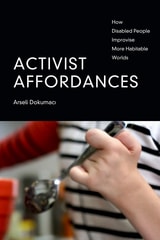
cover of Activist Affordances: How Disabled People Improvise More Habitable Worlds

Activist Affordances

How Disabled People Improvise More Habitable Worlds

Arseli Dokumaci

Duke University Press, 2023

For people who are living with disability, including various forms of chronic diseases and chronic pain, daily tasks like lifting a glass of water or taking off clothes can be difficult if not impossible. In Activist Affordances, Arseli Dokumacı draws on ethnographic work with differently disabled people whose ingenuity, labor, and artfulness allow them to achieve these seemingly simple tasks. Dokumacı shows how they use improvisation to imagine and bring into being more habitable worlds through the smallest of actions and the most fleeting of movements---what she calls “activist affordances.” Even as an environment shrinks to a set of constraints rather than opportunities, the improvisatory space of performance opens up to allow disabled people to imagine that same environment otherwise. Dokumacı shows how disabled people’s activist affordances present the potential for a more liveable and accessible world for all of us.
[more]
cover of All That Was Not Her

All That Was Not Her

Todd Meyers

Duke University Press, 2022

While studying caregiving and chronic illness in families living in situations of economic and social insecurity in Baltimore, anthropologist Todd Meyers met a woman named Beverly. In All That Was Not Her Meyers presents an intimate ethnographic portrait of Beverly, stitching together small moments they shared scattered over months and years and, following her death, into the present. He meditates on the possibilities of writing about someone who is gone—what should be represented, what experiences resist rendering, what ethical challenges exist when studying the lives of others. Meyers considers how chronic illness is bound up in the racialized and socioeconomic conditions of Beverly’s life and explores the stakes of the anthropologist’s engagement with one subject. Even as Meyers struggles to give Beverly the final word, he finds himself unmade alongside her. All That Was Not Her captures the complexity of personal relationships in the field and the difficulty of their ending.
[more]
cover of Chronic Conditions, Fluid States: Chronicity and the Anthropology of Illness

Chronic Conditions, Fluid States

Chronicity and the Anthropology of Illness

Manderson, Lenore

Rutgers University Press, 2010
Chronic Conditions, Fluid States explores the uneven impact of chronic illness and disability on individuals, families, and communities in diverse local and global settings. To date, much of the social as well as biomedical research has treated the experience of illness and the challenges of disease control and management as segmented and episodic. Breaking new ground in medical anthropology by challenging the chronic/acute divide in illness and disease, the editors, along with a group of rising scholars and some of the most influential minds in the field, address the concept of chronicity, an idea used to explain individual and local life-worlds, question public health discourse, and consider the relationship between health and the globalizing forces that shape it.
[more]
cover of Good Days, Bad Days: The Self and Chronic Illness in Time

Good Days, Bad Days

The Self and Chronic Illness in Time

Kathy C Charmaz

Rutgers University Press, 1993

Kathy Charmaz has written a compelling book on chronic illness and the effect it has on the self-concepts of those who suffer. It will appeal to anyone facing a long-term problem that seems beyond control. Her work is based on interviews with people suffering from such diseases as cancer, multiple sclerosis, and arthritis, and with their caregivers. Charmaz looks at how these people disclose their illness, how they experience their emotions, and how they manage daily life.

Illness provides a mirror that allows sufferers to see themselves and to become more introspective. As they struggle for control over illness and control over time, they also struggle to control the central images of the self. For example, the chronically ill may situate their self-concepts in the past, present, or future. Charmaz examines under what conditions they situate their self-concepts in each of those timeframes. People may say they live one day at a time. They may bracket certain experiences, such as a heart attack, as timemarkers or turning points in the past. Or they may look ahead to recovering their health. Or ahead to death. 

Charmaz artfully combines near jargon-free analysis with moving stories about how people have experienced illness, usually told in the sufferers' own words. She enters the world of the chronically ill, and brings us into it.
[more]
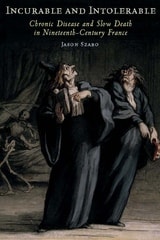
cover of Incurable and Intolerable: Chronic Disease and Slow Death in Nineteenth-Century France

Incurable and Intolerable

Chronic Disease and Slow Death in Nineteenth-Century France

Jason Szabo

Rutgers University Press, 2009

Terminal illness and the pain and anguish it brings are experiences that have touched millions of people in the past and continue to shape our experience of the present. Hospital machines that artificially support life and monitor vital signs beg the question: Is there not anything that medical science can offer as solace?

Incurable and Intolerable looks at the history of incurable illness from a variety of perspectives, including those of doctors, patients, families, religious counsel, and policy makers. This compellingly documented and well-written history illuminates the physical, emotional, social, and existential consequences of chronic disease and terminal illness, and offers an original look at the world of palliative medicine, politics, religion, and charity. Revealing the ways in which history can shed new light on contemporary thinking, Jason Szabo encourages a more careful scrutiny of today's attitudes, policies, and practices surrounding "imminent death" and its effects on society.

[more]
cover of Invalidism and Identity in Nineteenth-Century Britain

Invalidism and Identity in Nineteenth-Century Britain

Maria H. Frawley

University of Chicago Press, 2004

Nineteenth-century Britain did not invent chronic illness, but its social climate allowed hundreds of men and women, from intellectuals to factory workers, to assume the identity of "invalid." Whether they suffered from a temporary condition or an incurable disease, many wrote about their experiences, leaving behind an astonishingly rich and varied record of disability in Victorian Britain.

Using an array of primary sources, Maria Frawley here constructs a cultural history of invalidism. She describes the ways that Evangelicalism, industrialization, and changing patterns of doctor/patient relationships all converged to allow a culture of invalidism to flourish, and explores what it meant for a person to be designated—or to deem oneself—an invalid. Highlighting how different types of invalids developed distinct rhetorical strategies, her absorbing account reveals that, contrary to popular belief, many of the period's most prominent and prolific invalids were men, while many women found invalidism an unexpected opportunity for authority.

In uncovering the wide range of cultural and social responses to notions of incapacity, Frawley sheds light on our own historical moment, similarly fraught with equally complicated attitudes toward mental and physical disorder.
[more]
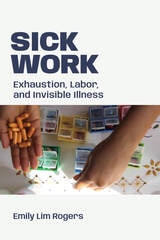
cover of Sick Work: Exhaustion, Labor, and Invisible Illness

Sick Work

Exhaustion, Labor, and Invisible Illness

Emily Lim Rogers

Duke University Press, 2026
In Sick Work, Emily Lim Rogers shows the unpaid labor it takes to be recognized as sick in the United States. Through a historical and ethnographic account of myalgic encephalomyelitis / chronic fatigue syndrome (ME/CFS)—a disease defined by disproportionate exhaustion after any form of exertion, which has no cure or treatment—she reveals how changing formations of labor decide what counts as disability and what does not. Sickness, she writes, is not work’s opposite. Rather, the frequent dismissal of their disease leaves people with ME/CFS to do their own labor of disease advocacy, or “sick work,” even as their symptoms prevent many from working paid jobs. Rogers presents a history of the discursive construction of chronic fatigue and demonstrates its development alongside capitalism since the dawn of industrial management science in the late nineteenth century. These histories, she argues, echo through to the present day, shaping the denial of me/cfs and the stigma that surrounds it. Examining the everyday lives of people with ME/CFS and their activist movements, Sick Work describes how they swim upstream against strong tides of disbelief and demands a radical transformation of how work is defined and valued.
[more]
cover of Stigma Stories: Rhetoric, Lived Experience, and Chronic Illness

Stigma Stories

Rhetoric, Lived Experience, and Chronic Illness

Molly Margaret Kessler

The Ohio State University Press, 2022

In Stigma Stories: Rhetoric, Lived Experience, and Chronic Illness, Molly Margaret Kessler focuses on ostomies and gastrointestinal conditions to show how stigma is nearly as central to living with chronic conditions as the conditions themselves. Drawing on a multi-year study that includes participant observations, interviews, and rhetorical engagement with public health campaigns, blogs, social media posts, and news articles, Stigma Stories advocates for a rhetorical praxiographic approach that is attuned to the rhetorical processes, experiences, and practices in which stigma is enacted or countered.

Engaging interdisciplinary conversations from the rhetoric of health and medicine, disability studies, narrative medicine, and sociology, Kessler takes an innovative look at how stigma functions on individual, interpersonal, and societal levels. In doing so, Kessler reveals how stories and lived experiences have much to teach us not only about how stigma functions but also about how it can be dismantled.

[more]
cover of The Kidney and the Cane: Planetary Health and Plantation Labor in Nicaragua

The Kidney and the Cane

Planetary Health and Plantation Labor in Nicaragua

Alex M. Nading

Duke University Press, 2025

The recent unprecedented growth of Nicaragua’s sugarcane industry has brought promises of more jobs, better health care, and cleaner energy. But these promises have been overshadowed by an epidemic of chronic kidney disease of nontraditional causes (CKDnt). Unknown before the late 1990s, this disease has sickened and killed thousands of sugarcane plantation workers. Scientific studies link the disease to rises in mean average annual temperatures, chronic water scarcity, and the overuse of toxic agrochemicals. CKDnt is now understood as a consequence of global climate change. In The Kidney and the Cane, Alex M. Nading situates this epidemic within a deeper history of sugarcane plantation violence, arguing that CKDnt is not a result of climate change: it is climate change. Outlining a place-based approach to planetary health, Nading follows activists, scientists, and residents in the sugarcane zone wrestling with the consequences of plantation life. Along the way, he raises critical questions about the capacity of corporations and states to care for people and ecosystems; the ability of citizens and experts to regulate toxic substances; and the future of work on a warming planet.
[more]