Results by title
7 books match the query 'Chronic pain'

Assessment of Chronic Pain Patients with the MMPI-2
Laura S. Keller
University of Minnesota Press, 1991
Chronic Conditions, Fluid States
Chronicity and the Anthropology of IllnessManderson, Lenore
Rutgers University Press, 2010
Contingent Figure
Chronic Pain and Queer EmbodimentMichael D. Snediker
University of Minnesota Press, 2021
A masterful synthesis of literary readings and poetic reflections, making profound contributions to our understanding of chronic pain
At the intersection of queer theory and disability studies, acclaimed theorist Michael D. Snediker locates something unexpected: chronic pain. Starting from this paradigm-shifting insight, Snediker elaborates a bracing examination of the phenomenological peculiarity of disability, articulating a complex idiom of figuration as the lived substance of pain’s quotidian. This lexicon helps us differently inhabit both the theoretical and phenomenal dimensions of chronic pain and suffering by illuminating where these modes are least distinguishable.
Suffused with fastidious close readings, and girded by a remarkably complex understanding of phenomenal experience, Contingent Figure resides in the overlap between literary theory and lyric experiment. Snediker grounds his exploration of disability and chronic pain in dazzling close readings of Herman Melville, Emily Dickinson, Henry James, and many others. Its juxtaposition of these readings with candid autobiographical accounts makes Contingent Figure an exemplary instance of literary theory as a practice of lyric attention.
Thoroughly rigorous and anything but predictable, this stirring inquiry leaves the reader with a rich critical vocabulary indebted to the likes of Maurice Blanchot, Gilles Deleuze, D. O. Winnicott, and Eve Kosofsky Sedgwick. A master class in close reading’s inseparability from the urgency of lived experience, this book is essential for students and scholars of disability studies, queer theory, formalism, aesthetics, and the radical challenge of Emersonian poetics across the long American nineteenth century.
Just Vibrations
The Purpose of Sounding GoodWilliam Cheng
University of Michigan Press, 2016
Modern academic criticism bursts with what Eve Kosofsky Sedgwick once termed paranoid readings—interpretative feats that aim to prove a point, persuade an audience, and subtly denigrate anyone who disagrees. Driven by strategies of negation and suspicion, such rhetoric tends to drown out softer-spoken reparative efforts, which forego forceful argument in favor of ruminations on pleasure, love, sentiment, reform, care, and accessibility.
Just Vibrations: The Purpose of Sounding Good calls for a time-out in our serious games of critical exchange. Charting the divergent paths of paranoid and reparative affects through illness narratives, academic work, queer life, noise pollution, sonic torture, and other touchy subjects, William Cheng exposes a host of stubborn norms in our daily orientations toward scholarship, self, and sound. How we choose to think about the perpetration and tolerance of critical and acoustic offenses may ultimately lead us down avenues of ethical ruin—or, if we choose, repair. With recourse to experimental rhetoric, interdisciplinary discretion, and the playful wisdoms of childhood, Cheng contends that reparative attitudes toward music and musicology can serve as barometers of better worlds.
Needless Suffering
How Society Fails Those with Chronic PainDavid Nagel
University Press of New England, 2016
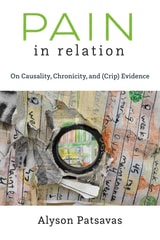
Pain in Relation
On Causality, Chronicity, and (Crip) EvidenceAlyson Patsavas
University of Michigan Press, 2026
Pain in Relation: On Causality, Chronicity, and (Crip) Evidence argues that the dominant stories circulating within contemporary US culture are marked by seemingly contradictory certainties: pain is at once subjective yet universal; that pain makes life unlivable and can be overcome with perseverance. These certainties graft onto pained people as impossible imperatives: the imperatives to live “despite” our pain and to defend the value of lives imagined to be compromised “because of” it. Alyson Patsavas outlines the harm these imperatives cause and draws on feminist, queer, and disability theory to offer alternative frameworks for making sense of and relating to pain.
The study fleshes out “crip autotheory” and experiments with evidencing practices, using anecdotes, journal entries, personal reflections, list-making, and photography to map “cripistemologies of pain,” or critical, disability-informed experiential ways of knowing pain. Equal parts cultural critique, intimate portrait of pained life, and commentary, Pain in Relation invites readers to challenge what they think they know about pain and explore new ways of relating to pain, pained life, and the futures we imagine for pained people.
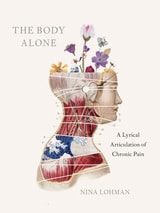
The Body Alone
A Lyrical Articulation of Chronic PainNina Lohman
University of Iowa Press, 2024
In both form and content, The Body Alone represents boundary-pressing work that subverts the traditional narrative by putting pressure on the medical, cultural, and political systems that impact women’s access to fair and equal healthcare. This is more than an illness narrative, it is a battle cry demanding change.