Results by title
7 books match the query 'Church renewal'
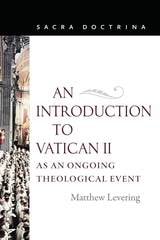
An Introduction to Vatican II as an Ongoing Theological Event
Matthew Levering
Catholic University of America Press, 2017
This is an introduction to Vatican II with a detailed summary of each of its four central documents—the dogmatic constitutions—followed by explanations of how to interpret them. In contrast to other introductions, which pay little attention to the theological soil in which the documents of Vatican II germinated, Levering offers a reading of each conciliar Constitution in light of a key theological author from the era: René Latourelle, SJ for Dei Verbum (persons and propositions); Louis Bouyer, CO for Sacrosanctum Concilium (active participation); Yves Congar, OP for Lumen Gentium (true and false reform); and Henri de Lubac, SJ for Gaudium et Spes (nature and grace).
This theological event is “ongoing,” Levering demonstrates, by tracing in each chapter the theological debates that have stretched from the close of the council till the present, and the difficulties the Church continues to encounter in encouraging an ever deeper participation in Jesus Christ on the part of all believers. In this light, the book’s final chapter compares the historicist (Massimo Faggioli) and Christological (Robert Imbelli) interpretations of Vatican II, arguing that historicism can undermine the Council’s fundamental desire for a reform and renewal rooted in Christ. The conclusion addresses the concerns about secularization and loss of faith raised after the Council by Henri de Lubac, Joseph Ratzinger, and Yves Congar, arguing that contemporary Vatican II scholarship needs to take these concerns more seriously.
Reassessing Reform
Christopher M. Bellitto
Catholic University of America Press, 2012
Rebuilding Trust
Clergy Morale in the Wake of the Abuse CrisisBrandon Vaidyanathan
Catholic University of America Press, 2025
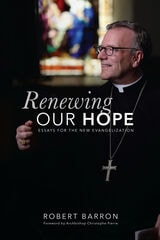
Renewing Our Hope
Essays for the New EvangelizationRobert Barron
Catholic University of America Press, 2020
Seeker Churches
Promoting Traditional Religion in a Nontraditional WayKimon Howland Sargeant
Rutgers University Press, 2000
America’s religious landscape is in flux. New churches are springing up and many older churches are redefining themselves to survive. At the forefront of this denominational free-for-all are evangelical “seeker” churches.
These churches target “seekers”—individuals of any faith or denominational background who seek spiritual fulfillment but are not currently affiliated with any specific church. By focusing on this largely untapped group, seeker churches have become one of the fastest-growing religious movements in the country. In his study, Kimon Sargeant provides a sociological context for the rise of these churches by exploring the rituals, messages, strategies, and denominational functions of this emerging form of American evangelical Protestantism.
Featuring live bands, professional lighting and sound systems, and multi-media presentations, seeker churches are attracting many people who have “dropped out” of organized religion. To broaden their appeal, they offer attenders advice on everyday issues ranging from relationships to finance.
The Bishop's Burden
Reforming the Catholic Church in Early Modern ItalyCeleste McNamara
Catholic University of America Press, 2020
The Megachurch and the Mainline
Remaking Religious Tradition in the Twenty-first CenturyStephen Ellingson
University of Chicago Press, 2007
Religious traditions provide the stories and rituals that define the core values of church members. Yet modern life in America can make those customs seem undesirable, even impractical. As a result, many congregations refashion church traditions so they may remain powerful and salient. How do these transformations occur? How do clergy and worshipers negotiate which aspects should be preserved or discarded?
Focusing on the innovations of several mainline Protestant churches in the San Francisco Bay Area, Stephen Ellingson’s The Megachurch and the Mainline provides new understandings of the transformation of spiritual traditions. For Ellingson, these particular congregations typify a new type of Lutheranism—one which combines the evangelical approaches that are embodied in the growing legion of megachurches with American society’s emphasis on pragmatism and consumerism. Here Ellingson provides vivid descriptions of congregations as they sacrifice hymns in favor of rock music and scrap traditional white robes and stoles for Hawaiian shirts, while also making readers aware of the long history of similar attempts to Americanize the Lutheran tradition.
This is an important examination of a religion in flux—one that speaks to the growing popularity of evangelicalism in America.