Results by title
3 books match the query 'Cities and towns, Medieval'
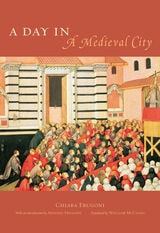
A Day in a Medieval City
Chiara Frugoni
University of Chicago Press, 2005
A Day in a Medieval City breathes life into the activities of the city streets, homes, fields, schools, and places of worship. With entertaining anecdotes and gritty details, it engages the modern reader with its discoveries of the religious, economic, and institutional practices of the day. From urban planning and education to child care, hygiene, and the more leisurely pursuits of games, food, books, and superstitions, Frugoni unearths the daily routines of the private and public lives of citizens. A Day in a Medieval City is a charming portal to the Middle Ages that you'll surely want with you on your travels to Europe—or in your armchair.
“Stunningly beautiful . . . and a good read as well. . . . It’s amazing how much wealth of detail and image Ms. Frugoni has packed into this delightful, relatively small book.”—Steve Goode, Washington Times
“Charming and insightful. . . .Written with exceptional grace and infused with a warm sense of humanity.”—Library Journal
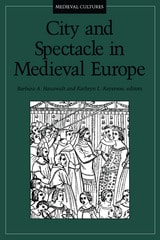
City and Spectacle in Medieval Europe
Barbara Hanawalt
University of Minnesota Press, 1994
Medieval Europe is known for its sense of ceremony and drama. Knightings, tournaments, coronations, religious processions, and even private celebrations such as baptisms, weddings, and funerals were occasions for ritual, feasting, and public display. This volume is the first to take a comprehensive look at the many types of city spectacles that entertained the masses and confirmed various messages of power in late medieval Europe. Bringing together leading scholars in history, art history, and literature, this interdisciplinary collection sets new standards for the study of medieval popular culture.
Drawing examples from Spain, England, France, Italy, and the Netherlands, most of them in the fifteenth century, the authors explore the uses of ceremony as statements of political power, as pleas for divine intercession, and as expressions of popular culture. Their essays show us spectacles meant to confirm events such as victories, the signing of a city charter, or the coronation of a king. In other circumstances, the spectacle acts as a battleground where a struggle for the control of the metaphors of power is played out between factions within cities or between cities and kings. Still other ceremonies called upon divine spiritual powers in the hope that their intervention might save the urban inhabitants. We see here a public cognizant of the power of symbols to express its goals and achievements, a society reaching the height of sophistication in its manipulation of popular and elite culture for grand shows.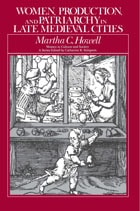
Women, Production, and Patriarchy in Late Medieval Cities
Martha C. Howell
University of Chicago Press, 1986