Results by title
205 books match the query 'City' and 7 start with a
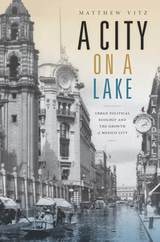
A City on a Lake
Urban Political Ecology and the Growth of Mexico CityMatthew Vitz
Duke University Press, 2018
A Geography of New Jersey
The City in the GardenStansfield, Charles A.
Rutgers University Press, 1998
African-American Mayors
Race, Politics, and the American CityEdited by David R. Colburn and Jeffrey S. Adler
University of Illinois Press, 2001
Once in office, African-American mayors faced vexing challenges. In large and small cities from the Sunbelt to the Rustbelt, black mayors assumed office during economic downturns and confronted the intractable problems of decaying inner cities, white flight, a dwindling tax base, violent crime, and diminishing federal support for social programs. Many encountered hostility from their own parties, city councils, and police departments; others worked against long-established power structures dominated by local business owners or politicians. Still others, while trying to respond to multiple demands from a diverse constituency, were viewed as traitors by blacks expecting special attention from a leader of their own race. All struggled with the contradictory mandate of meeting the increasing needs of poor inner-city residents while keeping white businesses from fleeing to the suburbs.
This is the first comprehensive treatment of the complex phenomenon of African-American mayors in the nation's major urban centers. Offering a diverse portrait of leadership, conflict, and almost insurmountable obstacles, this volume assesses the political alliances that brought black mayors to office as well as their accomplishments--notably, increased minority hiring and funding for minority businesses--and the challenges that marked their careers. Mayors profiled include Carl B. Stokes (Cleveland), Richard G. Hatcher (Gary), "Dutch" Morial (New Orleans), Harold Washington (Chicago), Tom Bradley (Los Angeles), Marion Barry (Washington, D.C.), David Dinkins (New York City), Coleman Young (Detroit), and a succession of black mayors in Atlanta (Maynard Jackson, Andrew Young, and Bill Campbell).Probing the elusive economic dimension of black power, African-American Mayors demonstrates how the same circumstances that set the stage for the victories of black mayors exaggerated the obstacles they faced.
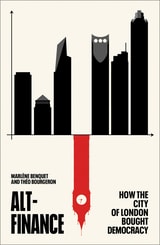
Alt-Finance
How the City of London Bought DemocracyMarlène Benquet
Pluto Press, 2022
Powerful financial forces have supported the neoliberal project since the 1980s to advance their interests, but there are now signs that these forces have a new face and a new strategy.
The majority of the British finance sector threw its support behind Britain leaving the European Union, a flagship institution of neoliberalism. Beyond this counterintuitive move, what was really happening and why? Alt-Finance examines a new authoritarian turn in financialised democracies, focusing on the City of London, revealing a dangerous alternative political project in the making.
In a clash with traditional finance, the new behemoths of financial capital - hedge funds, private equity firms, and real estate funds - have started to cohere around a set of political beliefs, promoting libertarian, authoritarian, climate-denying, and Eurosceptic views. Protecting investments, suppressing social dissent, and reducing state interference is at the core of their mission for a new world order.
By following the money, the authors provide indisputable evidence of these worrying developments. Through a clear analysis of the international dealings of this new authoritarian-libertarian regime, not just in Britain but in the US and Brazil, we can understand how our world is being shaped against our will by struggles between dominant groups.
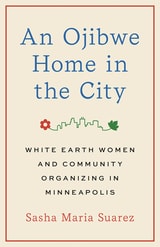
An Ojibwe Home in the City
White Earth Women and Community Organizing in MinneapolisSasha Maria Suarez
University of Minnesota Press, 2026
The story of generations of Ojibwe women who built a thriving Indigenous home in the urban heart of Minneapolis
Minneapolis became home to White Earth Ojibwe people not through a centralized movement but through generations of determined, behind-the-scenes work by Ojibwe women. These women were organizing not in the streets, but in sewing clubs, churches, classrooms, and kitchens to bring people together and form interconnected communities. Rooted in care, tradition, and persistence, their labor laid the foundation for a thriving urban Indigenous population that continues to shape the city today.
An Ojibwe Home in the City tells the histories of Louise and Emily Peake, Winnie Jourdain, Ignatia Broker, and other Ojibwe women who endeavored to make space for Native families in South Minneapolis. From the 1930s through the 1970s, these women built institutions, secured services, and fought for culturally grounded education—all while working inside systems never intended for them. Their efforts led to the creation of vital community hubs such as the Division of Indian Work and the Minneapolis American Indian Center and helped ensure that future generations would stay connected to their culture, even in an urban setting.
Far broader than a local history, this book challenges what we think we know about Native activism in the twentieth century, shifting the focus from protest to perseverance and steady commitment. Intimate, compelling, and deeply grounded in community, An Ojibwe Home in the City is both a tribute and a revelation—an essential and personal account of how Indigenous women made a place for their people in a changing world.
Retail e-book files for this title are screen-reader friendly with images accompanied by short alt text and/or extended descriptions.
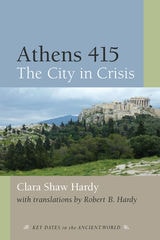
Athens 415
The City in CrisisClara Shaw Hardy, with translations by Robert B. Hardy
University of Michigan Press, 2020
On a summer night in 415 BCE, unknown persons systematically mutilated most of the domestic “herms”—guardian statues of the god Hermes—in Athens. The reaction was immediate and extreme: the Athenians feared a terrifying conspiracy was underway against the city and its large fleet—and possibly against democracy itself. The city established a board of investigators, which led to informants, accusations, and flight by many of the accused. Ultimately, dozens were exiled or executed, their property confiscated.
This dramatic period offers the opportunity to observe the city in crisis. Sequential events allow us to see the workings of the major institutions of the city (assembly, council, law courts, and theater, as well as public and private religion). Remarkably, the primary sources for these tumultuous months name conspirators and informants from a very wide range of status-groups: citizens, women, slaves, and free residents. Thus the incident provides a particularly effective entry-point into a full multifaceted view of the way Athens worked in the late fifth century.
Designed for classroom use, Athens 415 is no potted history, but rather a source-based presentation of ancient urban life ideal for the study of a people and their institutions and beliefs. Original texts—all translated by poet Robert B. Hardy—are presented along with thoughtful discussion and analyses by Clara Shaw Hardy in an engaging narrative that draws students into Athens’ crisis.
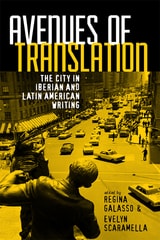
Avenues of Translation
The City in Iberian and Latin American WritingGalasso, Regina
Bucknell University Press, 2019
Cities both near and far communicate in a variety of ways. Travel between, through, and among urban centers initiates contact, and cities themselves are sites of ever-changing cultural and historical encounters. Predictable and surprising challenges and opportunities arise when city borders are crossed, voices meet, and artistic traditions find their counterparts. Using the Latin word for “translation,” translatio, or “to carry across,” as a point of departure, Avenues of Translation explores how translation perpetuates, diversifies, deepens, and expands the literary production of cities in their greater cultural context, and how translation shapes an understanding of and access to a city's past and present literary and cultural practices. Thinking about translation and the city is a way to tell the backstories of the cities, texts, and authors that are united by acts of translation.
Published by Bucknell University Press. Distributed worldwide by Rutgers University Press.