Results by title
4 books match the query 'Civic Life'
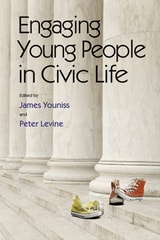
Engaging Young People in Civic Life
James Youniss
Vanderbilt University Press, 2009
The thirteen original essays are based on research in schools and in settings beyond the schoolyard where civic life is experienced. One focus is on programs for those schools in poor communities that tend to overlook civic education. Another chapter reports on how two city governments—Hampton, Virginia, and San Francisco—have invited youth to participate on boards and in agencies. A cluster of chapters focuses on the civic education programs in Canada and Western Europe, where, as in the United States, immigration and income inequality raise challenges to civic life.
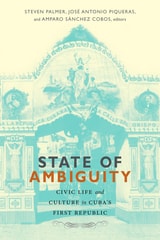
State of Ambiguity
Civic Life and Culture in Cuba's First RepublicSteven Palmer, José Antonio Piqueras, Amparo Sánchez Cobos, eds.
Duke University Press, 2014
Contributors. Imilcy Balboa Navarro, Alejandra Bronfman, Maikel Fariñas Borrego, Reinaldo Funes Monzote, Marial Iglesias Utset, Steven Palmer, José Antonio Piqueras Arenas, Ricardo Quiza Moreno, Amparo Sánchez Cobos, Rebecca J. Scott, Robert Whitney
The Paradoxes of Integration
Race, Neighborhood, and Civic Life in Multiethnic AmericaJ. Eric Oliver
University of Chicago Press, 2010
The United States is rapidly changing from a country monochromatically divided between black and white into a multiethnic society. The Paradoxes of Integration helps us to understand America’s racial future by revealing the complex relationships among integration, racial attitudes, and neighborhood life.
J. Eric Oliver demonstrates that the effects of integration differ tremendously, depending on which geographical level one is examining. Living among people of other races in a larger metropolitan area corresponds with greater racial intolerance, particularly for America’s white majority. But when whites, blacks, Latinos, and Asian Americans actually live in integrated neighborhoods, they feel less racial resentment. Paradoxically, this racial tolerance is usually also accompanied by feeling less connected to their community; it is no longer "theirs." Basing its findings on our most advanced means of gauging the impact of social environments on racial attitudes, The Paradoxes of Integration sensitively explores the benefits and at times, heavily borne, costs of integration.
The Wired City
Reimagining Journalism and Civic Life in the Post-Newspaper AgeDan Kennedy
University of Massachusetts Press, 2013
Although the Independent is the principal subject of The Wired City, Kennedy examines a number of other online news projects as well, including nonprofit organizations such as Voiceof San Diego and the Connecticut Mirror and for-profit ventures such as the Batavian, Baristanet, and CT News Junkie. Where legacy media such as major city newspapers are cutting back on coverage, entrepreneurs are now moving in to fill at least some of the vacuum.
The Wired City includes the perspectives of journalists, activists, and civic leaders who are actively re-envisioning how journalism can be meaningful in a hyperconnected age of abundant news sources. Kennedy provides deeper context by analyzing the decline of the newspaper industry in recent years and, in the case of those sites choosing such a path, the uneasy relationship between nonprofit status and the First Amendment.
At a time of pessimism over the future of journalism, The Wired City offers hope. What Kennedy documents is not the death of journalism but rather the uncertain and sometimes painful early stages of rebirth.