Results by title
2 books match the query 'Civil Rights Pioneer'
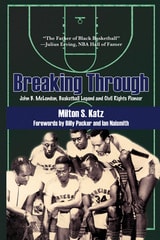
Breaking Through
John B. McLendon, Basketball Legend and Civil Rights PioneerMilton S. Katz
University of Arkansas Press, 2007
Winner, William Rockhill Nelson Award
John B. McLendon was the last living protégé of basketball’s inventor, Dr. James Naismith, and one of the “top ten basketball coaches of the century” in Billy Packer’s opinion. McLendon’s amazing records in college and pro basketball earned him a spot in the Basketball Hall of Fame (the first black coach to be inducted), and his coaching philosophy has had a huge influence on basketball coaches. Breaking Through is also a powerful and inspirational story about segregation and a champion’s struggle for equality in 1940s and 50s America.
Black Magic, ESPN’s Peabody Award–winning documentary about players and coaches who attended historically black colleges and universities, covers many of the events in McLendon’s life that Katz writes about in his book.
John McLendon was elected to the Naismith Memorial Basketball Hall of Fame in 2016.
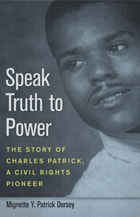
Speak Truth to Power
The Story of Charles Patrick, a Civil Rights PioneerMignette Y. Patrick Dorsey
University of Alabama Press, 2010
"Patrick did not intend to become a civil rights pioneer, but a minor dispute over a parking spot led to his arrest, beating while in custody, and eventual legal tribulations. His daughter's account of his ordeal is well researched, beautifully narrated, and extremely informative." —Journal of Southern History
On December 11, 1954, Charles Patrick drove to downtown Birmingham to buy a Boy Scout uniform for his son. Christmas traffic around the downtown department stores was heavy, and Patrick circled unsuccessfully until at last a streetside spot opened up and he began to pull in. As he did so, he was cut off by a woman who ordered him out of the way, as she was the wife of a city police officer. Patrick pulled away, remarking, "Ma’am, he doesn’t own the streets of Birmingham."
Normal low-level urban hassle? Not in 1954 Birmingham, when the woman was white and Patrick black. The woman reported to her husband that a black man had sassed her, and Patrick was summarily arrested, charged with disorderly conduct, and placed in a cell where he was beaten by the husband and another police officer.
Usually that would have been the end of it, but Patrick was not the sort of man to meekly endure an injustice. He found an attorney, went to court to fight the charges, and brought his assailants to justice--as whites, blacks, politicians and the press offered public support.
This book tells the story of Patrick’s quest for justice in segregated Alabama on the eve of the civil rights movement and represents a telling instance of the growing determination of African Americans to be treated fairly, part of the broadening and deepening stream of resolve that led to the widespread activism of the civil rights movement.