Results by title
9 books match the query 'Civil rights demonstrations'
Brazil's Sex Wars
The Aesthetics of Queer Activism in São PauloJoseph Jay Sosa
University of Texas Press, 2024
An ethnography and media analysis of LGBT+ activism in São Paulo during Brazil’s conservative turn from 2010 to 2018.
For decades, LGBT+ activists across the globe have secured victories by persuasively articulating rights to sexual autonomy. Brazilian activists, some of the world’s most energetic, have kept pace. But since 2010, a backlash has set in, as defenders of “tradition” and “family” have countered LGBT+ rights discourses using a rights-based language of their own.
To understand this shifting ground, Joseph Jay Sosa collaborated with Brazilian LGBT+ activists, who use the language of rights while knowing that rights are not what they seem. Drawing on the symbolic and affective qualities of rights, activists mobilize slogans, bodies, and media to articulate an alternative democratic sensorium. Beyond conventional notions of rights as tools for managing the obligations of states vis-à-vis citizens, activists show how rights operate aesthetically—enjoining the public to see and feel as activists do. Sosa tracks the fate of LGBT+ rights in a growing authoritarian climate that demands “human rights for the right humans.” Interpreting conflicts between advocates and opponents over LGBT+ autonomy as not just an ideological struggle but an aesthetic one, Brazil’s Sex Wars rethinks a style of politics that seems both utterly familiar and counterintuitive.
Bull Connor
William A. Nunnelley
University of Alabama Press, 1990
Nunnelley’s biography covers Connor’s early life as a sportscaster, his years as a nearly pathological police chief, and his reign as president of a corrupt public service commission.While providing the first published biographical study of Connor, Bull also traces the evolution of the civil rights movement in Birmingham. The book amplifies traditional one-dimensional accounts through the use of such primary sources a s Connor FBI files gained from a Freedom of Information request, Connor papers discovered in an old fire station about to be demolished, files from a law firm which represented Connor, interviews, and newspaper files. Connor’s racist image remains intact, but a more complete portrait of the controversial commissioner emerges.
Eugene “Bull” Connor gained infamy during the spring of 1963 as the heavy-handed Birmingham police commissioner who turned power hoses and police dogs on the black demonstrators led by Martin Luther King, Jr. Bull Connor and Birmingham symbolized hard-line Southern racism. Connor’s actions received national and international media coverage, which dramatized the plight of black people in segregated areas, giving the civil rights movement much-needed attention. After viewing television reports of the fire-hose and police-dogs episode, President John Kennedy said, “The civil rights movement should thank God for Bull Connor. He helped is as much as Abraham Lincoln.”
Bull Connor was an unlikely catalyst for the civil rights movement. Rather than forestalling integration, his response to the 1963 demonstrations hastened the demise of the dual society of which he became a symbol. Within weeks of King’s much-publicized Birmingham campaign, Congress took the first steps toward enacting the most sweeping civil rights legislation in American history. Birmingham was a turning point in the civil rights struggle, and Connor was the movement’s perfect adversary.
Expelled
James Lawson Jr. and Vanderbilt UniversityBenjamin Houston
Vanderbilt University Press, 2026
In February 1960, as lunch counter sit-ins began in Southern cities, national attention focused on Nashville, where demonstrations were carried out by an unusually organized and disciplined group of students tutored extensively in nonviolent direct action. Their mentor was Reverend James Lawson Jr., a graduate student at Vanderbilt University Divinity School with longstanding nonviolent credentials. His workshops with Nashville students, exploring Gandhian style philosophies and tactics, had predated the famed Greensboro sit-ins.
As demonstrations continued in Nashville and successive sit-ins saw violence erupt downtown, local Black ministers demanded an audience with Mayor Ben West. At this meeting, an exchange occurred that was misconstrued by subsequent newspaper reportage. Shortly thereafter, Lawson was summarily expelled from Vanderbilt, one semester shy of graduating.
Lawson’s ouster triggered a wave of repercussions and headlines. After extended negotiations with their superiors were rebuffed, a large contingent of Divinity School faculty resigned en masse. Simmering dissension between the university’s professors, Board of Trust, and administrators kept the crisis ongoing. Sustained criticism of Vanderbilt both within the city and nationally made for a turbulent situation as Lawson’s expulsion came to symbolize profound tensions about civil rights and racial justice.
Public in Name Only
The 1939 Alexandria Library Sit-In DemonstrationBrenda Mitchell-Powell
University of Massachusetts Press, 2022
Library History Round Table Reads Selection, March 2024
Alexandria Historical Society Special Merit Award, 2023
When Alexandria, Virginia’s first public library, was constructed just a few blocks from his home, Samuel Wilbert Tucker, a young, Black attorney, was appalled to learn that he could not use the library because of his race. Inspired by the legal successes of the NAACP in discrimination cases, he organized a grassroots protest to desegregate the library that his tax dollars supported.
Public in Name Only tells the important, but largely forgotten, story of Tucker and a group of Black citizens who agitated for change in the terms and conditions of their lives. Employing the combined strategies of direct-action public protest, nonviolent civil disobedience, and municipal litigation, Tucker’s initiative dovetailed with the national priorities and tactics of larger civil rights organizations. While Tucker’s campaign did not end with the desegregation of the Alexandria Library, but instead resulted in the creation of a “separate-and-unequal” Jim Crow Black branch, the sit-in demonstration represents a momentous early struggle for racial equity waged through civil rights activism.
The Dividends of Dissent
How Conflict and Culture Work in Lesbian and Gay Marches on WashingtonAmin Ghaziani
University of Chicago Press, 2008
Amin Ghaziani ably puts these demonstrations into their cultural context, chronicling gay and lesbian life at the time and the political currents that prompted the protests. He then turns to each march in detail, focusing on the role that internal dissent played in its organization. Ultimately, Ghaziani concludes that infighting can contribute positively to the development of social movements, and that the debates over the marches helped define what it means to be gay in the United States.
The People’s Plaza
Sixty-Two Days of Nonviolent ResistanceJustin Jones
Vanderbilt University Press, 2022
Central to the occupation was Justin Jones, a student of Fisk University and Vanderbilt Divinity School whose place at the forefront of the protests brought him and the occupation to the attention of the Tennessee state troopers, state and US senators, and Governor Bill Lee. The result was two months of solidarity in the face of rampant abuse, community in the face of state-sponsored terror, and standoff after standoff at the doorsteps of the people's house with those who claimed to represent them. In this, his first book, Jones describes those two revolutionary months of nonviolent resistance against a police state that sought to dehumanize its citizens.
The People's Plaza is a rumination on the abuse of power, and a vision of a more just, equitable, anti-racist Nashville—a vision that kept Jones and those with him posted on the plaza through intense heat, unprovoked arrests, vandalism, theft, and violent suppression. It is a first-person account of hope, a statement of intent, and a blueprint for nonviolent resistance in the American South and elsewhere.
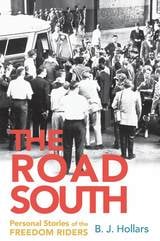
The Road South
Personal Stories of the Freedom RidersB. J. Hollars
University of Alabama Press, 2018
Revisits the inspiring and heroic stories of the Freedom Riders, through their own words.
In May 1961, despite multiple Supreme Court rulings, segregation remained alive and well within the system of interstate travel. All across the American South, interstate buses as well as their travel facilities were divided racially. This blatant disregard for law and morality spurred the Congress of Racial Equality to send thirteen individuals—seven black, six white—on a harrowing bus trip throughout the South as a sign of protest.
These original riders were met with disapproval, arrests and violence along the way, but that did not stop the movement. That summer, more than four hundred Freedom Riders continued their journey—many of them concluding their ride at Mississippi’s notorious Parchman Farm, where they endured further abuses and indignities. As a result of the riders sacrifice, by November of 1961, the Interstate Commerce Commission finally put an end to interstate commerce segregation, and in the process, elevated the riders to become a source of inspiration for other civil rights campaigns such as voter registration rights and school desegregation.
While much has been written on the Freedom Rides, far less has been published about the individual riders. Join award-winning author B. J. Hollars as he sets out on his own journey to meet them, retracing the historic route and learning the stories of as many surviving riders as he could. The Road South: Personal Stories of the Freedom Riders offers an intimate look into the lives and legacies of the riders. Throughout the book these civil rights veterans’ poignant, personal stories offer timely insights into America’s racial past and hopeful future.
Weaving the past with the present, Hollars aims to demystify the legendary journey, while also confronting more modern concerns related to race in America. The Road South is part memoir and part research-based journalism. It transcends the traditional textbook version of this historical journey to highlight the fascinating stories of the many riders—both black and white—who risked their lives to move the country forward.
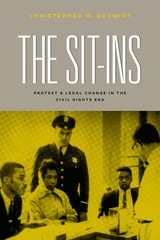
The Sit-Ins
Protest and Legal Change in the Civil Rights EraChristopher W. Schmidt
University of Chicago Press, 2018
The Sit-Ins tells the story of the student lunch counter protests and the national debate they sparked over the meaning of the constitutional right of all Americans to equal protection of the law. Christopher W. Schmidt describes how behind the now-iconic scenes of African American college students sitting in quiet defiance at “whites only” lunch counters lies a series of underappreciated legal dilemmas—about the meaning of the Constitution, the capacity of legal institutions to remedy different forms of injustice, and the relationship between legal reform and social change. The students’ actions initiated a national conversation over whether the Constitution’s equal protection clause extended to the activities of private businesses that served the general public. The courts, the traditional focal point for accounts of constitutional disputes, played an important but ultimately secondary role in this story. The great victory of the sit-in movement came not in the Supreme Court, but in Congress, with the passage of the Civil Rights Act of 1964, landmark legislation that recognized the right African American students had claimed for themselves four years earlier. The Sit-Ins invites a broader understanding of how Americans contest and construct the meaning of their Constitution.
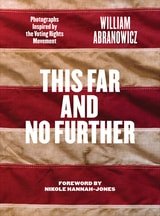
This Far and No Further
Photographs Inspired by the Voting Rights MovementBy William Abranowicz; foreword by Nikole Hannah-Jones
University of Texas Press, 2021
Standing on the Edmund Pettus Bridge in Selma, Alabama, in 2017, photographer William Abranowicz was struck by the weight of historical memory at this hallowed site of one of the civil rights movement's defining episodes: 1965's “Bloody Sunday,” when Alabama police officers attacked peaceful marchers. To Abranowicz’s eye, Selma seemed relatively unchanged from its apperance in the photographs Walker Evans made there in the 1930s. That, coupled with an awareness of renewed voter suppression efforts at state and federal levels, inspired Abranowicz to explore the living legacy of the civil and voting rights movement through photographing locations, landscapes, and individuals associated with the struggle, from Rosa Parks and Harry Belafonte to the barn where Emmett Till was murdered.
The result is This Far and No Further, a collection of photographs from Abranowicz's journey through the American South. Through symbolism, metaphor, and history, he unearths extraordinary stories of brutality, heroism, sacrifice, and redemption hidden within ordinary American landscapes, underscoring the crucial necessity of defending—and exercising—our right to vote at this tenuous moment for American democracy.