Results by title

5 books match the query 'Clark'

cover of How To Teach Your Children the Latin of the Church

How To Teach Your Children the Latin of the Church

Jack Clark

Catholic University of America Press, 2027
Mark Clark and Jack Clark wrote How To Teach Your Children the Latin of the Church based on their experience teaching and learning Latin. They wanted to teach and to learn Latin well enough to speak, read, and write it, and close friends of theirs, notably David Morgan and Jim Dobreff, helped them learn and learn how. The main principles are simple: learn by sounds whenever possible; and learn from things that are most familiar first. All humans speak mainly using figurative language by the time they're teenagers and even well before, but young children first learn primitive significations, the building blocks of all languages and language learning. The authors thought about how to do this in Latin for others without pointing out objects around the house and the yard and the town, and using the biblical text, and especially well-known narratives, occurred to both as the best and simplest way to create that situation. Anyone using this book will want to read and imitate everything aloud, from the biblical excerpts in the vocabulary lists to the exercises to the stories themselves. Most will know the stories in their native tongues, and once readers work the Latin in this book into their senses, from their ears to their mouths etc., making sure not to think in English, it won't be long until the brain does what it does best, which is to think in whatever language it's absorbing.
[more]
cover of In the Footsteps of Lewis and Clark: Early Commemorations and the Origins of the National Historic Trail

In the Footsteps of Lewis and Clark

Early Commemorations and the Origins of the National Historic Trail

Wallace G. Lewis

University Press of Colorado, 2024

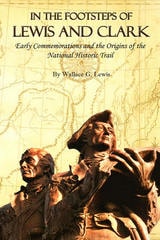
Although it was 1806 when Lewis and Clark returned to St. Louis after their journey across the country, it was not until 1905 that they were celebrated as national heroes. In the Footsteps of Lewis and Clark examines how public attitudes toward their explorations and the means of commemorating them have changed, from the production of the Lewis and Clark Exposition in 1905 to the establishment of the Lewis and Clark National Historic Trail in 1978 and the celebrations of the expedition's bicentennial from 2003 through 2007.

The first significant stirrings of national public interest in Lewis and Clark coincided with the beginning of a nationwide fascination with transcontinental automobile touring. Americans began to reconnect with the past and interact with the history of Western expansion by becoming a new breed of "frontier explorer" via their cars. As a result, early emphasis on local plaques and monuments yielded to pageants, reenactments, and, ultimately, attempts to retrace the route, promoting conservation and recreation along its length.

Wallace G. Lewis details the ingenuity that inspired the establishment of the Lewis and Clark National Historic Trail, opening a window to how America reimagines, recreates, and remembers its own past. In the Footsteps of Lewis and Clark will appeal to both scholarly and armchair historians interested in the Western frontier as experienced by both Lewis and Clark and those retracing their steps today.
[more]
cover of Interpreters with Lewis and Clark: The Story of Sacagawea and Toussaint Charbonneau

Interpreters with Lewis and Clark

The Story of Sacagawea and Toussaint Charbonneau

W. Dale Nelson

University of North Texas Press, 2003
[more]
cover of Lewis and Clark in Missouri

Lewis and Clark in Missouri

Ann Rogers

University of Missouri Press, 2002
In May 1804 Meriwether Lewis, William Clark, and the Corps of Discovery embarked on a seven-thousand-mile journey with instructions from President Thomas Jefferson to ascend the Missouri River to its source and continue on to the Pacific. They had spent five months in the St. Louis area preparing for the expedition that began with a six-hundred-mile, ten-week crossing of the future state of Missouri. Prior to this, the explorers had already seen about two hundred miles of Missouri landscape as they traveled up the Mississippi River to St. Louis in the autumn of 1803.
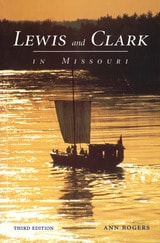
Lewis and Clark in Missouri focuses on the Missouri chapter of their epic journey, a portion of the story that has been slighted in other accounts. Ann Rogers uses the journals kept by members of the Corps along with many other primary source materials, providing a firsthand perspective on the people, plants, wildlife, rivers, and landscapes the explorers encountered. Beautiful color photographs and illustrations complement the text and support the passages Rogers quotes from the journals.
Brief biographies of Lewis, Clark, Sacagawea, John Colter, York, and other members of the expedition tell of their years in Missouri after the journey ended. Today’s followers of the Lewis and Clark Trail can find descriptions of sites to visit in Missouri, Kansas, and Illinois.
Carefully researched, yet highly readable, Lewis and Clark in Missouri will be of great interest not only to Missourians, but also to anyone wishing to learn more about the Corps of Discovery’s historic journey.
[more]
cover of The Natural World of Lewis and Clark

The Natural World of Lewis and Clark

David A. Dalton

University of Missouri Press, 2007

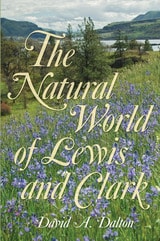
On their journey westward, Lewis and Clark demonstrated an amazing ability to identify the new plants and animals they encountered, and their observations enriched science’s understanding of the trans-Mississippi West. Others have written about their discoveries and have faithfully cataloged their findings; now a twenty-first-century biologist reexamines some of those discoveries in the light of modern science to show for the first time their lasting biological significance.

            The Natural World of Lewis and Clark interprets the expedition’s findings from a modern perspective to show how advances such as DNA research, modern understanding of proteins, and the latest laboratory methods shed new light on them. David Dalton recounts the expedition’s observations and, in clear, readily accessible terms, relates them to principles of ecology, genetics, physiology, and even animal behavior.

            Writing in informal language with a bit of wry humor, Dalton invites readers to imagine the West that Lewis and Clark found, revealing the dynamic features of nature and the dramatic changes that earlier peoples brought about. He explains surprising facts, ranging from why Indians used cottonwood bark as winter feed for horses to why the explorers experienced gastric distress with some foods, and even why the Expedition’s dog would have been well-advised to avoid a diet of salmon.

Dalton introduces the tools and techniques of today’s science in a way that won’t intimidate nonspecialist readers. Throughout the book he expertly balances botanical and zoological information, with coverage ranging from the extinction of large animals in North America a few thousand years ago to the expected effects of invasive species and climate change in the coming centuries.

            Enhanced with unusual and informative illustrations—not only nature photography but also historical images—this book will fascinate any reader with an interest in the natural history of the American West as well as broader issues in conservation and ecology. The Natural World of Lewis and Clark tells the story behind the story of this remarkable expedition and shows that its legacy extended not only across a continent but also into our own time.

[more]