Results by title
2 books match the query 'Clark, Mark'
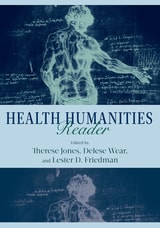
Health Humanities Reader
Jones, Therese
Rutgers University Press, 2014
Over the past forty years, the health humanities, previously called the medical humanities, has emerged as one of the most exciting fields for interdisciplinary scholarship, advancing humanistic inquiry into bioethics, human rights, health care, and the uses of technology. It has also helped inspire medical practitioners to engage in deeper reflection about the human elements of their practice.
In Health Humanities Reader, editors Therese Jones, Delese Wear, and Lester D. Friedman have assembled fifty-four leading scholars, educators, artists, and clinicians to survey the rich body of work that has already emerged from the field—and to imagine fresh approaches to the health humanities in these original essays. The collection’s contributors reflect the extraordinary diversity of the field, including scholars from the disciplines of disability studies, history, literature, nursing, religion, narrative medicine, philosophy, bioethics, medicine, and the social sciences.
With warmth and humor, critical acumen and ethical insight, Health Humanities Reader truly humanizes the field of medicine. Its accessible language and broad scope offers something for everyone from the experienced medical professional to a reader interested in health and illness.
[more]

Peter Lombard and the Biblical Gloss
Textual Fluidity in Mid-Twelfth-Century ParisMark Clark
Catholic University of America Press, 2026
This monograph presents altogether new and substantial evidence showing that the view of the development of Scholasticism and Scholastic thought going back three centuries at least is mistaken. Peter Lombard's Sentences and his career did not mark and mirror a transition from the traditional biblical theology to the newer systematic theology, as so long supposed. Rather, the traditional genres of medieval theology served as the indispensable foundation for the development of new forms for teaching Christian doctrine to clerics, forms organized systematically. The Bible was not displaced or abandoned in favor of various summas but was rather integrated into a medieval theology that looks surprisingly like the ideal of the Second Vatican Council. Dei Verbum, the dogmatic constitution that deals with the place of Sacred Scripture, doesn't mention the Schoolmen, because longstanding historiography on Scholastic thought in the High Middle Ages misled popes and prelates into supposing the medieval theology had abandoned the Bible in favor of cold, logical, systematic treatises. In fact, however, Peter Lombard, Bonaventure, Thomas Aquinas and many others could themselves have authored Dei Verbum, which reads like the prologues and primers that the masters teaching theology to clerics in the High Middle Ages wrote themselves.
[more]