Results by title
5 books match the query 'Clark, Peter'
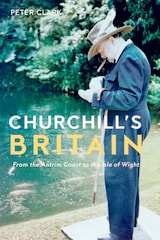
Churchill's Britain
From the Antrim Coast to the Isle of WightPeter Clark
Haus Publishing, 2023
Clark takes us on a geographical journey through Churchill's life, following his footsteps through Britain and Ireland.
More than half a century after his death, Winston Churchill, the most significant British statesman of the twentieth century, continues to intrigue us. Peter Clark’s book, however, is not merely another Churchill biography. Churchill’s Britain takes us on a geographical journey through Churchill’s life, leading us in Churchill’s footsteps through locations in Britain and Ireland that are tied to key aspects of his biography. Some are familiar–Blenheim Palace, where he was born; Chartwell, his beloved house in the country; and the Cabinet War Rooms, where he planned the campaigns of World War II. But we also are taken to his schools, his parliamentary constituencies, locations of famous speeches, the place where he started to paint, the tobacco shop where he bought his cigars, and the graves of his family and close friends.
Clark brings us close to the statesman Churchill by visiting sites that were important to the story of his long life, from the site where his father proposed to his American mother on the Isle of Wight to his grave in a country churchyard in Oxfordshire. Designed as a gazetteer with helpful regional maps, Churchill’s Britain can be dipped into, consulted by the traveler on a Churchill tour of Britain, or read straight through—and no matter how it’s read, it will deliver fresh insights into this extraordinary man.
[more]
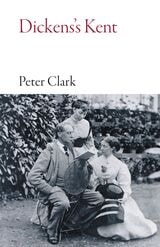
Dickens's Kent
Peter Clark
Haus Publishing, 2024
A geographical narrative of Charles Dickens’s life in Kent.
Few novelists have written so intimately about a city as Charles Dickens wrote about London, but he was intimately connected to Kent more than any other part of Britain. Perhaps Kent meant more to him than the capital. He had an idyllic childhood in Chatham and Kent features in his first works of fiction, Sketches by Boz and The Pickwick Papers, and in his favorite novel, David Copperfield. In his last ten years, he wrote two novels with strong Kentish themes, Great Expectations and The Mystery of Edwin Drood. He had his honeymoon outside Gravesend and often spent the summer months in Broadstairs. In 1856, he bought Gad’s Hill Place, near Rochester, and died there in 1870.
Dickens’s Kent begins with the description of a walk from London to Dickens's main residence, Gad’s Hill Place, before taking the reader to areas in Kent most closely associated with his life and work: the Medway Towns and their surroundings, Thanet and East Kent, and finally Staplehurst, the scene of the railway accident that nearly killed him.
[more]
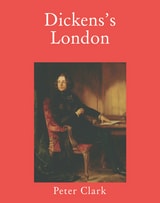
Dickens's London
Peter Clark
Haus Publishing, 2012
Marking the 150th anniversary of Charles Dickens’s death, Dickens’s London leads us in the footsteps of the author through this beloved city. Few novelists have written so intimately about a place as Dickens wrote about London, and, from a young age, his near-photographic memory rendered his experiences there both significant and in constant focus. Virginia Woolf maintained that “we remodel our psychological geography when we read Dickens,” as he produces “characters who exist not in detail, not accurately or exactly, but abundantly in a cluster of wild yet extraordinarily revealing remarks.” The most enduring “character” Dickens was drawn back to throughout his novels was London itself, in all its aspects, from the coaching inns of his early years to the taverns and watermen of the Thames. These were the constant cityscapes of his life and work.
In five walks through central London, Peter Clark explores “The First Suburbs”—Camden Town, Chelsea, Greenwich, Hampstead, Highgate and Limehouse—as they feature in Dickens’s writing and illuminates the settings of Dickens’s life and his greatest works of journalism and fiction. Describing these storied spaces of today’s central London in intimate detail, Clark invites us to experience the city as it was known to Dickens and his characters. These walks take us through the locations and buildings that he interacted with and wrote about, creating an imaginative reconstruction of the Dickensian world that has been lost to time.
In five walks through central London, Peter Clark explores “The First Suburbs”—Camden Town, Chelsea, Greenwich, Hampstead, Highgate and Limehouse—as they feature in Dickens’s writing and illuminates the settings of Dickens’s life and his greatest works of journalism and fiction. Describing these storied spaces of today’s central London in intimate detail, Clark invites us to experience the city as it was known to Dickens and his characters. These walks take us through the locations and buildings that he interacted with and wrote about, creating an imaginative reconstruction of the Dickensian world that has been lost to time.
[more]
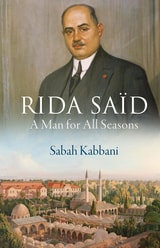
Rida Said
A Man for All SeasonsSabah Kabbani
Haus Publishing, 2018
Like many founding fathers, Rida Saïd (1876-1946) lived a cosmopolitan life before taking on his monumental contribution to building the modern nation of Syria. Born in Damascus in 1876, Said trained as a medical doctor in Istanbul and Paris. As a young man, he served as a field doctor with the Ottoman Empire’s army in the Balkan Wars, but he soon became disillusioned about his homeland’s foreign rulers. Like other Syrians, he was opposed to the aggressive Turkish nationalism that alienated Arabs and dreamed of a more inclusive system for his people. After his medical work in Damascus during World War I, and following the collapse of the Ottoman Empire, Said took on a critical role in establishing an independent Syria: he became a pioneering educator, advocating for the importance of providing institutions to educate the Arab people. He went on to become the first head of Damascus University, and then Minister of Education. He died in 1945, a few months before Syria finally achieved independence in 1946.
Now available for the first time in English, Rida Saïd: A Man for All Seasons tells the story of this remarkable life at the heart of a nation in deep conflict. Indeed, Saïd’s story resonates profoundly today as the Syrian people struggle for a future of opportunity and respect.
Now available for the first time in English, Rida Saïd: A Man for All Seasons tells the story of this remarkable life at the heart of a nation in deep conflict. Indeed, Saïd’s story resonates profoundly today as the Syrian people struggle for a future of opportunity and respect.
[more]
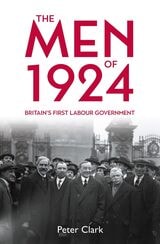
The Men of 1924
Britain’s First Labour GovernmentPeter Clark
Haus Publishing, 2023
An in-depth look at the diverse group of men who comprised Britain’s first Labour Party in 1924.
In January of 1924, the cabinet of the first Labour government consisted of twenty white, middle-aged men, as it had for generations. But the election also represented a radical departure from government by the ruling class. Most members of the administration had left school by the age of fifteen. Five of them had started work by the time they were twelve years old. Three were working down the mines before they entered their teens. Two were illegitimate, one was abandoned at birth, and three were of Irish immigrant descent. For the first time in Britain’s history, the cabinet could truly be said to represent all of Britain’s social classes. This unheralded revolution in representation is the subject of Peter Clark’s fascinating new book, The Men of 1924. Who were these men? Clark’s vivid portrayal is full of evocative portraits of a new breed of politician, the forerunners of all those who, later in the last century and this one, overcame a system from which they had been excluded for too long.
In January of 1924, the cabinet of the first Labour government consisted of twenty white, middle-aged men, as it had for generations. But the election also represented a radical departure from government by the ruling class. Most members of the administration had left school by the age of fifteen. Five of them had started work by the time they were twelve years old. Three were working down the mines before they entered their teens. Two were illegitimate, one was abandoned at birth, and three were of Irish immigrant descent. For the first time in Britain’s history, the cabinet could truly be said to represent all of Britain’s social classes. This unheralded revolution in representation is the subject of Peter Clark’s fascinating new book, The Men of 1924. Who were these men? Clark’s vivid portrayal is full of evocative portraits of a new breed of politician, the forerunners of all those who, later in the last century and this one, overcame a system from which they had been excluded for too long.
[more]