Results by title

3 books match the query 'Classical Antiquity'
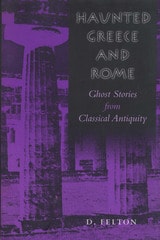
cover of Haunted Greece and Rome: Ghost Stories from Classical Antiquity

Haunted Greece and Rome

Ghost Stories from Classical Antiquity

By D. Felton

University of Texas Press, 1998

Stories of ghostly spirits who return to this world to warn of danger, to prophesy, to take revenge, to request proper burial, or to comfort the living fascinated people in ancient times just as they do today. In this innovative, interdisciplinary study, the author combines a modern folkloric perspective with literary analysis of ghost stories from classical antiquity to shed new light on the stories' folk roots.

The author begins by examining ancient Greek and Roman beliefs about death and the departed and the various kinds of ghost stories which arose from these beliefs. She then focuses on the longer stories of Plautus, Pliny, and Lucian, which concern haunted houses. Her analysis illuminates the oral and literary transmission and adaptation of folkloric motifs and the development of the ghost story as a literary form. In her concluding chapter, the author also traces the influence of ancient ghost stories on modern ghost story writers, a topic that will interest all readers and scholars of tales of hauntings.
[more]
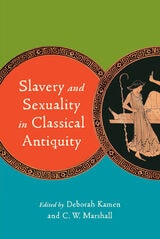
cover of Slavery and Sexuality in Classical Antiquity

Slavery and Sexuality in Classical Antiquity

Edited by Deborah Kamen and C. W. Marshall

University of Wisconsin Press, 2021

Slavery and sexuality in the ancient world are well researched on their own, yet rarely have they been examined together. This volume is the first to explore the range of roles that sex played in the lives of enslaved people in antiquity beyond prostitution, bringing together scholars of both Greece and Rome to consider important and complex issues. Chapters address a wealth of art, literature, and drama to analyze a wide range of issues, including gendered power dynamics, sexual violence in slave revolts, same-sex relations between free and enslaved people, and the agency of assault victims.
 
Slavery and Sexuality in Classical Antiquity reveals the often hidden and contradictory attitudes concerning the sexual identities and expression of enslaved people. These individuals were typically objectified by both social convention and legal description but were also recognized as human subjects, with subjectivity and sexual desires of their own. The contributors provoke valuable and fascinating questions that not only recognize the trauma and struggles of enslaved people but also point to the apparent inconsistencies in the mindsets of the enslavers. The resulting volume expands our understanding of both sexuality and slavery in ancient Greece and Rome, as separate subjects and as they impacted each other.

[more]
cover of The Ancient Art of Emulation: Studies in Artistic Originality and Tradition from the Present to Classical Antiquity

The Ancient Art of Emulation

Studies in Artistic Originality and Tradition from the Present to Classical Antiquity

Elaine K. Gazda, Editor

University of Michigan Press, 2002

This volume of essays examines the question of copying and other forms of artistic imitation and emulation in relation to Greek and Roman art, focusing particularly on sculpture and painting in the Roman period. It goes beyond recent studies of the subject in bringing to bear the views of early modern, modern, and contemporary artists on matters of copying and imitation as well as an exceptionally wide array of traditional and current critical perspectives--historiographic, literary, technical, stylistic, iconographic, and museological, among others.
Long regarded as copies of lost Greek masterpieces, a great many Roman works are now seen as neoclassical images worthy of analysis within their own Roman contexts. This book identifies and takes account of Roman criteria in rethinking the function and aesthetic appeal of these works in the eyes of their Roman owners and audiences. Collectively, the essays argue that many traditional assumptions about the status of works of classical art as originals or copies, and much of the evidence that has been used to sustain these assumptions, must be thoroughly rethought.
Among the authors are classical archaeologists, art historians (whose areas of expertise range from antiquity to the nineteenth century), and a contemporary artist and critic.
Elaine K. Gazda is Professor in the Department of the History of Art and the Interdepartmental Program in Classical Art and Archaeology, University of Michigan.
[more]