Results by title

2 books match the query 'Classical Hollywood Film'
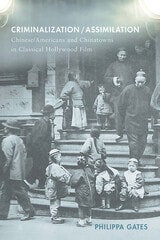
cover of Criminalization/Assimilation: Chinese/Americans and Chinatowns in Classical Hollywood Film

Criminalization/Assimilation

Chinese/Americans and Chinatowns in Classical Hollywood Film

Philippa Gates

Rutgers University Press, 2019
Criminalization/Assimilation traces how Classical Hollywood films constructed America’s image of Chinese Americans from their criminalization as unwanted immigrants to their eventual acceptance when assimilated citizens, exploiting both America’s yellow peril fears about Chinese immigration and its fascination with Chinatowns. Philippa Gates examines Hollywood’s responses to social issues in Chinatown communities, primarily immigration, racism, drug trafficking, and prostitution, as well as the impact of industry factors including the Production Code and star system on the treatment of those subjects. Looking at over 200 films, Gates reveals the variety of racial representations within American film in the first half of the twentieth century and brings to light not only lost and forgotten films but also the contributions of Asian American actors whose presence onscreen offered important alternatives to Hollywood’s yellowface fabrications of Chinese identity and a resistance to Hollywood’s Orientalist narratives.
[more]
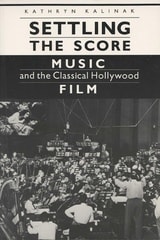
cover of Settling the Score: Music and the Classical Hollywood Film

Settling the Score

Music and the Classical Hollywood Film

Kathryn Kalinak

University of Wisconsin Press, 1992

Beginning with the earliest experiments in musical accompaniment carried out in the Edison Laboratories, Kathryn Kalinak uses archival material to outline the history of American music and film. Focusing on the scores of several key composers of the sound era, including Erich Wolfgang Korngold’s Captain Blood, Max Steiner’s The Informer, Bernard Herrmann’s The Magnificent Ambersons, and David Raksin’s Laura, Kalinak concludes that classical scoring conventions were designed to ensure the dominance of narrative exposition. Her analyses of contemporary work such as John Williams’ The Empire Strikes Back and Basil Poledouris’ RoboCop demonstrate how the traditions of the classical era continue to influence scoring practices today.

[more]