Results by title
3 books match the query 'Clean energy'

Clean Energy in South-East Asia
Ngo Dang Luu
The Institution of Engineering and Technology, 2025

Clean Energy
Past to futurePeter Tavner
The Institution of Engineering and Technology, 2024
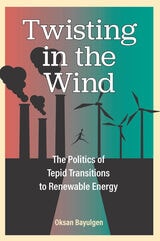
Twisting in the Wind
The Politics of Tepid Transitions to Renewable EnergyOksan Bayulgen
University of Michigan Press, 2022
Why do governments insist on fossil fuels? Why do renewables face uncertain and inconsistent legal and regulatory circumstances that slow their market-share growth against fossil fuels? Oksan Bayulgen studies the political determinants of partial energy reforms that result in tepid energy transitions and shifts the geographical focus from front-runner countries of energy innovation to developing countries, which have become the largest carbon emitters in the world. Her in-depth case study of energy policies in Turkey over the past two decades demonstrates that energy transitions are neither inevitable nor linear and that they are often initiated if and only when promoting renewables is in the interests of governing elites and stall when political dividends associated with energy rents change. This book contributes to the debates on the nature and pace of energy transitions by analyzing the power dynamics and political institutions under which energy reforms are initiated and implemented over time. This timely topic will be of interest to scholars, policymakers, energy investors, and anyone interested in environmental studies.