80 books match the query 'Clergy' and 8 start with a
cover of A Guide to Formation Advising for Seminarians

A Guide to Formation Advising for Seminarians

Edward J. McCormack

Catholic University of America Press, 2020
The future of the Church depends, in part, on forming future priests and ministers who are ready to accompany, lead, and love the People of God. Formation advising is one important part of that work. A Guide to Formation Advising for Seminarians/Seminary Faculty offers a practical guide to formation advising as a ministry of accompaniment, participation, and evaluation. Deacon Edward McCormack offers a comprehensive introduction to the ministry of formation advising for seminarians studying for priestly ministry. These volumes are for men and women who are new to the ministry of formation advising. The recent Vatican guidelines for seminary formation call for professional accompaniment of seminarians throughout their formation. This book explains in concrete detail how to do this through the entire formation process. Beginning with an overview of the formation process, A Guide to Formation Advising for Seminarians/Seminary Faculty explains the role of the formation advisor and the skills required for that ministry. It describes the various ways the formation advisor accompanies a person through the formation process. McCormack also provides concrete suggestions for how to promote in seminarians’ active participation in the process. Formators will also find explanation of the evaluation process with a style sheet and examples of written evaluations. The handbook contains an annotated bibliography on all the major topics a formation advisor comes across.
[more]
cover of A Guide to Formation Advising for Seminary Faculty: Accompaniment, Participation, and Evaluation

A Guide to Formation Advising for Seminary Faculty

Accompaniment, Participation, and Evaluation

Edward J. McCormack

Catholic University of America Press, 2020

The future of the Church depends, in part, on forming future priests and ministers who are ready to accompany, lead, and love the People of God. Formation advising is one important part of that work. A Guide to Formation Advising for Seminarians/Seminary Faculty offers a practical guide to formation advising as a ministry of accompaniment, participation, and evaluation. Deacon Edward McCormack offers a comprehensive introduction to the ministry of formation advising for seminarians studying for priestly ministry. These volumes are for men and women who are new to the ministry of formation advising. The recent Vatican guidelines for seminary formation call for professional accompaniment of seminarians throughout their formation. This book explains in concrete detail how to do this through the entire formation process.

Beginning with an overview of the formation process, A Guide to Formation Advising for Seminarians/Seminary Faculty explains the role of the formation advisor and the skills required for that ministry. It describes the various ways the formation advisor accompanies a person through the formation process. McCormack also provides concrete suggestions for how to promote in seminarians’ active participation in the process. Formators will also find explanation of the evaluation process with a style sheet and examples of written evaluations. The handbook contains an annotated bibliography on all the major topics a formation advisor comes across.
[more]
cover of A Man in the Wheatfield

A Man in the Wheatfield

Robert Laxalt

University of Nevada Press, 2002
Set in a small Nevada town of Italian immigrants, this allegorical tale illustrates the human traits of evil and fear. Laxalt relays his shocking story simply and concisely. Father Savio Lazzaroni is obsessed with a vision of evil. Mayor Manuel Cafferata is only concerned with his own standing in a tiny village peopled with Italian immigrants. Into their isolated town comes Smale Calder, the first outsider to set up business in the tightly knit society. The events that befall these three men and the villagers reveal the chilling ways in which people deal with fear and prejudice. When Calder’s secret passion for rattlesnakes is discovered, the lives of all involved are changed in a dramatic sequence of emotions and events. Laxalt’s quiet buildup of suspense and violence will sneak up on readers and leave them questioning the meaning of good and innocence. One of the best works written in the West, this novella was honored alongside Hemingway and Bellow upon its first release in 1964.
[more]
cover of A Ministry of Presence: Chaplaincy, Spiritual Care, and the Law

A Ministry of Presence

Chaplaincy, Spiritual Care, and the Law

Winnifred Fallers Sullivan

University of Chicago Press, 2014

Most people in the United States today no longer live their lives under the guidance of local institutionalized religious leadership, such as rabbis, ministers, and priests; rather, liberals and conservatives alike have taken charge of their own religious or spiritual practices. This shift, along with other social and cultural changes, has opened up a perhaps surprising space for chaplains—spiritual professionals who usually work with the endorsement of a religious community but do that work away from its immediate hierarchy, ministering in a secular institution, such as a prison, the military, or an airport, to an ever-changing group of clients of widely varying faiths and beliefs.

In A Ministry of Presence, Winnifred Fallers Sullivan explores how chaplaincy works in the United States—and in particular how it sits uneasily at the intersection of law and religion, spiritual care, and government regulation. Responsible for ministering to the wandering souls of the globalized economy, the chaplain works with a clientele often unmarked by a specific religious identity, and does so on behalf of a secular institution, like a hospital. Sullivan's examination of the sometimes heroic but often deeply ambiguous work yields fascinating insights into contemporary spiritual life, the politics of religious freedom, and the never-ending negotiation of religion's place in American institutional life.
[more]
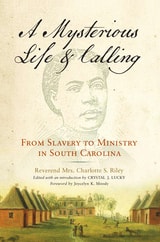
cover of A Mysterious Life and Calling: From Slavery to Ministry in South Carolina

A Mysterious Life and Calling

From Slavery to Ministry in South Carolina

Reverend Mrs. Charlotte S. Riley, Edited with an introduction by Crystal J. Lucky, Foreword by Joycelyn K. Moody

University of Wisconsin Press, 2016

Preacher, teacher, and postmistress, Charlotte Levy Riley was born into slavery but became a popular evangelist after emancipation. Although several nineteenth-century accounts by black preaching women in the northern states are known, this is the first discovery of such a memoir in the South.
            Born in 1839 in Charleston, South Carolina, Riley was taught to read, write, and sew despite laws forbidding black literacy. Raised a Presbyterian, she writes of her conversion at age fourteen to the African Methodist Episcopal (AME) church, embracing its ecstatic worship and led by her own spiritual visions. Her memoir is revelatory on many counts, including life in urban Charleston before and after emancipation, her work as a preacher at multiracial revivals, the rise of African American civil servants in the Reconstruction era, and her education and development as a licensed female minister in a patriarchal church.
            Crystal J. Lucky, who discovered Riley’s forgotten book in the library archives at Wilberforce University in Ohio, provides an introduction and notes on events, society, and religious practice in the antebellum era and during the Civil War and Reconstruction, and places A Mysterious Life and Calling in the context of other spiritual autobiographies and slave narratives.
[more]
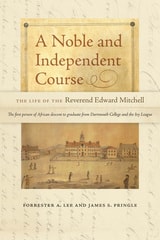
cover of A Noble and Independent Course: The Life of the Reverend Edward Mitchell

A Noble and Independent Course

The Life of the Reverend Edward Mitchell

Forrester A. Lee and James S. Pringle

Dartmouth College Press, 2018
In 1828 Edward Mitchell was the first student of African descent to graduate from Dartmouth College, more than thirty-five years before any other Ivy League school admitted a black student. This book tells Mitchell’s life story with the help of a recently rediscovered trove of his college essays, notes on his religious conversion, and hand-copied versions of his sermons. Born and raised in the French slave colony of Martinique, Mitchell immigrated to the United States and came of age in Philadelphia, where he broke bread with the city’s African American clerics and civic leaders. The Dartmouth trustees initially denied Mitchell admission but yielded to unified student protest. After his graduation, Mitchell continued his northward journey to serve as a Baptist preacher and evangelist in the pulpits of northern New England. His religious odyssey concluded in Lower Canada, where he was remembered as “the most profound theologian ever settled.” During his travels throughout the Atlantic world in an age of revolution and religious revival, Mitchell encountered the dominant social, economic, and political realities of his time. Although long celebrated as the inspiration for Dartmouth’s legacy of educating men and women of African ancestry, Mitchell’s life story remained unknown for almost two centuries. This book, which embodies history as recovery, is a testament to the authors’ desire to know the man behind the story.
[more]
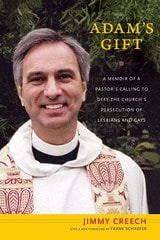
cover of Adam's Gift: A Memoir of a Pastor's Calling to Defy the Church's Persecution of Lesbians and Gays

Adam's Gift

A Memoir of a Pastor's Calling to Defy the Church's Persecution of Lesbians and Gays

Jimmy Creech

Duke University Press, 2011

Jimmy Creech, a United Methodist pastor in North Carolina, was visited one morning in 1984 by Adam, a longtime parishioner whom he liked and respected. Adam said that he was gay, and that he was leaving The United Methodist Church, which had just pronounced that “self-avowed practicing homosexuals” could not be ordained. He would not be part of a community that excluded him. Creech found himself instinctively supporting Adam, telling him that he was sure that God loved and accepted him as he was. Adam’s Gift is Creech’s inspiring first-person account of how that conversation transformed his life and ministry.

Adam’s visit prompted Creech to re-evaluate his belief that homosexuality was a sin, and to research the scriptural basis for the church’s position. He determined that the church was mistaken, that scriptural translations and interpretations had been botched and dangerously distorted. As a Christian, Creech came to believe that discriminating against lesbian, gay, bisexual, and transgender people was morally wrong. This understanding compelled him to perform same-gender commitment ceremonies, which conflicted with church directives. Creech was tried twice by The United Methodist Church, and, after the second trial, his ordination credentials were revoked. Adam’s Gift is a moving story and an important chapter in the unfinished struggle for lesbian, gay, bisexual, and transgender civil and human rights.
[more]
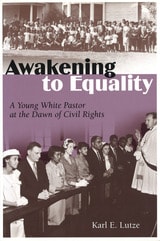
cover of Awakening to Equality: A Young White Pastor at the Dawn of Civil Rights

Awakening to Equality

A Young White Pastor at the Dawn of Civil Rights

Karl E. Lutze

University of Missouri Press, 2006

When Karl Lutze arrived in Oklahoma in 1945, he stepped into another world. A newly ordained clergyman born in Wisconsin, he was a young white man assigned to minister among Muskogee’s African American community. He soon found that in the South, crosses were as likely to be burned as revered. His recollections of postwar Oklahoma provide a compelling testament to the era’s racial conflict and some steps taken toward its resolution.
Awakening to Equality offers a unique perspective on an often-violent era that witnessed the gradual dismantling of segregation. Serving congregations in Muskogee and Tulsa, Lutze encountered a cross section of both communities—from the white and black power brokers to the most disempowered black and biracial families—and a stratified society buttressed by intimidation, cross burnings, and bombs. His activism in the Urban League and other local civil rights organizations gave him firsthand experience with forces moving toward change, as well as with the more entrenched forces resisting it.
Blending personal anecdotes and recollections of key players in this unfolding drama, Lutze puts a human face on historical and journalistic accounts of social change during the crucial early years of the civil rights movement. He takes readers back to small-town and urban Oklahoma in a time when African Americans were beginning to challenge segregation in Muskogee’s public transportation and a handful of liberal whites were trying to move their communities toward desegregation. Throughout this rich memoir, we meet actual people creating a future—one that involved the very redefinition of America.
More than a view of an earnest young clergyman trying to grow beyond the racial and social limitations of the church of his day, Awakening to Equality also depicts the struggles of Lutze’s own denomination to overcome its earlier accommodation of racism. Lutze’s success in his ministries made his achievements a model for mission work among African Americans and led to his appointment in 1959 first as field secretary and then shortly thereafter as executive director of the Lutheran Human Relations Association, a pioneering civil rights organization. Simultaneously, he taught classes as Associate Professor of Theology at Valparaiso University.
Lutze not only witnessed important events but also participated in them and found that his entire career was shaped by the experience. Awakening to Equality is a moving story that captures the real-life education of a prominent clergyman during a critical period in American life.
[more]