Results by title
4 books match the query 'Climate Crisis'
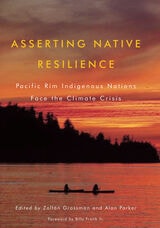
Asserting Native Resilience
Pacific Rim Indigenous Nations Face the Climate CrisisEdited by Zoltán Grossman and Alan Parker
Oregon State University Press, 2012
Native American tribes in the Pacific Northwest and Indigenous peoples around the Pacific Rim have already been deeply affected by droughts, flooding, reduced glaciers and snowmelts, seasonal shifts in winds and storms, and the northward movement of species on the land and in the ocean. Using tools of resilience, Native peoples are creating defenses to strengthen their communities, mitigate losses, and adapt where possible.
Asserting Native Resilience presents a rich variety of perspectives on Indigenous responses to the climate crisis, reflecting the voices of more than twenty contributors, including tribal leaders, scientists, scholars, and activists from the Pacific Northwest, British Columbia, Alaska, and Aotearoa / New Zealand, and beyond. Also included is a resource directory of Indigenous governments, NGOs, and communities and a community organizing booklet for use by Northwest tribes.
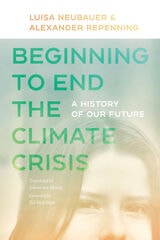
Beginning to End the Climate Crisis
A History of Our FutureLuisa Neubauer and Alexander Repenning
Brandeis University Press, 2023
“Act as though your house is on fire. Because it is.” Following Greta Thunberg, millions of young climate activists have been taking to the streets around the globe as part of the Fridays For Future movement. They demand that we “unite behind the science,” as, for too long, climate scientists have been ringing the alarm bells about rising temperatures, tipping points, and the devastating consequences of extreme weather—but politicians do nothing.
So how do you begin to end the climate crisis? Luisa Neubauer and Alexander Repenning begin by telling stories. Neubauer cofounded the youth climate activist group in Germany and has become its most prominent voice. In this book she and Repenning weave in personal accounts of their evolution as climate activists with a thorough analysis of how climate change impacts their generation, and what every one of us can and must do about it. The young and old in the United States and around the world can learn valuable lessons from their European counterparts.
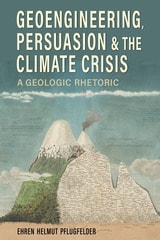
Geoengineering, Persuasion, and the Climate Crisis
A Geologic RhetoricEhren Helmut Pflugfelder
University of Alabama Press, 2023
A rhetorical exploration of an underexamined side of climate change—the ongoing research into and development of geoengineering strategies
Geoengineering, Persuasion, and the Climate Crisis: A Geologic Rhetoric exposes the deeply worrying state of discourse over geoengineering—the intentional manipulation of the earth’s climate as means to halt or reverse global warming. These climate-altering projects, which range from cloud-whitening to carbon dioxide removal and from stratospheric aerosol injection to enhanced weathering, are all technological solutions to more complex geosocial problems.
Geoengineering represents one of the most alarming forms of deliberative discourse in the twenty-first century. Yet geoengineering could easily generate as much harm as the environmental traumas it seeks to cure. Complicating these deliberations is the scarcity of public discussion. Most deliberations transpire within policy groups, behind the closed doors of climate-oriented startups, between subject-matter experts at scientific conferences, or in the disciplinary jargon of research journals. Further, much of this conversation occurs primarily in the West.
Ehren Helmut Pflugfelder makes clear how the deliberative rhetorical strategies coming from geoengineering advocates have been largely deceptive, hegemonic, deterministic, and exploitative. In this volume, he investigates how geoengineering proponents marshal geologic actors into their arguments—and how current discourse could lead to a greater exploitation of the earth in the future.
Pflugfelder’s goal is to understand the structure, content, purpose, and effect of these discourses, raise the alarm about their deliberative directions, and help us rethink our approach to the climate. In highlighting both the inherent problems of the discourses and the ways geologic rhetoric can be made productive, he attempts to give “the geologic” a place at the table to better understand the roles that all earth systems continue to play in our lives, now and for years to come.

History and the Climate Crisis
Environmental History in the ClassroomKate Hawkey
University College London, 2023
History education has a key contribution to make in developing a deeper understanding of the current environmental crisis, but its role is too often overlooked. When embedded in the school curriculum, environmental history adds crucial layers of knowledge to the learning from other subjects and can enable students to make their own informed contributions to one of the most pressing concerns of the twenty-first century.
History and the Climate Crisis provides much-needed environmental knowledge, an area that is new for most history teachers. The author considers the disciplinary and pedagogical challenges and demonstrates how including an environmental focus can strengthen students’ disciplinary knowledge. She also builds her argument through many examples and offers practical strategies for use in classrooms, including developed inquiries suitable for the secondary history curriculum. The book focuses on environmental history within a strong subject-bound curriculum and will be relevant to teachers, academics, and policymakers in the United Kingdom and internationally.