Results by title

15 books match the query 'Climate change mitigation'
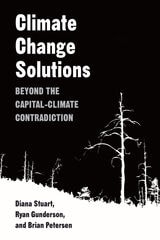
cover of Climate Change Solutions: Beyond the Capital-Climate Contradiction

Climate Change Solutions

Beyond the Capital-Climate Contradiction

Diana Stuart, Ryan Gunderson, and Brian Petersen

University of Michigan Press, 2020
Climate Change Solutions represents an application of critical theory to examine proposed solutions to climate change. Drawing from Marx’s negative conception of ideology, the authors illustrate how ideology continues to conceal the capital-climate contradiction or the fundamental incompatibility between growth-dependent capitalism and effectively and justly mitigating climate change. Dominant solutions to climate change that offer minor changes to the current system fail to address this contradiction. However, alternatives like degrowth involve a shift in priorities and power relations and can offer new systemic arrangements that confront and move beyond the capital-climate contradiction. While there are clear barriers to a systemic transition that prioritizes social and ecological well-being, such a transition is possible and desirable.
[more]
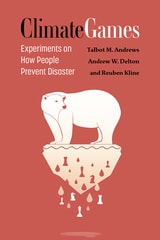
cover of Climate Games: Experiments on How People Prevent Disaster

Climate Games

Experiments on How People Prevent Disaster

Talbot M. Andrews, Andrew W. Delton, and Reuben Kline

University of Michigan Press, 2024

Can humanity work together to mitigate the effects of climate change? Climate Games argues we can. This book brings together a decade and a half of experimentation, conducted by researchers around the world, which shows that people can and will work together to prevent disasters like climate change. These experiments, called economic games, put money on the line to create laboratory disasters. Participants must work together by spending a bit of money now to prevent themselves from losing even more money in the future. Will people sacrifice their own money to prevent disaster? Can people make wise decisions? And can people decide wisely on behalf of others? The answer is a resounding yes. 

Yet real climate change is a complex social dilemma involving the world’s nearly eight billion inhabitants. In the real world, the worst effects of climate change are likely to be felt by developing countries, while most of the decisions will be made by rich, industrialized countries. And while the world as a whole would be better off if all nations reduced their greenhouse gas emissions, any given nation could decide it would be even better off if it continued emitting and let other nations take care of the problem. These disaster experiments test how real people respond to climate change’s unique constellation of challenges and deliver a positive message: People will prevent disaster.
[more]
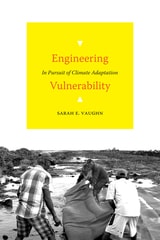
cover of Engineering Vulnerability: In Pursuit of Climate Adaptation

Engineering Vulnerability

In Pursuit of Climate Adaptation

Sarah E. Vaughn

Duke University Press, 2022

In Engineering Vulnerability Sarah E. Vaughn examines climate adaptation against the backdrop of ongoing processes of settler colonialism and the global climate change initiatives that seek to intervene in the lives of the world’s most vulnerable. Her case study is Guyana in the aftermath of the 2005 catastrophic flooding that ravaged the country’s Atlantic coastal plain. The country’s ensuing engineering projects reveal the contingencies of climate adaptation and the capacity of flooding to shape Guyanese expectations about racial (in)equality. Analyzing the coproduction of race and vulnerability, Vaughn details why climate adaptation has implications for how we understand the past and the continued human settlement of a place. Such understandings become particularly apparent not only through experts’ and ordinary citizens’ disputes over resources but in their attention to the ethical practice of technoscience over time. Approaching climate adaptation this way, Vaughn exposes the generative openings as well as gaps in racial thinking for theorizing climate action, environmental justice, and, more broadly, future life on a warming planet.

Duke University Press Scholars of Color First Book Award recipient
[more]
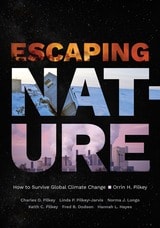
cover of Escaping Nature: How to Survive Global Climate Change

Escaping Nature

How to Survive Global Climate Change

Orrin H. Pilkey, Charles O. Pilkey, Linda P. Pilkey-Jarvis, Norma J. Longo, Keith C. Pilkey, Fred B. Dodson, and Hannah L. Hayes

Duke University Press, 2024

Industrial and agricultural greenhouse gas emissions are rapidly warming Earth’s climate, unleashing rising seas, ocean acidification, melting permafrost, powerful storms, wildfires, floods, deadly heat waves, droughts, tsunamis, food shortages, and armed conflict over shrinking water supplies while reducing nutritional levels in crops. Billions of people will become climate refugees. Hotter temperatures will allow tropical diseases to spread into temperate regions. Higher levels of CO2, allergens, dust, and other particulate matter will impair our physical and mental health and even reduce our cognitive abilities. Climate change disproportionately affects the world’s poor. It also harms Nature, and could ultimately trigger a sixth mass extinction. In Escaping Nature, Orrin H. Pilkey and his coauthors offer concrete suggestions for how to respond to the threats posed by global climate change. They argue that while we wait for the world’s governments to get serious about mitigating climate change we can adapt to a hotter world through technological innovations, behavioral changes, nature-based solutions, political changes, and education.
[more]
cover of Exploring Degrowth: A Critical Guide

Exploring Degrowth

A Critical Guide

Vincent Liegey

Pluto Press, 2020

A sense of urgency pervades global environmentalism, and the degrowth movement is bursting into the mainstream. As climate catastrophe looms closer, people are eager to learn what degrowth is about, and whether we can save the planet by changing how we live. This book is an introduction to the movement.

As politicians and corporations obsess over growth objectives, the degrowth movement demands that we must slow down the economy by transforming our economies, our politics and our cultures to live within the Earth's limits.

This book navigates the practice and strategies of the movement, looking at its strengths and weaknesses. Covering horizontal democracy, local economies and the reduction of work, it shows us why degrowth is a compelling and realistic project.
[more]
cover of Facing the Planetary: Entangled Humanism and the Politics of Swarming

Facing the Planetary

Entangled Humanism and the Politics of Swarming

William E. Connolly

Duke University Press, 2017
In Facing the Planetary William E. Connolly expands his influential work on the politics of pluralization, capitalism, fragility, and secularism to address the complexities of climate change and to complicate notions of the Anthropocene. Focusing on planetary processes—including the ocean conveyor, glacier flows, tectonic plates, and species evolution—he combines a critical understanding of capitalism with an appreciation of how such nonhuman systems periodically change on their own. Drawing upon scientists and intellectuals such as Lynn Margulis, Michael Benton, Alfred North Whitehead, Anna Tsing, Mahatma Gandhi, Wangari Maathai, Pope Francis, Bruno Latour, and Naomi Klein, Connolly focuses on the gap between those regions creating the most climate change and those suffering most from it. He addresses the creative potential of a "politics of swarming" by which people in different regions and social positions coalesce to reshape dominant priorities. He also explores how those displaying spiritual affinities across differences in creed can energize a militant assemblage that is already underway.
[more]
cover of Global Warming and Political Intimidation: How Politicians Cracked Down on Scientists as the Earth Heated Up

Global Warming and Political Intimidation

How Politicians Cracked Down on Scientists as the Earth Heated Up

Raymond S. Bradley

University of Massachusetts Press, 2011

Global warming is the number one environmental issue of our time, yet some prominent politicians have refused to accept scientific evidence of human responsibility and have opposed any legislation or international agreement that would limit greenhouse gas emissions. A few have gone even further and have tried to destroy the reputations of scientists researching climate change by deliberately undermining the credibility of their research. These politicians have sought to sow seeds of doubt in the minds of the public and to weaken public and political support for the control of fossil fuel use.

In this powerful book, highly respected climate scientist Raymond Bradley provides the inside story from the front lines of the debate. In clear and direct language, he describes the tactics those in power have used to intimidate him and his colleagues part of a larger pattern of governmental suppression of scientific information, politics at the expense of empirically based discourse.

Speaking from his experience, Bradley exposes the fault lines in the global warming debate, while providing a concise primer on climate change. The result is a cautionary tale of how politics and science can become fatally intertwined.
[more]
cover of Has It Come to This?: The Promises and Perils of Geoengineering on the Brink

Has It Come to This?

The Promises and Perils of Geoengineering on the Brink

J.P. Sapinski

Rutgers University Press, 2021
Geoengineering is the deliberate and large-scale intervention in the Earth's climate system in an attempt to mitigate the adverse effects of global warming. Now that climate emergency is upon us, claims that geoengineering is inevitable are rapidly proliferating. How did we get into this situation where the most extreme path now seems a plausible development? Is it an accurate representation of where we are at? Who is this “we” who is talking? What options make it onto the table? Which are left out? Whom does geoengineering serve? Why is the ensemble of projects that goes by that name so salient, even though the community of researchers and advocates is remarkably small? These are some of the questions that the thinkers contributing to this volume are exploring from perspectives ranging from sociology and geography to ethics and Indigenous studies. The editors set out this diverse collection of voices not as a monolithic, unified take on geoengineering, but as a place where creative thinkers, students, and interested environmental and social justice advocates can explore nuanced ideas in more than 240 characters. 
[more]
cover of Media Reform and the Climate Emergency: Rethinking Communication in the Struggle for a Sustainable Future

Media Reform and the Climate Emergency

Rethinking Communication in the Struggle for a Sustainable Future

David J. Park

University of Michigan Press, 2021

Award-winning author David J. Park argues that the battle against global warming is also a fight for media reform. With his new book Media Reform and the Climate Emergency: Rethinking Communication in the Struggle for a Sustainable Future, he critically examines how advertising, the digital infrastructure, and journalism advance the climate emergency and lays out a path of reform to help create a more sustainable world. The production and consumption of goods and services within consumer societies lead to unsustainable greenhouse gas emissions, and Park finds that much of mass communication is either dependent upon or closely tied to the success of this social organization. As a result, he suggests successful environmental movements creatively dismantle or reform institutional infrastructures that extend the planetary global warming crisis and the unsustainable consumption of nature.

Communication policies and industries are part of these infrastructures. Advertising evolved to propel a new consumer society that would encourage the over-consumption of goods and services with harmful and unsustainable production processes. Our digital infrastructure is largely premised upon the surveillance of online consumer habits and preferences, with the goal to create individualized messages to more effectively persuade people to increase their consumption habits. Much of commercial journalism resists the drastic and immediate regulatory changes necessary to address the worst aspects of this crisis. This is because so many of the needed changes challenge the media’s source of income, their libertarian philosophy, and the general status quo, which is preferred by elites. Bound to foster conversations among scholars, activists, politicians, and those who work in the communication industries, this book rethinks mass communication and highlights how immediate reform is needed in the struggle for a sustainable planet.
[more]
cover of Power Shift: Keywords for a New Politics of Energy

Power Shift

Keywords for a New Politics of Energy

Imre Szeman

West Virginia University Press, 2025

Power Shift traces recent social and cultural shifts in how we understand and imagine energy, the environment, and the challenges of global warming. Across the globe, the need to transition to renewables has become the guiding reality of our energy present and future, despite continuing resistance to change. But what does this moment of energy transition look like for those struggling to make it happen in a way that benefits every individual and all communities?

Featuring brief essays on 101 key terms by scholars, artists, and activists from around the world and across disciplines, Power Shift offers an expansive, kaleidoscopic guide to the history of petromodernity, recent technological and social developments, and pathways to new energy futures. The book offers new insights into the emergent politics of energy, contrasting today’s environmental and climate movements with the geopolitical contests of the Cold War era. It explores the still unfolding story of energy transition by focusing on the ongoing struggles of communities and individuals against decisions made by corporations, governments, and international organizations.
 
[more]
cover of Rejecting Climate Doomism

Rejecting Climate Doomism

Diana Stuart

University of Michigan Press, 2026

As scientists call for widespread climate action, there has been an alarming rise in climate doomism, the belief that it is too late to do anything about climate change. Many people who struggle to imagine the solutions and social order that would be needed to support more sustainable outcomes instead look away and do nothing, immobilized by defeatist thinking. Yet every fraction of a degree of warming avoided means saving lives and livelihoods in the future.

Drawing from climate science, sociology, psychology, and philosophy, Rejecting Climate Doomism outlines the reasons to instead choose action grounded in active hope. It examines how global warming could be effectively limited through specific policy proposals. Despite the many obstacles to achieving some of the policies discussed in this book, they are still possible and worth pursuing. By outlining a positive vision of the far-reaching changes that can be used to minimize warming, the book encourages readers to advocate for the social and economic changes necessary to forge the best path for people and the planet.
[more]
cover of Sustainability and Water Management in the Maya World and Beyond

Sustainability and Water Management in the Maya World and Beyond

Jean T. Larmon

University Press of Colorado, 2021

Sustainability and Water Management in the Maya World and Beyond investigates climate change and sustainability through time, exploring how political control of water sources, maintenance of sustainable systems, ideological relationships with water, and fluctuations in water availability have affected and been affected by social change. Contributors focus on and build upon earlier investigations of the global diversity of water management systems and the successes and failures of their employment, while applying a multitude of perspectives on sustainability.
 
The volume focuses primarily on the Precolumbian Maya but offers several analogous case studies outside the ancient Maya world that illustrate the pervasiveness of water’s role in sustainability, including an ethnographic study of the sustainability of small-scale, farmer-managed irrigation systems in contemporary New Mexico and the environmental consequences of Angkor’s growth into the world’s most extensive preindustrial settlement. The archaeological record offers rich data on past politics of climate change, while epigraphic and ethnographic data show how integrated the ideological, political, and environmental worlds of the Maya were.
 
While Sustainability and Water Management in the Maya World and Beyond stresses how lessons from the past offer invaluable insight into current approaches of adaptation, it also advances our understanding of those adaptations by making the inevitable discrepancies between past and present climate change less daunting and emphasizing the sustainable negotiations between humans and their surroundings that have been mediated by the changing climate for millennia. It will appeal to students and scholars interested in climate change, sustainability, and water management in the archaeological record.
 
Contributors: Mary Jane Acuña, Wendy Ashmore, Timothy Beach, Jeffrey Brewer, Christopher Carr, Adrian S. Z. Chase, Arlen F. Chase, Diane Z. Chase, Carlos R. Chiriboga, Jennifer Chmilar, Nicholas Dunning, Maurits W. Ertsen, Roland Fletcher, David Friedel, Robert Griffin, Joel D. Gunn, Armando Anaya Hernández, Christian Isendahl, David Lentz, Sheryl Luzzadder-Beach, Dan Penny, Kathryn Reese-Taylor, Michelle Rich, Cynthia Robin, Sylvia Rodríguez, William Saturno, Vernon Scarborough, Payson Sheets, Liwy Grazioso Sierra, Michael Smyth, Sander van der Leeuw, Andrew Wyatt
 
[more]
cover of Tales from an Uncertain World: What Other Assorted Disasters Can Teach Us About Climate Change

Tales from an Uncertain World

What Other Assorted Disasters Can Teach Us About Climate Change

L. S. Gardiner

University of Iowa Press, 2018

So far, humanity hasn’t done very well in addressing the ongoing climate catastrophe. Veteran science educator L. S. Gardiner believes we can learn to do better by understanding how we’ve dealt with other types of environmental risks in the past and why we are dragging our feet in addressing this most urgent emergency. Weaving scientific facts and research together with humor and emotion, Gardiner explores human responses to erosion, earthquakes, fires, invasive species, marine degradation, volcanic eruptions, and floods in order to illuminate why we find it so challenging to deal with climate change. Insight emerges from unexpected places—a mermaid exhibit, a Magic 8 Ball, and midcentury cartoons about a future that never came to be. 

Instead of focusing on the economics and geopolitics of the debate over climate change, this book brings large-scale disaster to a human scale, emphasizing the role of the individual. We humans do have the capacity to deal with disasters. When we face threatening changes, we don’t just stand there pretending it isn’t so, we do something. But because we’re human, our responses aren’t always the right ones the first time—yet we can learn to do better. This book is essential reading for all who want to know how we can draw on our strengths to survive the climate catastrophe and forge a new relationship with nature. 
[more]
cover of The Climate Trial: Law and Justice on a Melting Planet

The Climate Trial

Law and Justice on a Melting Planet

Noah Walker-Crawford

Duke University Press, 2026
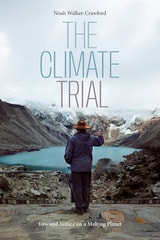
Saúl Luciano Lliuya guides tours in the mountains and his family grow corn, wheat, barley, and potatoes on their farm in Huaraz, Peru, a community of more than 100,000 people in the Andes near Palcacocha, a glacial lake. Palcacocha, however, is growing, as is the major flood risk to Huaraz. Climate change through the emission of greenhouse gases continues to melt the Peruvian glaciers—greenhouse gases that come from corporate polluters not just in Peru, but across the industrialized world. So, Luciano Lliuya decided to sue. Although the German energy company RWE has never operated in Peru, Luciano Lliuya sought to hold the company, which uses coal power generation, liable for damages in a groundbreaking case that, despite being dismissed, established that major emitters can be held liable for climate harms. In The Climate Trial, anthropologist Noah Walker-Crawford draws on years of personal involvement with the lawsuit and extensive fieldwork in Peru and Germany to follow the people, legal strategies, scientific arguments, and political tensions that have shaped the trial. More than a courtroom drama, The Climate Trial is a deeply human story about moral responsibility in a changing world and what it means to be a “good neighbor” while living thousands of miles away.
[more]
cover of The Secure and the Dispossessed: How the Military and Corporations Are Shaping a Climate-Changed World

The Secure and the Dispossessed

How the Military and Corporations Are Shaping a Climate-Changed World

Edited by Nick Buxton and Ben Hayes

Pluto Press, 2015

While ecologists and environmentalists view the melting of the polar ice caps as a dire and threatening effect of climate change, many business and political leaders see emerging opportunity, as a result of newly accessible oil and gas fields. As the contributors to The Secure and the Dispossessed reveal, the ongoing environmental transitions raise a host of complicated questions about global assets and resources as well as dangerous opportunism.
 
The Secure and the Dispossessed gathers together essays by high-profile journalists, academics, and activists, including Christian Parenti, Nafeez Ahmed, and policy analyst Oscar Reyes. They offer a close and critical guide to questions about climate change, showing how they converge with questions about international security and global economic power, as new natural resources become available. This book is an essential guide to the key environmental and political debates which will shape future policies and elections: how managing the world’s supply of oil and gas can be squared with the environmental impact of our continued reliance on those very same fossil fuels.
[more]