Results by title
18 books match the query 'Clinical medicine'
A Clinician's Guide to Progressive Supranuclear Palsy
Golbe, Lawrence I
Rutgers University Press, 2019
A Clinician’s Guide to Progressive Supranuclear Palsy emphasizes early diagnostic signs, medication options, non-pharmacologic management and palliative care. It offers a quick overview of the complications of PSP most likely to prompt an ER visit; a widening spectrum of PSP variants; and ample description of the genetics, epidemiology, natural history, pathology, molecular biology and neurochemistry of PSP. The PSP Rating Scale used in the book is a convenient tool for clinicians in routine practice and the leading PSP clinical measure world-wide. Golbe provides a practical and useful guidebook to help all clinicians learn and battle this complex disorder.
Arterial and Venous Access in the Cardiac Catheterization Lab
Arterial and Venous Access in the Cardiac Catheterization LabAbu-Fadel, Mazen
Rutgers University Press, 2016
Percutaneous cardiac and endovascular procedures are performed by a variety of interventional physicians and continue to evolve and expand. One of the most important steps in performing these procedures is vascular access and their Achilles heel is vascular access site complications. This volume is intended to help the clinician by providing a practical overview of the techniques and technologies used in top catheterization laboratories to access the arterial and venous beds.
Dr. Mazen Abu-Fadel and his contributors, part of the renowned cardiovascular team at the University of Oklahoma Health Sciences Center, carefully walk the reader through the various techniques used to obtain vascular access into most arterial and venous sites. They thoroughly describe current data, techniques, advantages, risks, and benefits of each vascular access site. Covering everything from anatomic landmarks to closures devices, Arterial and Venous Access in the Cardiac Catheterization Lab offers a complete overview of each procedure. In addition, it provides an up-to-date guide to the best medical technologies and equipment used when performing these procedures.
Arterial and Venous Access in the Cardiac Catheterization Lab is an invaluable resource for a wide range of clinical personnel, from attending physicians and trainees to nursing staff and vascular technicians. Written by experienced leaders in the field, it demonstrates how to perform complex, risky procedures while providing patients with expert care.
Blockchain Technology in e-Healthcare Management
Suyel Namasudra
The Institution of Engineering and Technology, 2022
Clinical Cases for Pediatric Medical Students and Residents
Ruth Worthington
Michigan State University Press, 2017
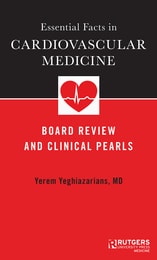
Essential Facts in Cardiovascular Medicine
Board Review and Clinical PearlsYeghiazarians, Yerem
Rutgers University Press, 2018
Essential Facts in Cardiovascular Medicine covers numerous important topics from the basics of Statistics, to factoids in General Cardiology, Physical Exam, EKG, Congenital Heart Disease, Valvular Heart Disease, Heart Failure/Transplant, Acute Coronary Syndromes, Pericardial Diseases, Electrophysiology, Pharmacology, Pregnancy, Pulmonary Hypertension, Peripheral Vascular Disease, Echocardiography, Formulas, Interventional Cardiology and Cardiac Tumors.
Generalism in Clinical Practice and Education
Edited by Sophie Park and Kay Leedham-Green
University College London, 2024
Generalism is a key approach to healthcare organization and delivery that enables person-centered, dynamic, and cost-effective patient care. With its emphasis on adaptability, generalism requires expansive, nurturing, and personalized approaches to clinical education in which a generalist attends to and explores patient priorities.
Generalism in Clinical Practice and Education outlines a generalist philosophy of practice, which is brought to life through interleaved examples. Written by a range of international clinicians, patients, and academics this book does not prescribe a single way to do generalism properly. Rather, it seeks to inspire readers’ future engagement with generalism in practice and education through sharing underpinning concepts, values, and principles. This ‘big picture’ attention to generalism across public health, social determinants of health, and clinical care is at the heart of sustainable and efficient use of resources to prioritize those in need. The book explores four key principles that aim to achieve creative, inclusive, and agile approaches to clinical care. Its goal is to support generalism in clinical practice and education and to produce clinical practitioners and learners who enjoy, embrace, and enhance future clinical care.
Iatrogenicity
Causes and Consequences of Iatrogenesis in Cardiovascular MedicineGussak, Ihor B
Rutgers University Press, 2017
Edited by two renowned cardiology experts, Iatrogenicity: Causes and Consequences of Iatrogenesis in Cardiovascular Medicine addresses both the iatrogenicity that arises with cardiovascular interventions, as well as non-cardiovascular interventions that result in adverse consequences on the cardiovascular system. The book aims to achieve three things: to summarize the available information on this topic in a single high-yield volume; to highlight the human and financial cost of iatrogenesis; and to describe and propose potential interventions to ameliorate the effects of iatrogenesis. This accessible book is a practical reference for any practicing physician who sees patients with cardiovascular issues. .
Intuition in Medicine
A Philosophical Defense of Clinical ReasoningHillel D. Braude
University of Chicago Press, 2012
Intuition is central to discussions about the nature of scientific and philosophical reasoning and what it means to be human. In this bold and timely book, Hillel D. Braude marshals his dual training as a physician and philosopher to examine the place of intuition in medicine.
Ischemic Stroke
Diagnosis and TreatmentMartin-Schild, Sheryl
Rutgers University Press, 2018
Key topics explored cover all elements of stroke care, including examinations of: emergent evaluation of the suspected stroke patient, clinical signs and symptoms of stroke, mechanisms of ischemic stroke, neuroimaging, cardiac-based evaluation, thrombolytic therapy, endovascular therapy, critical care management, rehabilitation, cardiac arrhythmias, and structural heart disease.
Listening to the Whispers
Re-thinking Ethics in HealthcareEdited by Christine Sorrell Dinkins and Jeanne Merkle Sorrell
University of Wisconsin Press, 2006
Listening to the Whispers gives voice to scholars in philosophy, medical anthropology, physical therapy, and nursing, helping readers re-think ethics across the disciplines in the context of today's healthcare system. Diverse voices, often unheard, challenge readers to enlarge the circle of their ethical concerns and look for hidden pathways toward new understandings of ethics. Essays range from a focus on the context of corporatization and managed care environments to a call for questioning the fundamental values of society as these values silently affect many others in healthcare. Each chapter is followed by a brief essay that highlights issues useful for scholarly research and classroom discussion. The conversations of interpretive research in healthcare contained in this volume encourage readers to re-think ethics in ways that will help to create an ethical healthcare system with a future of new possibilities.
Outstanding Academic Title, Choice Magazine
Medical Necessity
Health Care Access and the Politics of Decision MakingDaniel Skinner
University of Minnesota Press, 2019
How the politics of “medical necessity” complicates American health care
The definition of medical necessity has morphed over the years, from a singular physician’s determination to a complex and dynamic political contest involving patients, medical companies, insurance companies, and government agencies. In this book, Daniel Skinner constructs a comprehensive understanding of the politics of defining this concept, arguing that sustained political engagement with medical necessity is essential to developing a health care system that meets basic public health objectives.
From medical marijuana to mental health to reproductive politics, the concept of medical necessity underscores many of the most divisive and contentious debates in American health care. Skinner’s close reading of medical necessity’s production illuminates the divides between perceptions of medical need as well as how the gatekeeper concept of medical necessity tends to frame medical objectives. He questions the wisdom of continuing to use medical necessity when thinking critically about vexing health care challenges, exploring the possibility that contracts, rights, and technology may resolve the contentious politics of medical necessity.
Skinner ultimately contends that a major shift is needed, one in which health care administrators, doctors, and patients admit that medical necessity is, at its base, a contestable political concept.
Medicine, Religion, and Health
Where Science and Spirituality MeetHarold G Koenig
Templeton Press, 2008
Medicine, Religion, and Health: Where Science and Spirituality Meet will be the first title published in the new Templeton Science and Religion Series, in which scientists from a wide range of fields distill their experience and knowledge into brief tours of their respective specialties. In this, the series' maiden volume, Dr. Harold G. Koenig, provides an overview of the relationship between health care and religion that manages to be comprehensive yet concise, factual yet inspirational, and technical yet easily accessible to nonspecialists and general readers.
Neuropharmacotherapy in Critical Illness
Brophy, Gretchen
Rutgers University Press, 2017
In the treatment of neurocritical disease states, pharmacotherapeutic strategies are increasingly relevant. Neuropharmacotherapy in Critical Illness is the first book that provides this information in a high-yield format for the busy healthcare provider. Edited and authored by leading experts in the field, this book provides practitioners with clinical pearls on neuropharmacology, dosing strategies, monitoring, adverse events, drug interactions, and evidence-based pharmacotherapy.
Precision Medicine Oncology
A PrimerLorna Rodriguez-Rodriguez
Rutgers University Press, 2019
Precision Medicine Oncology: A Primer is a concise review of the fundamental principles and applications of precision medicine, intended for clinicians, particularly those working in oncology. It provides an accessible introduction to the technological advances in DNA and RNA sequencing, gives a detailed overview of approaches to the interpretation of molecular test results and their point-of-care implementation for individual patients, and describes innovative clinical trial designs in oncology as well as characteristics of the computational infrastructures through which massive quantities of data are collected, stored, and used in precision medicine oncology.
Rethinking Hypothyroidism
Why Treatment Must Change and What Patients Can DoAntonio C. Bianco, MD
University of Chicago Press, 2022
Hypothyroidism, also commonly referred to as Hashimoto’s disease, affects millions in the United States alone. It occurs when the thyroid—the butterfly-shaped gland that sits in your neck right above the front of your shirt collar—malfunctions or after thyroid surgery, causing thyroid hormone levels in circulation to drop below normal. Thus, treatment is aimed at bringing these hormone levels back to normal. This is done with daily tablets of thyroxine or T4. Because hypothyroidism is so common, we likely know someone who is on this type of medication. While most patients respond well to this standard treatment, about ten to twenty percent (some two to three million individuals in the United States) are far from living a typical life. They exhibit “foggy brain”—low energy, confusion, and poor memory. Many doctors have shrugged off their complaints, believing these symptoms to be unrelated to the thyroid disease. In Rethinking Hypothyroidism, Dr. Antonio C. Bianco, a physician and a scientist who has studied hypothyroidism and thyroid hormones for decades, offers an accessible overview of the disease’s treatment and the role of big pharma in shaping it, making the case that the current approach is failing many patients. But more than this, Bianco calls for alternatives to improve lives, and he equips patients and their families with the tools to advocate for other treatments.
Rethinking Hypothyroidism
Why Treatment Must Change and What Patients Can DoAntonio C. Bianco, MD
University of Chicago Press, 2022
In this primer for patients, their families, and their doctors, a leading physician and scientist explains why the standard treatment for hypothyroidism fails many—and offers an empowering call for change.
Hypothyroidism, also commonly referred to as Hashimoto’s disease, affects millions in the United States alone. It occurs when the thyroid—the butterfly-shaped gland that sits in your neck right above the front of your shirt collar—malfunctions or after thyroid surgery, causing thyroid hormone levels in circulation to drop below normal. Thus, treatment is aimed at bringing these hormone levels back to normal. This is done with daily tablets of thyroxine or T4. Because hypothyroidism is so common, we likely know someone who is on this type of medication. While most patients respond well to this standard treatment, about ten to twenty percent (some two to three million individuals in the United States) are far from living a typical life. They exhibit “foggy brain”—low energy, confusion, and poor memory. Many doctors have shrugged off their complaints, believing these symptoms to be unrelated to the thyroid disease. In Rethinking Hypothyroidism, Dr. Antonio C. Bianco, a physician and a scientist who has studied hypothyroidism and thyroid hormones for decades, offers an accessible overview of the disease’s treatment and the role of big pharma in shaping it, making the case that the current approach is failing many patients. But more than this, Bianco calls for alternatives to improve lives, and he equips patients and their families with the tools to advocate for other treatments.
Symptoms of Unknown Origin
A Medical OdysseyClifton K. Meador
Vanderbilt University Press, 2005
Recounting a series of fascinating case studies, Meador shows in this book how he came to reject a strict adherence to the prevailing biomolecular model of disease and its separation of mind and body. He studied other theories and approaches—George Engel's biopsychosocial model of disease, Michael Balint's study of physicians as pharmacological agents—and adjusted his practice accordingly to treat what he called "nondisease." He had to retool, learn new and more in-depth interviewing and listening techniques, and undergo what Balint termed a "slight but significant change in personality."
In chapters like "The Woman Who Believed She Was a Man" and "The Diarrhea of Agnes," Meador reveals both the considerable harm that can result from wrong diagnoses of nonexistent diseases and the methods he developed to help patients with chronic symptoms not defined by a medical disease. Throughout the book, he recommends subsequent studies to test his observations, and he urges full application of the scientific method to the doctor-patient relationship, pointing out that few objective studies of these all-important interactions have ever been done.
The Normals
A People’s History of Modern America in Five Human ExperimentsLaura Stark
University of Chicago Press, 2027
How healthy control subjects in clinical research transformed the practice and labor of science, as told by the Normals themselves.
In the 1950s, the National Institutes of Health were in search of a large, replenishing stream of healthy people to participate in clinical studies. To establish legal sources of test subjects, the NIH signed unprecedented contracts with American colleges, church organizations, and other government agencies, and in the process gave rise to a new type of test subject: the “normal patient.” Thousands of them eventually moved into the NIH Clinical Center to live in hospital rooms, eat food prepared in a metabolic kitchen, and follow—or flout—the rules.
The Normals is a groundbreaking account of the NIH Normal Volunteer Patient Program, which has lasted into the twenty-first century. This program harnessed outside organizations in all areas of postwar American life—colleges and universities, labor unions, civic groups, federal prisons, and churches—to recruit research subjects for human experiments. Drawing on thousands of pages of unearthed government documents, oral histories, and personal materials shared by the patients themselves (collected in a new archive), Laura Stark follows five experiments and the people involved, delving into their biographies, their time at the Clinical Center, and the thorny problem of determining who counts as “normal.” The “Normals” were not passive objects of study, Stark shows, but active research participants who collaborated with scientists, maintained the laboratories where they served, informed official ethics policies, and bargained to meet their needs.
By taking seriously the pillow fights and the first kisses, the bible clubs and the movie nights that animated the Clinical Center as much as the medical experiments, The Normals brings to life a surprising true story of the origins of our present-day system of human experiment, one that at once explores what it means to work, to serve, to volunteer.