Results by title
6 books match the query 'Coercion'
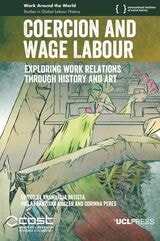
Coercion and Wage Labour
Exploring Work Relations through History and ArtEdited by Anamarija Batista, Viola Müller, and Corinna Peres
University College London, 2023
Broad in scope, Coercion and Wage Labour examines diverse areas of work including textile production, war industries, civil service, and domestic labor, in contexts from the Middle Ages to the present day. This book demonstrates that wages have consistently shaped working people’s experiences and failed to protect workers from coercion. Instead, wages emerge as versatile tools to bind, control, and exploit workers. Remuneration mirrors the distribution of power in labor relations, often separating employers physically and emotionally from their employees and disguising coercion.
The book makes historical narratives accessible to interdisciplinary audiences. Most chapters are preceded by illustrations by artists invited to visually conceptualize the book’s key messages and to emphasize the presence of the body and landscape in the realm of work. In turn, the chapter texts reflect back on the artworks, creating an intense intermedial dialogue that offers mutually relational “translations” and narrations of labor coercion. Other contributions written by art scholars discuss how coercion in remunerated labor is constructed and reflected in artistic practice. The collection serves as an innovative and creative tool for teaching and raises awareness that narrating history is always contingent on the medium chosen and its inherent constraints and possibilities.
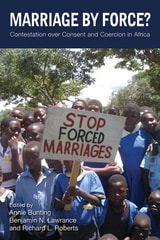
Marriage by Force?
Contestation over Consent and Coercion in AfricaAnnie Bunting
Ohio University Press, 2016
With forced marriage, as with so many human rights issues, the sensationalized hides the mundane, and oversimplified popular discourses miss the range of experiences. In sub-Saharan Africa, the relationship between coercion and consent in marriage is a complex one that has changed over time and place, rendering impossible any single interpretation or explanation.
The legal experts, anthropologists, historians, and development workers contributing to Marriage by Force? focus on the role that marriage plays in the mobilization of labor, the accumulation of wealth, and domination versus dependency. They also address the crucial slippage between marriages and other forms of gendered violence, bondage, slavery, and servile status.
Only by examining variations in practices from a multitude of perspectives can we properly contextualize the problem and its consequences. And while early and forced marriages have been on the human rights agenda for decades, there is today an unprecedented level of international attention to the issue, thus making the coherent, multifaceted approach of Marriage by Force? even more necessary.
Military Institutions and Coercion in the Developing Nations
The Military in the Political Development of New NationsMorris Janowitz
University of Chicago Press, 1988
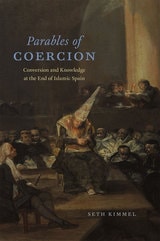
Parables of Coercion
Conversion and Knowledge at the End of Islamic SpainSeth Kimmel
University of Chicago Press, 2015
In its careful examination of how Spanish authors transformed the history of scholarship through debate about forced religious conversion, Parables of Coercion makes us rethink what we mean by tolerance and intolerance, and shows that debates about forced conversion and assimilation were also disputes over the methods and practices that demarcated one scholarly discipline from another.

Resolving Disputes Between Nations
Coercion or Conciliation?Martin Patchen
Duke University Press, 1988
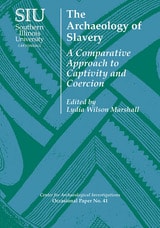
The Archaeology of Slavery
A Comparative Approach to Captivity and CoercionEdited by Lydia Wilson Marshall
Southern Illinois University Press, 2014
Plantation sites, especially those in the southeastern United States, have long dominated the archaeological study of slavery. These antebellum estates, however, are not representative of the range of geographic locations and time periods in which slavery has occurred. As archaeologists have begun to investigate slavery in more diverse settings, the need for a broader interpretive framework is now clear.
The Archaeology of Slavery: A Comparative Approach to Captivity and Coercion, edited by Lydia Wilson Marshall, develops an interregional and cross-temporal framework for the interpretation of slavery. Contributors consider how to define slavery, identify it in the archaeological record, and study it as a diachronic process from enslavement to emancipation and beyond.
Essays cover the potential material representations of slavery, slave owners’ strategies of coercion and enslaved people’s methods of resisting this coercion, and the legacies of slavery as confronted by formerly enslaved people and their descendants. Among the peoples, sites, and periods examined are a late nineteenth-century Chinese laborer population in Carlin, Nevada; a castle slave habitation at San Domingo and a more elite trading center at nearby Juffure in the Gambia; two eighteenth-century plantations in Dominica; Benin’s Hueda Kingdom in the seventeenth and eighteenth centuries; plantations in Zanzibar; and three fugitive slave sites on Mauritius—an underground lava tunnel, a mountain, and a karst cave.
This essay collection seeks to analyze slavery as a process organized by larger economic and social forces with effects that can be both durable and wide-ranging. It presents a comparative approach that significantly enriches our understanding of slavery.