Results by title
2 books match the query 'Cohen, Joanna'
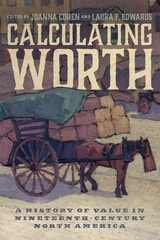
Calculating Worth
A History of Value in Nineteenth-Century North AmericaEdited by Joanna Cohen Laura F. Edwards
University of Chicago Press, 2027
Explores the history of value as a concept, one that we regularly use but tend to take for granted as the monetary expression of market mechanisms.
Calculating Worth, a collection of essays edited by historians Joanna Cohen and Laura F. Edwards, reshapes our concept of what “value” meant in the past. Collectively, the essays reorient conventional narratives and reveal multiple methods of determining value, some traditional, some new, but all based in human agency. Calculating Worth brings together scholars of legal history, Native American history, women’s history, material culture, the history of slavery, and African American history, with topics that range widely over the nineteenth century, across North America and beyond.
Through studying subjects as varied as personal property, land, enslaved people, and intangibles such as prayer, reputation, and suffering, this portrait of value is diverse, humanistic, and far more capacious than what typically fits within the bounds of the concept of capitalism. Rather, value turns out to be a question of power—and how it is used.
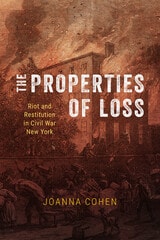
The Properties of Loss
Riot and Restitution in Civil War New YorkJoanna Cohen
University of Chicago Press, 0
A powerful account of the claims made by victims of the 1863 Draft Riots reveals how Americans’ emotional and legal responses to loss informed the development of contemporary capitalism.
The right to property has been central to America’s history, but for Joanna Cohen, loss of property has been powerful, too, not as a right but as an emotion. In The Properties of Loss, Cohen focuses on the aftermath of Manhattan’s infamous Draft Riots in July 1863, where Civil War draft protests fomented anti-Black terrorism that set the city aflame. In the wake of this destruction, nearly 2,000 people filed claims against the city, seeking reparation. But they found that the city chose not to value their property or imagine their losses as they did. Beyond the individual stories of suffering and struggle, these claims serve as a nexus for understanding how the conception of loss, the value of property, and the obligations of restitution changed in the nineteenth century. Charting these changes by focusing closely on emotions, Cohen shows how these changes shaped contemporary capitalism and underpin a surprising array of today’s discriminatory forces.