Results by title
9 books match the query 'Collected Writings'
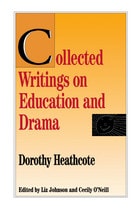
Collected Writings on Education and Drama
Dorothy Heathcote
Northwestern University Press, 1984
In this lively collection of essays and talks from 1967-80, Heathcote shares the findings of her groundbreaking work in the application of theater techniques and play to classroom teaching. She provides a time-tested philosophy on the value of dramatic activity in breaking down barriers and overcoming inertia. Her insistence that teachers must step down from their pedestals and immerse themselves in the possibility of the moment makes for magical and challenging reading.

Freedom In Our Lifetime
The Collected Writings Of Anton Muziwakhe LembedeAnton Muziwakhe Lembede
Ohio University Press, 1996
When a group of young political activists met in 1944 to launch the African National Congress Youth League, it included the nucleus of a remarkable generation of leaders who forged the struggle for freedom and equality in South Africa for the next half century: Nelson Mandela, Oliver Tambo, Walter Sisulu, Jordan Ngubane, Ellen Kuzwayo, Albertina Smith, A. P. Mda, Dan Tloome, and David Bopape. It was Anton Lembede, however whom they chose as their first president.
Lembede, who had just begun practicing law in Johannesburg, was known for his sharp intellect, fiery personality, and unwavering commitment to the struggle at hand. The son of farm laborers from the district of Georgedale, Natal, Lembede had worked tirelessly to put himself through school and college, and then to qualify for the bachelor of laws degree. When he began law practice in 1943, he had also earned the respect of his fellows, not only for his intellectual achievements (which were many), but also for his dedication to the cause of freedom in South Africa. “I am,” he explained, “Africa’s own child.”
His untimely death in 1947 at the age of 33 sent a wave of grief through the Congress Youth, who had looked to him for moral as well as political leadership. With the publication of Freedom In Our Lifetime, the editors acknowledge Lembede’s early contribution to the freedom movement, in particular his passionate and eloquent articulation of the African-centered philosophy he called “Africanism.”
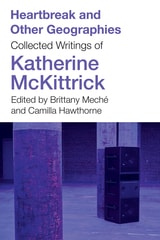
Heartbreak and Other Geographies
Collected Writings of Katherine McKittrickKatherine McKittrick
University of Minnesota Press, 2026
A uniquely structured collection of essays from one of today’s most esteemed scholars of black studies
A thoughtfully curated selection of texts by preeminent black feminist scholar Katherine McKittrick, Heartbreak and Other Geographies showcases the remarkable depth of inquiry she has generated over twenty years. Edited by Brittany Meché and Camilla Hawthorne, this collection highlights McKittrick’s enduring commitment to ideas around radical placemaking and the creative articulations of and within the black diaspora.
McKittrick’s work is marked by a recurring engagement with anticolonialism, practices of liberation, and radical methodologies of black cultural production. Through discussions of figures such as Toni Morrison, Jimi Hendrix, Édouard Glissant, Paul Gilroy, Nina Simone, and Sylvia Wynter, the writing in Heartbreak and Other Geographies spans the author’s investigations into scientific method, liberal modernity, the cycles that perpetuate racial violence, and the poetics and sonics of black livingness.
Bringing together recent texts, influential pieces, and lesser-known essays, the unconventional format of Heartbreak and Other Geographies includes an introductory conversation with McKittrick as well as a series of creative interludes from the editors throughout the book. Innovative in both form and content, this wide-ranging volume invites us to rethink the boundaries between disciplines and the ways that scholarship can embody a more collaborative form of worldmaking.
Retail e-book files for this title are screen-reader friendly with images accompanied by short alt text and/or extended descriptions.
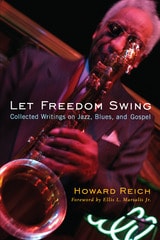
Let Freedom Swing
Collected Writings on Jazz, Blues, and GospelHoward Reich
Northwestern University Press, 2010
Each section of Let Freedom Swing composes a suite, focusing on either a person, place, or scene. Reich gives new life to the standards with his profiles and elegies for such giants as Gershwin, Ellington, and Sinatra. A profile of Louis Armstrong brings out the often angry side of Satchmo but also reveals a more remarkable musician and human being.
His open-mindedness makes Reich a particularly astute observer of the experimental and new, from Ornette Coleman to Chicago experimentalist Ken Vandermark. And his observations about street music open our ears to the songs of everyday life. Reich’s fearlessness is evident in his writing about daunting subjects, such as the New Orleans music scene after Katrina, the lost legacy of jazz in Panama, and the complicated legacy of "race music" in America.
Howard Reich combines a deep enthusiasm for music, a breadth of knowledge, and an ability to share his world with his readers, and Let Freedom Swing is essential reading for anyone interested in the continuing vitality of jazz, gospel, blues, and American music in general.
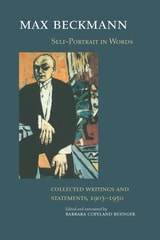
Self-Portrait in Words
Collected Writings and Statements, 1903-1950Max Beckmann
University of Chicago Press, 1997
"Barbara Copeland Buenger . . . has done an excellent job of editing and annotating Beckmann's voluminous private and public writings."—Andrea Barnet, New York Times Book Review
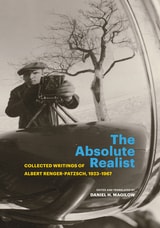
The Absolute Realist
Collected Writings of Albert Renger-Patzsch, 1923–1967Albert Renger-Patzsch
J. Paul Getty Trust, The, 2022
A towering figure in the history of photography, Albert Renger-Patzsch (1897–1966) has come to epitomize New Objectivity, the neorealist movement in modernist literature, film, and the visual arts recognized as the signature artistic style of Germany’s Weimar Republic. Today, his images are regularly exhibited and widely considered key influences on contemporary photographers. Whether they capture geometrically intricate cacti, flooded tidal landscapes, stacks of raw materials, or imposing blast furnace towers, Renger-Patzsch’s photographs embody what his peer Hugo Sieker termed “absolute realism,” an approach predicated upon the idea that photographers have one task: to exploit the camera’s unique capacity to document with uncompromising detail.
Not only a photographer, Renger-Patzsch was also an influential and lucid writer who advocated his unique brand of uncompromising realism in almost a half century’s worth of articles, essays, lectures, brochures, and unpublished manuscripts addressing photography, technology, and modernity. Drawing on his papers at the Getty Research Institute and other archives, The Absolute Realist unites in one volume this skillful photographer’s ideas about the defining visual medium of modernity.
The Collected Writings of Beatrix Farrand
American Landscape Gardener, 1872-1959Beatrix Farrand
University Press of New England, 2009
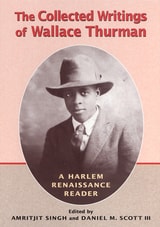
The Collected Writings of Wallace Thurman
A Harlem Renaissance ReaderSingh, Amritjit
Rutgers University Press, 2003
This book is the definitive collection of the writings of Wallace Thurman (1902-1934), providing a comprehensive anthology of both the published and unpublished works of this bohemian, bisexual writer. Widely regarded as the enfant terrible of the Harlem Renaissance scene, Thurman was a leader among a group of young artists and intellectuals that included, among others, Langston Hughes, Zora Neale Hurston, Richard Bruce Nugent, Gwendolyn Bennett, and Aaron Douglas. Through the publication of magazines such as FIRE!! and Harlem: A Forum of Negro Life, Thurman tried to organize the opposition of the younger generation against the programmatic and promotional ideologies of the older generation of black leaders and intellectuals such as W.E.B. Du Bois and Benjamin Brawley. Thurman also left a permanent mark on the period through his prolific work as a novelist, playwright, short story writer, and literary critic, as well as by claiming for himself a voice as a public intellectual.
The Collected Writings of Wallace Thurman is divided into eight sections to highlight the variety of genres and styles Thurman practiced as he courageously pursued controversial subjects throughout his short and brilliant career. It includes Essays on Harlem, Social Essays and Journalism, Correspondence, Literary Essays and Reviews, Poetry and Short Fiction, Plays, and Excerpts from Novel.
Filling an important gap in Harlem Renaissance literature, this collection brings together all of Thurman’s essays, nearly all of his letters to major black and white figures of the 1920s, and three previously unpublished major works. These books are Aunt Hagar’s Children, which is a collection of essays and two full-length plays, Harlem, and Jeremiah the Magnificent. The introduction to the volume, along with the carefully researched introductory notes to each of the eight sections, provides a challenging new reevaluation of Thurman and the Harlem Renaissance for both the general reader and scholar.
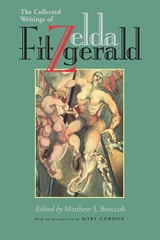
The Collected Writings of Zelda Fitzgerald
Zelda Fitzgerald
University of Alabama Press, 1997
The voice behind the legend—Zelda Fitzgerald in her own words.
Zelda Sayre Fitzgerald has long been perceived as the tragic "other half" of the Scott and Zelda legend. Born in Montgomery, Alabama, the high-spirited tomboy turned flapper was talented in dance, painting, and writing but lived in the shadow of her husband's success. Her writing can be experienced on its own terms in Matthew Bruccoli's meticulously edited The Collected Writings of Zelda Fitzgerald.
The collection includes Zelda's only published novel, Save Me the Waltz, an autobiographical account of the Fitzgeralds' adventures in Paris and on the Riviera; her celebrated farce, Scandalabra; eleven short stories; twelve articles; and a selection of letters to her husband, written over the span of their marriage, that reveals the couple's loving and turbulent relationship.
Zelda Sayre Fitzgerald has long been an American cultural icon. The Collected Writings affirms her place as a writer and as a symbol not only of the Lost Generation but of all generations as she struggled to define herself through her art.