Results by title
4 books match the query 'Collectors'

Museum Pieces
Collectors and CollectionNeil Harris
University of Chicago Press, 0
An eminent historian assembles a career-long group of essays about art collecting and the leadership, strategies, and shifting cultural power of American art museums as they have emerged over the past 150 years.
Museums and their cultural power, and the vagaries of collecting in the United States have fascinated University of Chicago historian Neil Harris for more than sixty years. In this collection of eighteen lively essays from across his distinguished career, Harris addresses period rooms, visitor research, museum education, museum branding and merchandising, and the persistent influence of individual collectors and patrons such as J. Pierpont Morgan, among other important topics. Harris’s geographical range is broad, too, with considerations of museums in Boston, New York, Washington, D.C., Toledo, Chicago, Denver, and elsewhere.
Harris remains one of a very small number of art-minded scholars whose work on museums, taste, and collecting not only can be read by other historians of the United States but can be read with real profit. In a rich and reflective introduction, Harris connects his deep interest in recurring subjects to both his own intellectual biography and broader trends in American scholarship.
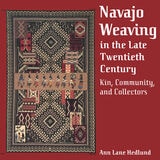
Navajo Weaving in the Late Twentieth Century
Kin, Community, and CollectorsAnn Lane Hedlund
University of Arizona Press, 2004
In testimony to this living art form, this book presents 74 dazzling color plates of Navajo rugs and wall hangings woven between 1971 and 1996. Drawn from a private southwestern collection, they represent the work of sixty of the finest native weavers in the American Southwest. The creations depicted here reflect a number of styles—revival, sandpainting, pictorial, miniature, sampler—and a number of major regional variations, from Ganado to Teec Nos Pos.
Textile authority Ann Hedlund provides an introductory narrative about the development of Navajo textile collecting—including the shift of attention from artifacts to art—and a brief review of the history of Navajo weaving. She then comments on the shaping of the particular collection represented in the book, offering a rich source of knowledge and insight for other collectors.
Explaining themes in Navajo weaving over the quarter-century represented by the Santa Fe Collection, Hedlund focuses on the development of modern rug designs and the influence on weavers of family, community, artistic identity, and the marketplace. She also introduces each section of plates with a description of the representative style, its significance, and the weavers who perpetuate and deviate from it. In addition to the textile plates, Hedlund’s color photographs show the families, landscapes, livestock, hogans, and looms that surround today’s Navajo weavers.
Navajo Weaving in the Late Twentieth Century explores many of the important connections that exist today among weavers through their families and neighbors, and the significant role that collectors play in perpetuating this dynamic art form. For all who appreciate American Indian art and culture, this book provides invaluable guidance to the fine points of collecting and a rich visual feast.
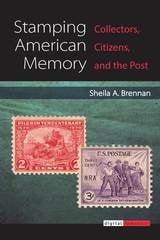
Stamping American Memory
Collectors, Citizens, and the PostSheila A. Brennan
University of Michigan Press, 2018
In the age of digital communications, it can be difficult to imagine a time when the meaning and imagery of stamps was politically volatile. While millions of Americans collected stamps from the 1880s to the 1940s, Stamping American Memory is the first scholarly examination of stamp collecting culture and how stamps enabled citizens to engage their federal government in conversations about national life in early-twentieth-century America. By examining the civic conversations that emerged around stamp subjects and imagery, this work brings to light the role that these underexamined historical artifacts have played in carrying political messages.
Sheila A. Brennan crafts a fresh synthesis that explores how the US postal service shaped Americans’ concepts of national belonging, citizenship, and race through its commemorative stamp program. Designed to be saved as souvenirs, commemoratives circulated widely and stood as miniature memorials to carefully selected snapshots from the American past that also served the political needs of small interest groups. Stamping American Memory brings together the histories of the US postal service and the federal government, collecting, and philately through the lenses of material culture and memory to make a significant contribution to our understanding of this period in American history.

The Afterlife of Aldus
Posthumous Fame, Collectors and the Book TradeEdited by Jill Kraye and Paolo Sachet
University of London Press, 2018