Results by title
29 books match the query 'College'
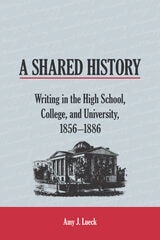
A Shared History
Writing in the High School, College, and University, 1856-1886Amy J. Lueck
Southern Illinois University Press, 2020
Lueck explores Civil War- and Reconstruction-era challenges to the University of Louisville and nearby local high schools, their curricular transformations, and their fate in regard to national education reform efforts. These institutions reflect many of the educational trends and developments of the day: college and university building, the emergence of English education as the dominant curriculum for higher learning, student-centered pedagogies and educational theories, the development and transformation of normal schools, the introduction of manual education and its mutation into vocational education, and the extension of advanced education to women, African American, and working-class students.
Lueck demonstrates a complex genealogy of interconnections among high schools, colleges, and universities that demands we rethink our categories and standards of assessment and our field’s history. A shift in our historical narrative would promote a move away from an emphasis on the preparation, transition, and movement of student writers from high school to college or university and instead allow a greater focus on the fostering of rich rhetorical practices and pedagogies at all educational levels. As the definition of college-level writing becomes increasingly contested once again, Lueck invites a reassessment of the discipline’s understanding of contemporary programs based in high schools like dual-credit and concurrent enrollment.

Academic Archives
Managing the Next Generation of College and University Archives, Records, and Special CollectionsAaron D. Purcell
American Library Association, 2012
College and University Archives
Christopher J. Prom
American Library Association, 2009
College and University Archives
Christopher J. Prom
Society of American Archivists, 0
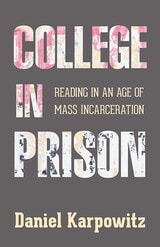
College in Prison
Reading in an Age of Mass IncarcerationKarpowitz, Daniel
Rutgers University Press, 2017
College in Prison chronicles how, since 2001, Bard College has provided hundreds of incarcerated men and women across the country access to a high-quality liberal arts education. Earning degrees in subjects ranging from Mandarin to advanced mathematics, graduates have, upon release, gone on to rewarding careers and elite graduate and professional programs. Yet this is more than just a story of exceptional individuals triumphing against the odds. It is a study in how the liberal arts can alter the landscape of some of our most important public institutions giving people from all walks of life a chance to enrich their minds and expand their opportunities.
Drawing on fifteen years of experience as a director of and teacher within the Bard Prison Initiative, Daniel Karpowitz tells the story of BPI’s development from a small pilot project to a nationwide network. At the same time, he recounts dramatic scenes from in and around college-in-prison classrooms pinpointing the contested meanings that emerge in moments of highly-charged reading, writing, and public speaking. Through examining the transformative encounter between two characteristically American institutions—the undergraduate college and the modern penitentiary—College in Prison makes a powerful case for why liberal arts education is still vital to the future of democracy in the United States.
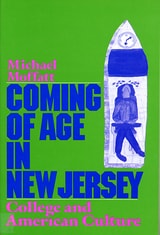
Coming of Age in New Jersey
College and American CultureMoffatt, Michael
Rutgers University Press, 1989
Connecting in College
How Friendship Networks Matter for Academic and Social SuccessJanice M. McCabe
University of Chicago Press, 2016
As McCabe and the students she talks to show, the friendships we forge in college are deeply meaningful, more meaningful than we often give them credit for. They can also vary widely. Some students have only one tight-knit group, others move between several, and still others seem to meet someone new every day. Some students separate their social and academic lives, while others rely on friendships to help them do better in their coursework. McCabe explores how these dynamics lead to different outcomes and how they both influence and are influenced by larger factors such as social and racial inequality. She then looks toward the future and how college friendships affect early adulthood, ultimately drawing her findings into a set of concrete solutions to improve student experiences and better guarantee success in college and beyond.
Divergent Paths to College
Race, Class, and Inequality in High SchoolsHolland, Megan M
Rutgers University Press, 2019
Doing Honest Work in College, Third Edition
How to Prepare Citations, Avoid Plagiarism, and Achieve Real Academic SuccessCharles Lipson
University of Chicago Press, 2018
Doing Honest Work in College
How to Prepare Citations, Avoid Plagiarism, and Achieve Real Academic SuccessCharles Lipson
University of Chicago Press, 2004
In the first part of the book, Lipson outlines three core principles of academic honesty and explores how these principles inform all aspects of college work. He discusses plagiarism in detail, outlining an ingenious note-taking system and offering guidelines for quoting and paraphrasing. Careful attention is paid to online research, including the perils of "dragging and dropping" text without proper citation. These chapters include numerous tips, all highlighted for students, on how to work honestly and study effectively.
The second part of the book gives a full account of citation styles in the humanities, social sciences, and physical and biological sciences, as well as in pre-professional studies. Filled with examples, these chapters show students exactly how to cite books, journals, edited volumes, Web sites, online publications, and much more—in every citation style imaginable.
By clearly communicating the basic principles of academic honesty and exploring these principles in action, Doing Honest Work in College promotes genuine learning and academic success. This must-have reference empowers faculty and students to address questions about academic honesty before problems arise. It will be the book students turn to for advice from their first class to their final exam.
Doing Honest Work in College
How to Prepare Citations, Avoid Plagiarism, and Achieve Real Academic Success, Second EditionCharles Lipson
University of Chicago Press, 2008
For this second edition, Charles Lipson has updated hundreds of examples and included many new media sources. There is now a full chapter on how to take good notes and use them properly in papers and assignments. The extensive list of citation styles incorporates guidelines from the American Anthropological Association. The result is the definitive resource on academic integrity that students can use every day.
“Georgetown’s entering class will discover that we actually have given them what we expect will be a very useful book, Doing Honest Work in College. It will be one of the first things students see on their residence hall desks when they move in, and we hope they will realize how important the topic is.”—James J. O’Donnell, Provost, Georgetown University
“A useful book to keep on your reference shelf.”—Bonita L. Wilcox, English Leadership Quarterly
Farm House
College Farm to University MuseumAtherly, Mary E.
University of Iowa Press, 1995
From High School to College
Gender, Immigrant Generation, and Race-EthnicityCharles Hirschman
Russell Sage Foundation, 2016
Today, over 75 percent of high school seniors aspire to graduate from college. However, only one-third of Americans hold a bachelor’s degree, and college graduation rates vary significantly by race/ethnicity and parental socioeconomic status. If most young adults aspire to obtain a college degree, why are these disparities so great? In From High School to College, Charles Hirschman analyzes the period between leaving high school and completing college for nearly 10,000 public and private school students across the Pacific Northwest.
Hirschman finds that although there are few gender, racial, or immigration-related disparities in students’ aspirations to attend and complete college, certain groups succeed at the highest rates. For example, he finds that women achieve better high school grades and report receiving more support and encouragement from family, peers, and educators. They tend to outperform men in terms of preparing for college, enrolling in college within a year of finishing high school, and completing a degree. Similarly, second-generation immigrants are better prepared for college than first-generation immigrants, in part because they do not have to face language barriers or learn how to navigate the American educational system.
Hirschman also documents that racial disparities in college graduation rates remain stark. In his sample, 35 percent of white students graduated from college within seven years of completing high school, compared to only 19 percent of black students and 18 percent of Hispanic students. Students’ socioeconomic origins—including parental education and employment, home ownership, and family structure—account for most of the college graduation gap between disadvantaged minorities and white students. Further, while a few Asian ethnic groups have achieved college completion rates on par with whites, such as Chinese and Koreans, others, whose socioeconomic origins more resemble those of black and Hispanic students, such as Filipinos and Cambodians, also lag behind in preparedness, enrollment, and graduation from college.
With a growing number of young adults seeking college degrees, understanding the barriers that different students encounter provides vital information for social scientists and educators. From High School to College illuminates how gender, immigration, and ethnicity influence the path to college graduation.

General Education in the Social Sciences
Centennial Reflections on the College of the University of ChicagoEdited by John J. MacAloon
University of Chicago Press, 1992
Social Science 2 holds the place of honor among these educational projects. For more than half a century, Soc 2 has been one of the most influential courses in American undergraduate education. This unique, year-long course, the oldest and most distinguished of its kind at any American university, has served as an ongoing experiment in how the social sciences can be taught and learned in the general education context.
In this collection John MacAloon has gathered essays by fourteen eminent social scientists—such as David Riesman, Michael Schudson, and F. Champion Ward—who as either teachers or students were profoundly shaped by Soc 2. Their multifarious and selective memories—full of dissonances and harmonies of recollection, judgment, and voice—create a compelling biography of a course and a college that have survived tumultous change through sustained and committed argument.
This book will be of great interest to anyone interested not only in the theory but the practice of higher education.
Intercultural Skills in Action
An International Student's Guide to College and University Life in the U.S.Darren LaScotte and Bethany Peters
University of Michigan Press, 2021
Although traditional ESL/EFL textbooks have primarily introduced cultural topics at a knowledge level only, this textbook is designed to create meaningful opportunities for students to reflect on and practice intercultural skills in ways that are relatable in their daily lives and that can lead to a more satisfying U.S. academic experience.
Each unit opens with a discovery activity that serves as a springboard for the unit and introduces the topic in an engaging way. Chapters feature academic content that builds expands knowledge of intercultural skills, plus opportunities for students to pause and reflect on how to apply what they are learning to their own intercultural experiences. The activities ask students to respond with short written reflections and practice oral skills through discussion in pairs and small groups. Each unit closes with an activity that requires students to use higher-order thinking skills to create, evaluate, and/or analyze cultural information gathered from college and university settings in the form of surveys, interviews, observations, or internet research and then report on what they have learned.
The intended audiences for this book are international students studying in Intensive English Programs, in university bridge or pathway programs, or at colleges and universities in the United States. It may also be used by new-student orientation programs or by student services offices that provide intercultural training for students, staff, and faculty who work with international students.
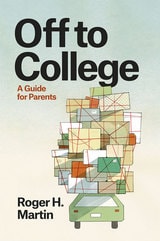
Off to College
A Guide for ParentsRoger H. Martin
University of Chicago Press, 2015
With Off to College, Roger H. Martin helps parents understand this important period of transition by providing the perfect tour of the first year on today’s campus. Martin, a twenty-year college president and former Harvard dean, spent a year visiting five very different colleges and universities across the United States—public and private, large and small, elite and non-elite—to get an insider’s view of modern college life. He observes an advising session as a student sorts out her schedule, unravels the mysteries of roommate assignments with a residence life director, and patrols campus with a safety officer on a rowdy Saturday night. He gets pointers in freshman English and tips on athletics and physical fitness from coaches. He talks with financial aid officers and health service providers. And he listens to the voices of the first–year students themselves. Martin packs Off to College with the insights and advice he gained and bolsters them with data from a wide variety of sources to deliver a unique and personal view of the current student experience.
The first year is not just the beginning of a student’s college education but also the first big step in becoming an adult. Off to College will help parents understand what to expect whether they’re new to the college experience or reconciling modern campus life with memories of their own college days.
Polished
College, Class, and the Burdens of Social MobilityMelissa Osborne
University of Chicago Press, 2024
While college initiates a major transition in all students’ lives, low-income and first-generation students attending elite schools are often entering entirely new worlds. Amid the financial and academic challenges of adapting to college, their emotional lives, too, undergo a transformation. Surrounded by peers from different classes and cultural backgrounds, they are faced with an impossible choice: turn away from their former lives to blend in or stay true to themselves and remain on the outside.
An ethnography that draws on in-depth interviews with one hundred and fifty first-generation and low-income students across eighteen elite institutions, Polished uncovers the hidden consequences of the promise of social mobility in today’s educational landscape. Sociologist Melissa Osborne reveals how the very support designed to propel first-generation students forward can unexpectedly reshape their identities, often putting them at odds with their peers and families. Without direct institutional support, this emotional journey can lead to alienation, mental health challenges, poor academic outcomes, and difficult choices between upward mobility or maintaining authenticity and community. Whether you're an educator, advocate, or student, Polished provides a powerful perspective on the uncharted challenges of social mobility and personal identity during college.
Polished
College, Class, and the Burdens of Social MobilityMelissa Osborne
University of Chicago Press, 2024
An illuminating look at the emotional costs of mobility faced by first-generation and low-income college students.
While college initiates a major transition in all students’ lives, low-income and first-generation students attending elite schools are often entering entirely new worlds. Amid the financial and academic challenges of adapting to college, their emotional lives, too, undergo a transformation. Surrounded by peers from different classes and cultural backgrounds, they are faced with an impossible choice: turn away from their former lives to blend in or stay true to themselves and remain on the outside.
An ethnography that draws on in-depth interviews with one hundred and fifty first-generation and low-income students across eighteen elite institutions, Polished uncovers the hidden consequences of the promise of social mobility in today’s educational landscape. Sociologist Melissa Osborne reveals how the very support designed to propel first-generation students forward can unexpectedly reshape their identities, often putting them at odds with their peers and families. Without direct institutional support, this emotional journey can lead to alienation, mental health challenges, poor academic outcomes, and difficult choices between upward mobility or maintaining authenticity and community. Whether you're an educator, advocate, or student, Polished provides a powerful perspective on the uncharted challenges of social mobility and personal identity during college.
Securing the Future
Investing in Children From Birth to CollegeSheldon Danziger
Russell Sage Foundation, 2000
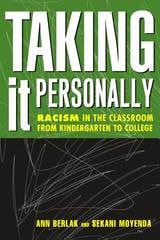
Taking It Personally
Racism In Classroom From Kinderg To CollegeAnn Berlak
Temple University Press, 2001
The "encounter" -- as it was called -- was an expression of Moyenda's anger at the institutionalized racism of our educational system, a system whose foundations are reinforced and whose assumptions about race are reproduced in the graduate school classroom. Forcing everyone involved to rethink their own race consciousness, Taking it Personally is a chronicle of two teachers and their own educational progress. In processing their own responses to the encounter, along with their students', Berlak and Moyenda meditate not only on their own ideas on teaching and learning, but also redefine the obligation a teacher has to his or her students.
Personal in its approach, yet grounded in significant currents of educational thought, Taking it Personally will be a must-read for any educator or educator-to-be who is committed to teaching in our diverse classrooms.
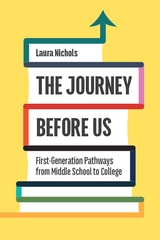
The Journey Before Us
First-Generation Pathways from Middle School to CollegeLaura Nichols
Rutgers University Press, 2020
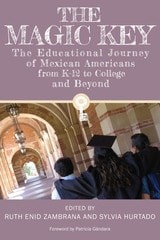
The Magic Key
The Educational Journey of Mexican Americans from K-12 to College and BeyondEdited by Ruth Enid Zambrana and Sylvia Hurtado
University of Texas Press, 2015
Mexican Americans comprise the largest subgroup of Latina/os, and their path to education can be a difficult one. Yet just as this group is often marginalized, so are their stories, and relatively few studies have chronicled the educational trajectory of Mexican American men and women. In this interdisciplinary collection, editors Zambrana and Hurtado have brought together research studies that reveal new ways to understand how and why members of this subgroup have succeeded and how the facilitators of success in higher education have changed or remained the same.
The Magic Key’s four sections explain the context of Mexican American higher education issues, provide conceptual understandings, explore contemporary college experiences, and offer implications for educational policy and future practices. Using historical and contemporary data as well as new conceptual apparatuses, the authors in this collection create a comparative, nuanced approach that brings Mexican Americans’ lived experiences into the dominant discourse of social science and education. This diverse set of studies presents both quantitative and qualitative data by gender to examine trends of generations of Mexican American college students, provides information on perceptions of welcoming university climates, and proffers insights on emergent issues in the field of higher education for this population. Professors and students across disciplines will find this volume indispensable for its insights on the Mexican American educational experience, both past and present.
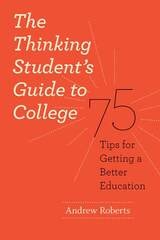
The Thinking Student's Guide to College
75 Tips for Getting a Better EducationAndrew Roberts
University of Chicago Press, 2010
Each fall, thousands of eager freshmen descend on college and university campuses expecting the best education imaginable: inspiring classes taught by top-ranked professors, academic advisors who will guide them to a prestigious job or graduate school, and an environment where learning flourishes outside the classroom as much as it does in lecture halls. Unfortunately, most of these freshmen soon learn that academic life is not what they imagined. Classes are taught by overworked graduate students and adjuncts rather than seasoned faculty members, undergrads receive minimal attention from advisors or administrators, and potentially valuable campus resources remain outside their grasp.
Andrew Roberts’ Thinking Student’s Guide to College helps students take charge of their university experience by providing a blueprint they can follow to achieve their educational goals—whether at public or private schools, large research universities or small liberal arts colleges. An inside look penned by a professor at Northwestern University, this book offers concrete tips on choosing a college, selecting classes, deciding on a major, interacting with faculty, and applying to graduate school. Here, Roberts exposes the secrets of the ivory tower to reveal what motivates professors, where to find loopholes in university bureaucracy, and most importantly, how to get a personalized education. Based on interviews with faculty and cutting-edge educational research, The Thinking Student’s Guide to College is a necessary handbook for students striving to excel academically, creatively, and personally during their undergraduate years.

They Went to College
A Study of 951 Former University StudentsC. Robert Pace
University of Minnesota Press, 1941
They Went to College was first published in 1941. Minnesota Archive Editions uses digital technology to make long-unavailable books once again accessible, and are published unaltered from the original University of Minnesota Press editions.
Top Student, Top School?
How Social Class Shapes Where Valedictorians Go to CollegeAlexandria Walton Radford
University of Chicago Press, 2013
Watch an interview of Alexandria Walton Radford discussing her book here: http://www.youtube.com/watch?v=F81c1D1BpY0
Unequal Choices
How Social Class Shapes Where High-Achieving Students Apply to CollegeYang Va Lor
Rutgers University Press, 2023

WHEN KIDS GO TO COLLEGE
A PARENTS GUIDE TO CHANGING RELATIONSHIPBARBARA & PHILIP R. NEWMAN & NEWMAN
The Ohio State University Press, 1992
What Every ESL Student Should Know
A Guide to College and University Academic SuccessKathy Ochoa Flores
University of Michigan Press, 2008
This book teaches English language learners about language learning and classroom expectations. It is a compilation of advice, experiences, suggestions, strategies, and learning theories collected over many years of teaching this population.
What Every ESL Student Should Know was written to help English language learners be successful in community college and college classrooms—specifically, how to prepare students for expectations and behavior within the classroom and how to help them to be good students, how to participate in class, what to expect from the class, and what to do to learn English. Learning strategies and language theories are presented in brief.
Who Goes to College
Comparison of Minnesota College Freshmen, 1930-1960Ralph Berdie
University of Minnesota Press, 1962