Results by title
5 books match the query 'Colonial forces'
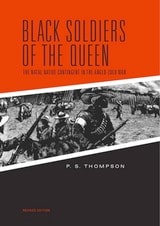
Black Soldiers of the Queen
The Natal Native Contingent in the Anglo-Zulu WarP. S. Thompson
University of Alabama Press, 2006
Africans who fought alongside the British against the Zulu king
Khaki and Blue
Military and Police in British Colonial AfricaAnthony Clayton
Ohio University Press, 1989
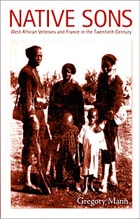
Native Sons
West African Veterans and France in the Twentieth CenturyGregory Mann
Duke University Press, 2006
Focusing on the period between World War I and 1968, Mann draws on archival research and extensive interviews with surviving Malian veterans of French wars to explore the experiences of the African soldiers. He describes the effects their long absences and infrequent homecomings had on these men and their communities, he considers the veterans’ status within contemporary Malian society, and he examines their efforts to claim recognition and pensions from France. Mann contends that Mali is as much a postslavery society as it is a postcolonial one, and that specific ideas about reciprocity, mutual obligation, and uneven exchange that had developed during the era of slavery remain influential today, informing Malians’ conviction that France owes them a “blood debt” for the military service of African soldiers in French wars.
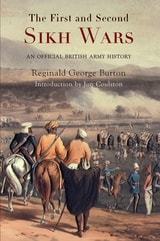
The First and Second Sikh Wars
Reginald George Burton
Westholme Publishing, 2008
The First and Second Sikh Wars of the 1840s were the final battles that secured British domination of the Indian subcontinent for the next century. Noted for both their brutality and sophistication in tactics—with large-scale cavalry clashes, sieges, and artillery and infantry engagements—the wars against the Sikh principalities not only handed control of India to Great Britain, but the defeated Sikh armies ended up becoming some of the most loyal and ablest soldiers of the British Empire. The lessons from these wars also influenced changes in British military policy and strategies, particularly against indigenous peoples. In 1911, the British Army command asked its historical branch in India to prepare a military history of the Sikh Wars. The result, The First and Second Sikh Wars, is a publication rich in detail and analysis and a treasure trove of background information about the British Army in India, Sikh culture at the time, and the battles of Ferozeshah, Aliwal, Chillianwala, and Gujrat. Despite the importance of these wars in the history of both the nineteenth century and the modern era, there are no similar complete narrative accounts of these conflicts available that rely on official records of the period. This facsimile is enhanced by historian Jon Coulston's new introduction and suggestions for further reading.

Wrangling Pelicans
Military Life in Texas PresidiosTim Seiter
University of Texas Press, 2025
2026 Excellence in Historic Preservation Award, Daughters of the American Revolution
2026 Summerlee Book Prize, Center for History and Culture of Southeast Texas and the Upper Gulf Coast
2026 Tejano Book Prize, Tejano Genealogy Society of Austin (TGSA)
A richly detailed history of daily life for colonial Spanish soldiers surviving on the eighteenth-century Texas Gulf Coast.
In 1775, Spanish King Carlos III ordered the capture of American pelicans for his wildlife park in Madrid. The command went to the only Spanish fort on the Texas coast—Presidio Nuestra Señora de Loreto de la Bahía in present-day Goliad. But the overworked soldiers stationed at the fort had little interest indulging a king an ocean away. Their days were consumed with guarding their community against powerful Indigenous peoples and managing the demands of frontier life. The royal order went ignored.
Wrangling Pelicans brings to life the world of Presidio La Bahía’s Hispano soldiers, whose duties ranged from heated warfare to high-stakes diplomacy, while their leisure pursuits included courtship, card playing, and cockfighting. It highlights the lives of presidio women and reveals the ways the Spanish legal system was used by and against the soldiers as they continually negotiated their roles within the empire and their community. Although they were agents of the Spanish crown, soldiers at times defied their king and even their captain as they found ways to assert their autonomy. Offering a fresh perspective on colonial Texas, Wrangling Pelicans recreates the complexities of life at the empire’s edge, where survival mattered more than royal decrees.