Results by title
9 books match the query 'Coloniality'
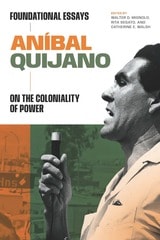
Aníbal Quijano
Foundational Essays on the Coloniality of PowerAnibal Quijano. Edited by Walter D. Mignolo, Rita Segato, and Catherine E. Walsh
Duke University Press, 2024
The Peruvian sociologist Aníbal Quijano is widely considered to be a foundational figure of the decolonial perspective grounded in three basic concepts: coloniality, coloniality of power, and the colonial matrix of power. His decolonial theorizations of these three concepts have transformed the principles and assumptions of the very idea of knowledge, impacted the social sciences and humanities, and questioned the myth of rationality in natural sciences. The essays in this volume encompass nearly thirty years of Quijano’s work, bringing them to an English-reading audience for the first time. This volume is not simply an introduction to Quijano’s work; it achieves one of his unfulfilled goals: to write a book that contains his main hypotheses, concepts, and arguments. In this regard, the collection encourages a fuller understanding and broader implementation of the analyses and concepts that he developed over the course of his long career. Moreover, it demonstrates that the tools for reading and dismantling coloniality originated outside the academy in Latin America and the former Third World.
[more]

Beyond Man
Race, Coloniality, and Philosophy of ReligionYountae An and Eleanor Craig, editors
Duke University Press, 2021
Beyond Man reimagines the meaning and potential of a philosophy of religion that better attends to the inextricable links among religion, racism, and colonialism. An Yountae, Eleanor Craig, and the contributors reckon with the colonial and racial implications of the field's history by staging a conversation with Black, Indigenous, and decolonial studies. In their introduction, An and Craig point out that European-descended Christianity has historically defined itself by its relation to the other while paradoxically claiming to represent and speak to humanity in its totality. The topics include secularism, the Eucharist's relation to Blackness, and sixteenth-century Brazilian cannibalism rituals as well as an analysis of how Mircea Eliade's conception of the sacred underwrites settler colonial projects and imaginaries. Throughout, the contributors also highlight the theorizing of Afro-Caribbean thinkers such as Sylvia Wynter, C. L. R. James, Frantz Fanon, and Aimé Césaire whose work disrupts the normative Western categories of religion and philosophy.
Contributors. An Yountae, Ellen Armour, J. Kameron Carter, Eleanor Craig, Amy Hollywood, Vincent Lloyd, Filipe Maia, Mayra Rivera, Devin Singh, Joseph R. Winters
Contributors. An Yountae, Ellen Armour, J. Kameron Carter, Eleanor Craig, Amy Hollywood, Vincent Lloyd, Filipe Maia, Mayra Rivera, Devin Singh, Joseph R. Winters
[more]

Coloniality in the Cliff Swallow
The Effect of Group Size on Social BehaviorCharles R. Brown and Mary Bomberger Brown
University of Chicago Press, 1996
Many animal species live and breed in colonies. Although biologists have documented numerous costs and benefits of group living, such as increased competition for limited resources and more pairs of eyes to watch for predators, they often still do not agree on why coloniality evolved in the first place.
Drawing on their twelve-year study of a population of cliff swallows in Nebraska, the Browns investigate twenty-six social and ecological costs and benefits of coloniality, many never before addressed in a systematic way for any species. They explore how these costs and benefits are reflected in reproductive success and survivorship, and speculate on the evolution of cliff swallow coloniality.
This work, the most comprehensive and detailed study of vertebrate coloniality to date, will be of interest to all who study social animals, including behavioral ecologists, population biologists, ornithologists, and parasitologists. Its focus on the evolution of coloniality will also appeal to evolutionary biologists and to psychologists studying decision making in animals.
[more]
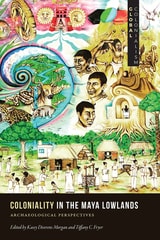
Coloniality in the Maya Lowlands
Archaeological Perspectivesedited by Kasey Diserens Morgan &Tiffany C. Fryer
University Press of Colorado, 2022
Coloniality in the Maya Lowlands explores what has been required of the Maya to survive both internal and external threats and other destabilizing forces. These include shifting power dynamics and sociocultural transformations, tumultuous political regimes, the precarity of newly formed nation states, migration in search of refuge, and newly globalizing economies in the Yucatecan lowlands in the Late Colonial to Early National periods—the times when formal Spanish colonial rule was giving way to Yucatecan and Mexican neocolonial settler systems.
The work takes a hemispheric approach to the historical and material analysis of colonialism, bridging the often disparate literatures on coloniality and settler colonialism. Archaeologists and anthropologists working in what are today southeastern Mexico, Belize, Guatemala, and Honduras grapple with the material realities of coloniality at a regional level. They provide sustained discussions of Maya experiences with wide-ranging colonial endurances: violence, resource insecurity, land rights, refugees, the control of borders, the movement of contraband, surveillance, individual and collective agency, consumption, and use of historic resources.
Considering a future for historical archaeologies of the Maya region that bridges anthropology, ethnohistory, Indigenous studies, settler colonial studies, and Latin American studies, Coloniality in the Maya Lowlands presents a new understanding of how ways of being in the Maya world have formed and changed over time, as well as the shared investments of historical archaeologists and sociocultural anthropologists working in the Maya region.
Contributors: Fernando Armstrong-Fumero, Alejandra Badillo Sánchez, Adolfo Iván Batún Alpuche, A. Brooke Bonorden, Maia C. Dedrick, Scott L. Fedick, Fior García Lara, John Gust, Brett A. Houk, Rosemary A. Joyce, Gertrude B. Kilgore, Jennifer P. Mathews, Patricia A. McAnany, James W. Meierhoff, Fabián A. Olán de la Cruz, Julie K. Wesp
[more]
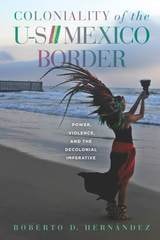
Coloniality of the US/Mexico Border
Power, Violence, and the Decolonial ImperativeRoberto D. Hernández
University of Arizona Press, 2018
National borders are often taken for granted as normal and necessary for a peaceful and orderly global civil society. Roberto D. Hernández here advances a provocative argument that borders—and border violence—are geospatial manifestations of long histories of racialized and gendered colonial violence.
In Coloniality of the U-S///Mexico Border, Hernández offers an exemplary case and lens for understanding what he terms the “epistemic and cartographic prison of modernity/coloniality.” He adopts “coloniality of power” as a central analytical category and framework to consider multiple forms of real and symbolic violence (territorial, corporeal, cultural, and epistemic) and analyzes the varied responses by diverse actors, including local residents, government officials, and cultural producers.
Based on more than twenty years of border activism in San Diego–Tijuana and El Paso–Ciudad Juárez, this book is an interdisciplinary examination that considers the 1984 McDonald’s massacre, Minutemen vigilantism, border urbanism, the ongoing murder of women in Ciudad Juárez, and anti-border music.
Hernández’s approach is at once historical, ethnographic, and theoretically driven, yet it is grounded in analyses and debates that cut across political theory, border studies, and cultural studies. The volume concludes with a theoretical discussion of the future of violence at—and because of—national territorial borders, offering a call for epistemic and cartographic disobedience.
[more]
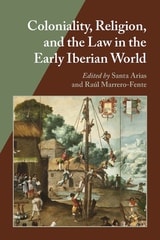
Coloniality, Religion, and the Law in the Early Iberian World
Santa Arias
Vanderbilt University Press, 2013
From postcolonial, interdisciplinary, and transnational perspectives, this collection of original essays looks at the experience of Spain's empire in the Atlantic and the Pacific and its cultural production.
Hispanic Issues Series
Nicholas Spadaccini, Editor-in-Chief
Hispanic Issues Online
hispanicissues.umn.edu/online_main.html
Hispanic Issues Series
Nicholas Spadaccini, Editor-in-Chief
Hispanic Issues Online
hispanicissues.umn.edu/online_main.html
[more]
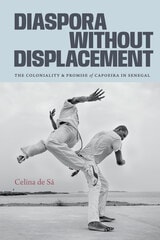
Diaspora Without Displacement
The Coloniality and Promise of Capoeira in SenegalCelina de Sá
Duke University Press, 2025
Capoeira—a game of combat primarily developed by enslaved West Central Africans—has become an icon of both Brazilian national culture and pride in the country’s diasporic African heritage. Yet the sport remains less accessible in Africa itself, overshadowed in large part by participants in the Global North. In Diaspora Without Displacement, Celina de Sá tells the story of capoeira as it "returns" to the African continent through the creative initiatives of young urban professionals in Senegal. De Sá demonstrates how a new generation of African capoeiristas are taking up their own Afro-diasporic performance tradition, effectively reframing notions of diaspora and race through their social practice. Though capoeira has largely Angolan roots and the agents of return are typically white Brazilians and Europeans, the West African practitioners de Sá documents nonetheless form an exceptional relationship to capoeira that, in turn, becomes a mode of political and social consciousness. Analyzing a capoeira network across West Africa, de Sá shows how urban West Africans use capoeira to explore the relationship between Blackness, diaspora, and African heritage.
[more]
On the Semicivilized
Coloniality, Finance, and Embodied Sovereignty in CairoJulia Elyachar
Duke University Press, 2025
On the Semicivilized by Julia Elyachar is a sweeping analysis of the coloniality that shaped—and blocked—sovereign futures for those dubbed barbarian and semicivilized in the former Ottoman Empire. Drawing on thirty years of ethnographic research in Cairo, family archives from Palestine and Egypt, and research on Ottoman debt and finance to rethink catastrophe and potentiality in Cairo and the world today, Elyachar theorizes a global condition of the “semicivilized” marked by nonsovereign futures, crippling debts, and the constant specter of violence exercised by those who call themselves civilized. Originally used to describe the Ottoman Empire, whose perceived “civilizational differences” rendered it incompatible with a Western-dominated global order, semicivilized came to denote lands where unitary territorial sovereignty was stymied at the end of WWI. Elyachar’s theorizing offers a new analytic vocabulary for thinking beyond territoriality, postcolonialism, and the “civilized"/"primitive” divide. Looking at the world from the perspective of the semicivilized, Elyachar argues, allows us to shift attention to embodied infrastructures, collective lives, and practices of moving and acting in common that bypass lingering assumptions of territorialism and unitary sovereign rule.
[more]
The Coloniality of the Secular
Race, Religion, and Poetics of World-MakingAn Yountae
Duke University Press, 2024
In The Coloniality of the Secular, An Yountae investigates the collusive ties between the modern concepts of the secular, religion, race, and coloniality in the Americas. Drawing on the work of Édouard Glissant, Frantz Fanon, Aimé Césaire, Sylvia Wynter, and Enrique Dussel, An maps the intersections of revolutionary non-Western thought with religious ideas to show how decoloniality redefines the sacred as an integral part of its liberation vision. He examines these thinkers’ rejection of colonial religions and interrogates the narrow conception of religion that confines it within colonial power structures. An explores decoloniality’s conception of the sacred in relation to revolutionary violence, gender, creolization, and racial phenomenology, demonstrating its potential for reshaping religious paradigms. Pointing out that the secular has been pivotal to regulating racial hierarchies under colonialism, he advocates for a broader understanding of religion that captures the fundamental ideas that drive decolonial thinking. By examining how decolonial theory incorporates the sacred into its vision of liberation, An invites readers to rethink the transformative power of decoloniality and religion to build a hopeful future.
[more]