Results by title
4 books match the query 'Color in art'
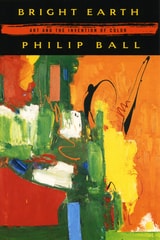
Bright Earth
Art and the Invention of ColorPhilip Ball
University of Chicago Press, 2003
Finalist for the 2002 National Book Critics Circle Award.
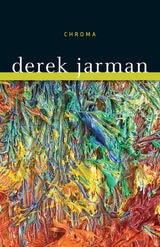
Chroma
A Book of ColorDerek Jarman
University of Minnesota Press, 2010

Monochrome Multitudes
Art of One Color from Albers to ZeislerEdited by Orianna Cacchione and Christine Mehring
University of Chicago Press, 2027
A vividly illustrated volume tracing the monochrome as a fundamental yet expansive strategy in twentieth- and twenty-first-century art.
Exploring a fantastic range of monochromatic artworks, Monochrome Multitudes upends traditional accounts of abstraction, revisits modernist ideas, and reveals the creative possibilities and global resonance of a seemingly reductive art form.
Bringing together examples spanning five continents, the book considers how artists such as El Anatsui, Mark Bradford, Lygia Clark, Lucio Fontana, Ellsworth Kelly, Yayoi Kusama, Kasimir Malevich, Gerhard Richter, Betye Saar, Amanda Williams, Haegue Yang, as well as little-known early cartoonists have experimented with monochrome compositions. Scholars of art history, film, music, law, disability studies, astrophysics, neurobiology, mathematics, and more reflect on monochrome artworks that build on foundational components of modernism. Together, they illuminate often overlooked cultural, political, racial, and gendered meanings of artworks; reveal the significance of materials ranging from fiber, wall paint, and videotape, to footballs, pantyhose, and candy; and engage North American art in a global dialog extending into Europe, Asia, Latin America, and Africa. Artworks are presented in monochromatic groupings—yellow, blue, white, red, gray, and black—and thematic sections trace connections across topics such as the body, the environment, urban space, sound, and media.
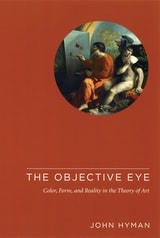
The Objective Eye
Color, Form, and Reality in the Theory of ArtJohn Hyman
University of Chicago Press, 2006
This, in a nutshell, is the central problem in the theory of art. It has fascinated philosophers from Plato to Wittgenstein. And it fascinates artists and art historians, who have always drawn extensively on philosophical ideas about language and representation, and on ideas about vision and the visible world that have deep philosophical roots.
John Hyman’s The Objective Eye is a radical treatment of this problem, deeply informed by the history of philosophy and science, but entirely fresh. The questions tackled here are fundamental ones: Is our experience of color an illusion? How does the metaphysical status of colors differ from that of shapes? What is the difference between a picture and a written text? Why are some pictures said to be more realistic than others? Is it because they are especially truthful or, on the contrary, because they deceive the eye?
The Objective Eye explores the fundamental concepts we use constantly in our most innocent thoughts and conversations about art, as well as in the most sophisticated art theory. The book progresses from pure philosophy to applied philosophy and ranges from the metaphysics of color to Renaissance perspective, from anatomy in ancient Greece to impressionism in nineteenth-century France. Philosophers, art historians, and students of the arts will find The Objective Eye challenging and absorbing.