Results by title
20 books match the query 'Come'
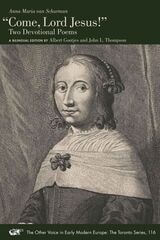
"Come, Lord Jesus!"
Two Devotional Poems. A Bilingual EditionAnna Maria van Schurman
Iter Press, 2026
The life and reputation of Anna Maria van Schurman (1607–78) swung dramatically from her early fame as a prodigy and femme savante to the infamy she bore in the wake of her late affiliation with Jean de Labadie. From her late adolescence on, van Schurman was widely known for her intellectual gifts, her mastery of languages, and her skillful portraiture and embroidery. Described by some as a femme savante and “the Star of Utrecht,” she gained an international reputation with the publication of her defense of women’s education. Her later years, however, were marked by a growing disillusionment with her own fame and intellectual achievements, and her reputation was dramatically marred in the eyes of her contemporaries when, in her final decade, she repudiated the Dutch Reformed Church to affiliate with Jean de Labadie. With him and his spiritual community, she lived out her last years in peace while also composing a two-volume defense of her actions and convictions, entitled Eukleria or The Better Choice.
The years between her withdrawal from public life and her supposedly scandalous return are not easily mapped. Drawing on two long devotional poems that she wrote during this period (and that remained unpublished during her lifetime), this bilingual edition introduces readers to van Schurman’s private piety, as well as to her theological acumen, her artistry as a vernacular poet, and her participation in the leadership of a conventicle of like-minded friends and acquaintances. The English translation closely approximates the rhyme, meter, and cadence of the Dutch original and thus facilitates an appreciation not only of the poet’s meaning but also of the auditory aesthetics of each text.
Art to Come
Histories of Contemporary ArtTerry Smith
Duke University Press, 2019
Come In and Hear the Truth
Jazz and Race on 52nd StreetPatrick Burke
University of Chicago Press, 2008
Come In and Hear the Truth uses a range of materials, from classic photographs to original interviews with musicians, to bring the street’s vibrant history to life and to shed new light on the interracial contacts and collaborations it generated.
Come On, Men, One More Effort …
Anthropogenesis, Christianity, SexuationThierry De Duve
Diaphanes, 2024
Thierry de Duve outlines the main features of a critical theory of male, all-too-male sexuation and cross-gender emancipation, drawing on Marcel Gauchet’s theses on Christianity as an exit from religion, Jacques Lacan’s algebra of desire, and Geneviève Morel’s analysis of the “law of the mother.”
Wouldn’t it have required more than the translation of the three Christian maxims “faith, hope, love” into the revolutionary maxims “liberté, egalité, fraternité?” Is there more to the knot of incarnation, fatherhood, and the cult of Mary than just Christian mysticism? Can the uncertainty of fatherhood become an act of faith that acknowledges a fundamental uncertainty?
Come On, Men, One More Effort… explores ways out of the dead end of political concepts adopted by the Enlightenment and their continued impact today, since the only possibility seems to be to embrace the religious and reject it at the same time.
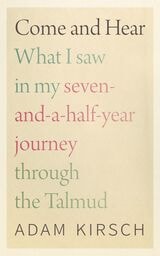
Come and Hear
What I Saw in My Seven-and-a-Half-Year Journey through the TalmudAdam Kirsch
Brandeis University Press, 2021
Spurred by a curiosity about Daf Yomi—a study program launched in the 1920s in which Jews around the world read one page of the Talmud every day for 2,711 days, or about seven and a half years—Adam Kirsch approached Tablet magazine to write a weekly column about his own Daf Yomi experience. An avowedly secular Jew, Kirsch did not have a religious source for his interest in the Talmud; rather, as a student of Jewish literature and history, he came to realize that he couldn’t fully explore these subjects without some knowledge of the Talmud. This book is perfect for readers who are in a similar position. Most people have little sense of what the Talmud actually is—how the text moves, its preoccupations and insights, and its moments of strangeness and profundity. As a critic and journalist Kirsch has experience in exploring difficult texts, discussing what he finds there, and why it matters. His exploration into the Talmud is best described as a kind of travel writing—a report on what he saw during his seven-and-a-half-year journey through the Talmud. For readers who want to travel that same path, there is no better guide.
Come in at the Door
William March
University of Alabama Press, 1934
Come in at the Door is the first in March’s “Pearl County” collection, and it tells the story of Chester, a boy who lives with his withholding, widowed father, and Mitty, who keeps house and serves as a surrogate wife to Chester’s father and a mother to Chester. One morning before dawn, Mitty takes Chester to the Athlestan courthouse to watch the hanging of a man who’d killed “a grotesque, dwarflike creature” he thought had “laid a conjure” on him.
Throughout Chester’s rambunctious young manhood, the gruesome memory hovers just below the surface of his mind, recalled in detail only at his father’s death, when the book sweeps forward to its shattering denouement. A classic of Southern Gothic that illuminates family, class, race, and gender, Come in at the Door marks the homecoming of a Southern storyteller at the peak of his craft.

Come the Sweet By and By
LERMAN ELEANOR
University of Massachusetts Press, 1975
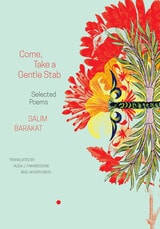
Come, Take a Gentle Stab
Selected PoemsSalim Barakat
Seagull Books, 2021
Although Salim Barakat is one of the most renowned and respected contemporary writers in Arabic letters, he remains virtually unknown in the English-speaking world. This first collection of his poetry in English, representing every stage of his career, remedies that startling omission. Come, Take a Gentle Stab features selections from his most acclaimed works of poetry, including excerpts from his book-length poems, rendered into an English that captures the exultation of language for which he is famous.
A Kurdish-Syrian man, Barakat chose to write in Arabic, the language of cultural and political hegemony that has marginalized his people. Like Paul Celan, he mastered the language of the oppressor to such an extent that the course of the language itself has been compelled to bend to his will. Barakat pushes Arabic to a point just beyond its linguistic limits, stretching those limits. He resists coherence, but never destroys it, pulling back before the final blow. What results is a figurative abstraction of struggle, as alive as the struggle itself. And always beneath the surface of this roiling water one can glimpse the deep currents of ancient Kurdish culture.
For the City Yet to Come
Changing African Life in Four CitiesAbdouMaliq Simone
Duke University Press, 2004
Drawing on his nearly fifteen years of work in African cities—as an activist, teacher, development worker, researcher, and advisor to ngos and local governments—Simone provides a series of case studies illuminating the provisional networks through which most of Africa’s urban dwellers procure basic goods and services. He examines informal economies and social networks in Pikine, a large suburb of Dakar, Senegal; in Winterveld, a neighborhood on the edge of Pretoria, South Africa; in Douala, Cameroon; and among Africans seeking work in Jeddah, Saudi Arabia. He contextualizes these particular cases through an analysis of the broad social, economic, and historical conditions that created present-day urban Africa. For the City Yet to Come is a powerful argument that any serious attempt to reinvent African urban centers must acknowledge the particular history of these cities and incorporate the local knowledge reflected in already existing informal urban economic and social systems.
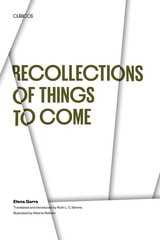
Recollections of Things to Come
By Elena Garro
University of Texas Press, 1969
This remarkable first novel depicts life in the small Mexican town of Ixtepec during the grim days of the Revolution. The town tells its own story against a variegated background of political change, religious persecution, and social unrest. Elena Garro, who has also won a high reputation as a playwright, is a masterly storyteller. Although her plot is dramatically intense and suspenseful, the novel does not depend for its effectiveness on narrative continuity. It is a book of episodes, one that leaves the reader with a series of vivid impressions. The colors are bright, the smells pungent, the many characters clearly drawn in a few bold strokes. Octavio Paz, the distinguished poet and critic, has written that it "is truly an extraordinnary work, one of the most perfect creations in contemporary Latin American literature."
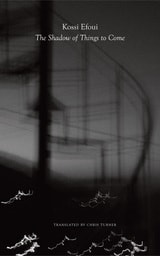
Shadow of Things to Come
Kossi Efoui
Seagull Books, 2013
In an unnamed African nation, the people are subject to a state of perpetual warfare and to an Orwellian abuse of language that strips from language its meaning and renders life senseless. And in a bare room lit only by moonlight, a young man hides, waiting for the mysterious crocodile-men to come and help him escape from the violent tyranny of the state. While he waits, he tells his story.
This is Kossi Efoui’s catastrophic and carnivalesque dreamscape, the dark setting of The Shadow of Things to Come. Here, men and women are taken in the night, spirited away from their families, and sent to plantation penal colonies to be worked to the edge of madness. When they return, they are empty shells, their lost time referred to as the “Time of Annexation.” But though his parents were taken, our protagonist survived, first in the care of a quirky benefactress named Mama Maize, then under the wing of the state itself, as a student at one of its elite schools. When he meets a bookseller named Axis Kemal, however, he has found a surrogate father, an eccentric and wise man who can bring him out of the meaningless confusion and tell him the truth about the society he lives in.
Through his characters, Efoui speaks out against atrocity and the abuse of power, but more, he writes against political rhetoric and the destruction of meaning by government. This novel is a love letter to language and, in Chris Turner’s dazzling translation, it becomes a stunning introduction for English-language readers to an exciting new talent.
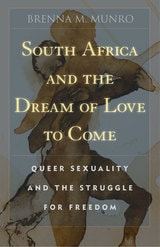
South Africa and the Dream of Love to Come
Queer Sexuality and the Struggle for FreedomBrenna M. Munro
University of Minnesota Press, 2012
After apartheid, South Africa established a celebrated new political order that imagined the postcolonial nation as belonging equally to the descendants of indigenous people, colonizing settlers, transported slaves, indentured laborers, and immigrants. Its constitution, adopted in 1996, was the first in the world to include gays and lesbians as full citizens. Brenna M. Munro examines the stories that were told about sexuality, race, and nation throughout the struggle against apartheid in order to uncover how these narratives ultimately enabled gay people to become imaginable as fellow citizens. She also traces how the gay, lesbian, or bisexual person appeared as a stock character in the pageant of nationhood during the transition to democracy. In the process, she offers an alternative cultural history of South Africa.
Munro asserts that the inclusion of gay people made South Africans feel “modern”—at least for a while. Being gay or being lesbian was reimagined in the 1990s as distinctly South African, but the “newness” that made these sexualities apt symbols for a transformed nation can also be understood as foreign and un-African. Indeed, a Western-style gay identity is often interpreted through the formula “gay equals modernity equals capitalism.” As South Africa’s reentrance into the global economy has failed to bring prosperity to the majority of its citizens, homophobic violence has been on the rise.
Employing a wide array of texts—including prison memoirs, poetry, plays, television shows, photography, political speeches, and the postapartheid writings of Nobel Laureates Nadine Gordimer and J. M. Coetzee—Munro reports on how contemporary queer activists and artists are declining to remain ambassadors for the “rainbow nation” and refusing to become scapegoats for the perceived failures of liberation and liberalism.
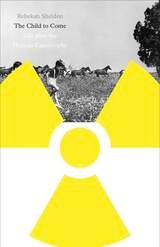
The Child to Come
Life after the Human CatastropheRebekah Sheldon
University of Minnesota Press, 2016
Generation Anthropocene. Storms of My Grandchildren. Our Children’s Trust. Why do these and other attempts to imagine the planet’s uncertain future return us—again and again—to the image of the child? In The Child to Come, Rebekah Sheldon demonstrates the pervasive conjunction of the imperiled child and the threatened Earth and blisteringly critiques the logic of catastrophe that serves as its motive and its method.
Sheldon explores representations of this perilous future and the new figurations of the child that have arisen in response to it. Analyzing catastrophe discourse from the 1960s to the present—books by Joanna Russ, Margaret Atwood, and Cormac McCarthy; films and television series including Southland Tales, Battlestar Galactica, and Children of Men; and popular environmentalism—Sheldon finds the child standing in the place of the human species, coordinating its safe passage into the future through the promise of one more generation. Yet, she contends, the child figure emerges bound to the very forces of nonhuman vitality he was forged to contain.
Bringing together queer theory, ecocriticism, and science studies, The Child to Come draws on and extends arguments in childhood studies about the interweaving of the child with the life sciences. Sheldon reveals that neither life nor the child are what they used to be. Under pressure from ecological change, artificial reproductive technology, genetic engineering, and the neoliberalization of the economy, the queerly human child signals something new: the biopolitics of reproduction. By promising the pliability of the body’s vitality, the pregnant woman and the sacred child have become the paradigmatic figures for twenty-first century biopolitics.

The Kingdom to Come
Thoughts on the Union before and after the Scottish Independence ReferendumPeter Hennessy
Haus Publishing, 2015
Peter Hennessy discusses the run-up to the Scottish Independence Referendum and its immediate aftermath, as well as the constitutional issues the referendum opened for the entire United Kingdom. This book includes Hennessy’s personal impressions of recent questioning of the Acts of Union that created Great Britain and describes when he, as the top expert on Britain’s unwritten constitution, became an important voice in what might happen next. The Kingdom to Come also offers a valuable examination of the possible agenda for remaking the constitution in both the medium and long term.
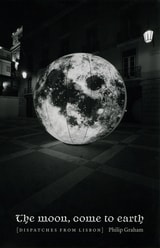
The Moon, Come to Earth
Dispatches from LisbonPhilip Graham
University of Chicago Press, 2009
A dispatch from a foreign land, when crafted by an attentive and skilled writer, can be magical, transmitting pleasure, drama, and seductive strangeness.
In The Moon, Come to Earth, Philip Graham offers an expanded edition of a popular series of dispatches originally published on McSweeney’s, an exuberant yet introspective account of a year’s sojourn in Lisbon with his wife and daughter. Casting his attentive gaze on scenes as broad as a citywide arts festival and as small as a single paving stone in a cobbled walk, Graham renders Lisbon from a perspective that varies between wide-eyed and knowing; though he’s unquestionably not a tourist, at the same time he knows he will never be a local. So his lyrical accounts reveal his struggles with (and love of) the Portuguese language, an awkward meeting with Nobel laureate José Saramago, being trapped in a budding soccer riot, and his daughter’s challenging transition to adolescence while attending a Portuguese school—but he also waxes loving about Portugal’s saudade-drenched music, its inventive cuisine, and its vibrant literary culture. And through his humorous, self-deprecating, and wistful explorations, we come to know Graham himself, and his wife and daughter, so that when an unexpected crisis hits his family, we can’t help but ache alongside them.
A thoughtful, finely wrought celebration of the moment-to-moment excitement of diving deep into another culture and confronting one’s secret selves, The Moon, Come to Earth is literary travel writing of a rare intimacy and immediacy.
The Sound of Things to Come
An Audible History of the Science Fiction FilmTrace Reddell
University of Minnesota Press, 2018
A groundbreaking approach to sound in sci-fi films offers new ways of construing both sonic innovation and science fiction cinema
Including original readings of classics like The Day the Earth Stood Still, 2001: A Space Odyssey, Star Wars, and Blade Runner, The Sound of Things to Come delivers a comprehensive history of sound in science fiction cinema. Approaching movies as sound objects that combine cinematic apparatus and consciousness, Trace Reddell presents a new theory of sonic innovation in the science fiction film.
Reddell assembles a staggering array of movies from sixty years of film history—including classics, blockbusters, B-movies, and documentaries from the United States, Britain, France, Germany, Japan, and the Soviet Union—all in service to his powerful conception of sound making as a speculative activity in its own right. Reddell recasts debates about noise and music, while arguing that sound in the science fiction film provides a medium for alien, unknown, and posthuman sound objects that transform what and how we hear.
Avoiding genre criticism’s tendency to obsess over utopias, The Sound of Things to Come draws on film theory, sound studies, and philosophies of technology to advance conversations about the avant-garde, while also opening up opportunities to examine cinematic sounds beyond the screen.
Theory for the World to Come
Speculative Fiction and Apocalyptic AnthropologyMatthew J. Wolf-Meyer
University of Minnesota Press, 2019
Can social theories forge new paths into an uncertain future?
The future has become increasingly difficult to imagine. We might be able to predict a few events, but imagining how looming disasters will coincide is simultaneously necessary and impossible. Drawing on speculative fiction and social theory, Theory for the World to Come is the beginning of a conversation about theories that move beyond nihilistic conceptions of the capitalism-caused Anthropocene and toward generative bodies of thought that provoke creative ways of thinking about the world ahead. Matthew J. Wolf-Meyer draws on such authors as Kim Stanley Robinson and Octavia Butler, and engages with afrofuturism, indigenous speculative fiction, and films from the 1970s and ’80s to help think differently about the future and its possibilities.
Forerunners: Ideas First
Short books of thought-in-process scholarship, where intense analysis, questioning, and speculation take the lead
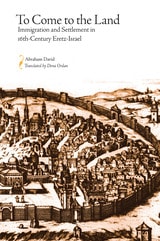
To Come to the Land
Immigration and Settlement in 16th-Century Eretz-IsraelAbraham David, translated by Dena Ordan
University of Alabama Press, 1999
To Come to the Land makes available in English a vast body of research,
previously available only in Hebrew, on the early history of the land now
known as Israel.
Abraham David here focuses on the Spanish and Portuguese Jews who fled
the Iberian Peninsula during the 16th century, tracing the beginnings of
Sephardic influence in the land of Israel.
After the Ottoman Turks conquered Syria, Palestine, and Egypt in 1516,
the Ottoman regime, unlike their Mamluk predecessors, encouraged economic
development and settlement throughout the region. This openness to immigration
offered a solution to the crisis Iberian Jews were undergoing as a result
of their expulsion from Spain and the forced conversions in Portugal. Within
a few years of the Ottoman conquest, Jews of Spanish extraction, many of
them clustered in urban areas, dominated the Jewish communities of Eretz-Israel.
In this carefully researched study, David examines the lasting impression
made by these enterprising Jewish settlers on the commercial, social, and
intellectual life of the area under early Ottoman rule. Of particular interest
is his examination of the cities of Jerusalem and Safed and David's succinct
biographies of leading Jewish personalities throughout the region.
This first English translation of a ground-breaking Hebrew work provides
a comprehensive overview of a significant chapter in the history of Israel
and explores some of the factors that brought to it the best minds of the
age. Essential for scholars of late Medieval Jewish history, To Come to
the Land will also be an important resource for scholars of intellectual
history, as it provides background crucial to an understanding of the intellectual
flourishing of the period.
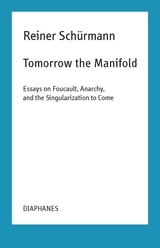
Tomorrow the Manifold
Essays on Foucault, Anarchy, and the Singularization to ComeReiner Schürmann
Diaphanes, 2018
Taken together, these pivotal essays introduce the reader to Schürmann’s most urgent concerns and assemble the conceptual tools that go on to lay the groundwork for his final work, Broken Hegemonies, which offers a subversive re-reading of the history of Western metaphysics outside of Foucault’s genealogical approach. To the reader unfamiliar with Schürmann’s work, these texts establish him as one of the most radical thinkers of the late 20th century, whose work might eventually become legible in our present.
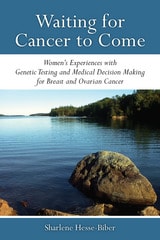
Waiting for Cancer to Come
Women’s Experiences with Genetic Testing and Medical Decision Making for Breast and Ovarian CancerSharlene Hesse-Biber
University of Michigan Press, 2014
Waiting for Cancer to Come tells the stories of women who are struggling with their high risk for cancer. Based on interviews and surveys of dozens of women, this book pieces together the diverse yet interlocking experiences of women who have tested positive for the BRCA 1/2 gene mutations, which indicate a higher risk of developing breast and ovarian cancer. Sharlene Hesse-Biber brings these narratives to light and follows women’s journeys from deciding to get screened for BRCA, to learning the test has come back positive, to dealing with their risk. Many women already know the challenges of a family history riddled with cancer and now find themselves with the devastating knowledge of their own genetic risk. Using the voices of the women themselves to describe the under-explored BRCA experience, Waiting for Cancer to Come looks at the varied emotional, social, economic, and psychological factors at play in women’s decisions about testing and cancer prevention.