Results by title
10 books match the query 'Command'

Advances in Command, Control and Communication Systems
C.J. Harris
The Institution of Engineering and Technology, 1987
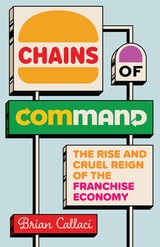
Chains of Command
The Rise and Cruel Reign of the Franchise EconomyBrian Callaci
University of Chicago Press, 2026
A surprising look at the big business of owning small businesses and what America’s franchise economy means for its workers.
Walk into a McDonald’s anywhere in the United States, and it will be identical to every other McDonald’s in the country. Yet, that particular store is almost certainly owned and operated by an “independent” franchisee. While McDonald’s presents an image of centralized uniformity to the consumer, it shows a different face to the small business owners operating its stores under its control and the workers preparing its product to its standards. How then does McDonald’s—and its big business peers—manage to be two things at once?
In this revelatory work, economist Brian Callaci shows how franchisors have altered the legal treatment of corporations in their favor through a decades-long crusade of lobbying and litigation. Their efforts subsequently unleashed a slew of legal and economic sins upon the US economy and labor force, allowing multinational corporations to control continent-spanning empires while outsourcing employment and scapegoating legal responsibilities onto small businesses. The result: the unfettered growth of some of America’s most recognizable businesses, at the aggregate expense of America’s workers.
Remarkable in both its scale and synthesis, Callaci’s story is the first chronicle of this business movement—initially resisted by US courts before experiencing a dramatic reversal of fortune after decades of campaigning by some of America’s most established entrepreneurs. An urgent and erudite history, Chains of Command reveals how the US labor market was tamed one small business at a time.
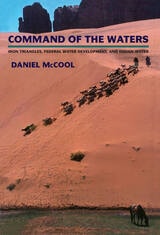
Command of the Waters
Iron Triangles, Federal Water Development, and Indian WaterDaniel C. McCool
University of Arizona Press, 1994
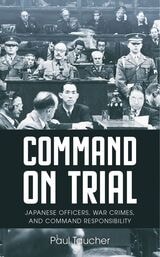
Command on Trial
Japanese Officers, War Crimes, and Command ResponsibilityPaul Taucher
Hong Kong University Press, 2026
An examination of how the legal doctrine of command responsibility was applied during military tribunals for Japanese war criminals, often inconsistently and ineffectively.
Between 1945 and 1951, the Allied powers prosecuted over 5,700 suspected Japanese war criminals across the Asia-Pacific region before one international and many national tribunals using a new legal doctrine known as command responsibility. Command responsibility holds officers criminally liable for the crimes of their subordinates even if they did not order the crimes to occur. Allied authorities believed that the structure of the Japanese military had allowed the crimes to occur and that pursuing guilt for war crimes should extend beyond enlisted soldiers who were the direct perpetrators of war crimes to those who had been in a position of command.
Command on Trial shows that the application of command responsibility in the courtroom was highly unstable and open to manipulation, especially in the trials of lower-ranking officers, resulting in outcomes that were legally, morally, and philosophically inconsistent. A clear illustration of the pitfalls of command responsibility, this book shows that the trials—and command responsibility—did not achieve comprehensive justice and left unanswered the question of who was actually responsible for many of the war crimes that were perpetrated.
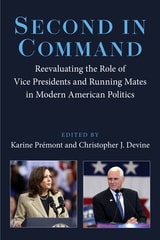
Second in Command
Reevaluating the Role of Vice Presidents and Running Mates in Modern American PoliticsEdited by Karine Prémont and Christopher J. Devine
University of Michigan Press, 2026
In recent years, the office of the vice president has become a focal point of presidential politics and governance. From the emergence of the modern vice presidency under Walter Mondale to Mike Pence’s and Kamala Harris’s dramatic influence on the outcome of the 2020 election, Second in Command explores how vice presidents and vice-presidential candidates have shaped the direction of the country and changed American politics. The frenzy of speculation surrounding the “veepstakes” every four years and extensive media coverage of the vice-presidential debate may seem odd, given the vice presidency’s limited constitutional powers and dismal public reputation.
Dispelling the myth that the vice presidency is a powerless or merely ceremonial role, Second in Command draws on the multidisciplinary expertise of more than a dozen leading vice-presidential scholars to reveal the complex, consequential, and often misunderstood nature of the office. With accessible language and vivid examples, it traces the transformation of vice-presidential power over the past half-century, reveals the evolving electoral significance of vice-presidential running mates, and highlights the need for a deeper public understanding of these pivotal figures. Chapters employ a range of qualitative and quantitative methodologies, including elite interviews, archival research, case studies, and advanced statistical modeling to cover topics such as gender and media effects in running mate selection and the representation of vice presidents in popular culture. This book offers a fresh, engaging, and essential perspective on a vital institution at the heart of American democracy.
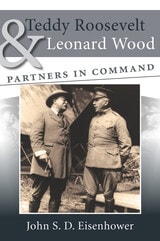
Teddy Roosevelt and Leonard Wood
Partners in CommandJohn S. D. Eisenhower
University of Missouri Press, 2013
Theodore Roosevelt was a man of wide interests, strong opinions, and intense ambition for both himself and his country. When he met Leonard Wood in 1897, he recognized a kindred spirit. Moreover, the two men shared a zeal for making the United States an imperial power that would challenge Great Britain as world leader. For the remainder of their lives, their careers would intertwine in ways that shaped the American nation.
When the Spanish American War came, both men seized the opportunity to promote the goals of American empire. Roosevelt resigned as assistant secretary of the navy in William McKinley’s administration to serve as a lieutenant colonel of the Rough Riders, a newly organized volunteer cavalry. Wood, then a captain in the medical corps and physician to McKinley, was promoted to colonel and given charge of the unit.
Roosevelt later took over command of the Rough Riders. In the Battle of San Juan Hill, he led it in a charge up Kettle Hill that would end in victory for the American troops and make their daring commander a household name, a war hero, and, eventually, president of the United States.
At the Treaty of Paris in 1898, Spain ceded Cuba, Puerto Rico, Guam, and the Philippines to the United States. The next year, Wood became military governor of Cuba. He remained in the post until 1902. By that time Roosevelt was president. One of the major accomplishments of his administration was reorganization of the War Department, which the war with Spain had proved disastrously outdated. In 1909, when William Howard Taft needed a strong army chief of staff to enforce the new rules, he appointed Leonard Wood.
Both Wood and Roosevelt were strong proponents of preparedness, and when war broke out in Europe in August 1914, Wood, retired as chief of staff and backed by Roosevelt, established the “Plattsburg camps,” a system of basic training camps. When America entered the Great War, the two men’s foresight was justified, but their earlier push for mobilization had angered Woodrow Wilson, and both were denied the command positions they sought in Europe.
Roosevelt died in 1919 while preparing for another presidential campaign. Wood made a run in his place but was never taken seriously as a candidate. He retired from the army and spent the last seven years of his life as civilian governor of the Philippines.
It was a quiet end for two men who had been giants of their time. While their modernization of the army is widely admired, they were not without their critics. Roosevelt and Wood saw themselves as bold leaders but were regarded by some as ruthless strivers. And while their shared ambitions for the United States were tempered by a strong sense of duty, they could, in their certainty and determination, trample those who stood in their path. Teddy Roosevelt and Leonard Wood: Partners in Command is a revealing and long overdue look at the dynamic partnership of this fascinating pair and will be welcomed by scholars and military history enthusiasts alike.
The Command of the Air
Giulio Douhet, translated by Dino Ferrari
University of Alabama Press, 2009
The theory that put victory in the skies.
The Command of the Air presents Giulio Douhet’s groundbreaking argument that air power is the decisive force in modern war. In this classic work of military theory, Douhet defines the revolutionary concept of the “command of the air”—the idea that victory belongs to the nation able to prevent its enemy from flying while striking vital centers deep behind the lines. Through bold logic and vivid examples, the book shows how aviation transformed warfare by bypassing armies and navies entirely, projecting power directly against a nation’s industrial, communications, and civilian infrastructure.
This edition brings together Douhet’s original 1921 text, his expanded 1927 revision, and subsequent essays, all framed by a rich editors’ introduction. Readers gain insight into his vision of the Independent Air Force, the strategic use of mass bombing, and the technological evolution of modern aircraft. Douhet’s credentials—an Italian general, early aviation commander, and one of history’s most influential air‑power theorists—underscore the authority and ambition behind his ideas.
Scholars and students of military history, air‑power strategy, national security, and the evolution of modern warfare will find this volume indispensable. It is equally valuable for contemporary defense professionals seeking to understand how concepts such as strategic bombing, total war, and air superiority first took shape.
The Eye of Command
Kimberly Kagan
University of Michigan Press, 2006
Challenging Keegan's seminal work, The Eye of Command offers a new approach to studying and narrating battles, based upon an analysis of the works of the Roman military authors Julius Caesar and Ammianus Marcellinus. Kimberly Kagan argues that historians cannot explain a battle's outcome solely on the basis of soldiers' accounts of small-unit actions. A commander's view, exemplified in Caesar's narratives, helps explain the significance of a battle's major events, how they relate to one another and how they lead to a battle's outcome. The "eye of command" approach also answers fundamental questions about the way commanders perceive battles as they fight them-questions modern military historians have largely ignored.
"The Eye of Command is a remarkable book-smart, thoughtful, clear, vigorous, factual but creative, and grounded in the practical. It is at once scholarly and readable, combining classical scholarship and military theory. Rarely have I come across a book that makes two-thousand-year-old events seem so alive."
-Barry Strauss, Professor of History, Cornell University
"In a work well written, concisely presented, and convincingly argued, Kagan uses examples from Caesar's Gallic Wars to challenge John Keegan's focus on lower-echelon experiences of battle in favor of 'The eye of command': a narrative technique emphasizing decisions and events that shape a battle's outcome."
-Dennis Showalter, Professor of History, Colorado College
"To know whether a battle is won or lost is not enough. Kagan's deep analysis of theory and practice points to a new way of understanding complex army-commander and small-unit perspectives that can properly claim the status of history."
-Gordon Williams, Thacher Professor of Latin Emeritus, Yale University
Kimberly Kagan was an Assistant Professor of History at the United States Military Academy between 2000 and 2005. Since then, she has served as a lecturer in International Affairs, History, and the Humanities at Yale University and as an adjunct professor at Georgetown's Edmund A. Walsh School of Foreign Service and at American University's Department of History. She received her Ph.D. in Ancient History from Yale University.
To Command the Sky
The Battle for Air Superiority Over Germany, 1942-1944Stephen L. McFarland and Wesley Phillips Newton
University of Alabama Press, 2006
To Command the Sky is a scholarly record of the fight for domination of the skies over western Europe during World War II. It also explains the technical details of the tactics used to defeat the Luftwaffe. This book is important for serious students of World War II or military aviation.

Yours to Command
The Life and Legend of Texas Ranger Captain Bill McDonaldHarold J. Weiss Jr.
University of North Texas Press, 2009