Results by title
9 books match the query 'Commemoration'
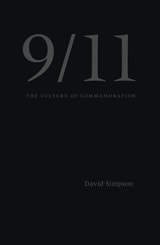
9/11
The Culture of CommemorationDavid Simpson
University of Chicago Press, 2006
In 9/11, Simpson argues that elements of the conventional culture of mourning and remembrance—grieving the dead, summarizing their lives in obituaries, and erecting monuments in their memory—have been co-opted for political advantage. He also confronts those who labeled the event an “apocalypse,” condemning their exploitation of 9/11 for the defense of torture and war.
In four elegant chapters—two of which expand on essays originally published in the London Review of Books to great acclaim—Simpson analyzes the response to 9/11: the nationally syndicated “Portraits of Grief” obituaries in the New York Times; the debates over the rebuilding of the World Trade Center towers and the memorial design; the representation of American and Iraqi dead after the invasion of March 2003, along with the worldwide circulation of the Abu Ghraib torture photographs; and the urgent and largely ignored critique of homeland rhetoric from the domain of critical theory.
Calling for a sustained cultural and theoretical analysis, 9/11 is the first book of its kind to consider the events of that tragic day with a perspective so firmly grounded in the humanities and so persuasive about the contribution they can make to our understanding of its consequences.
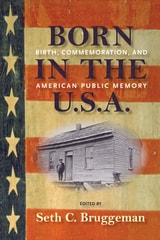
Born in the U.S.A.
Birth, Commemoration, and American Public MemorySeth C. Bruggeman
University of Massachusetts Press, 2012
Beyond asking why it is that Americans care about birthplaces and how they choose which ones to commemorate, Born in the U.S.A. offers insights from historians, curators, interpretive specialists, and others whose experience speaks directly to the challenges of managing historical sites. Each essay points to new ways of telling old stories at these mainstays of American memory. The case of the modern house museum receives special attention in a provocative concluding essay by Patricia West.
In addition to West and the editor, contributors include Christine Arato, Dan Currie, Keith A. Erekson, David Glassberg, Anna Thompson Hajdik, Zachary J. Lechner, Paul Lewis, Hilary Iris Lowe, Cynthia Miller, Laura Lawfer Orr, Robert Paynter, Angela Phelps, and Paul Reber.

Dethroning historical reputations
universities, museums and the commemoration of benefactorsEdited by Jill Pellew and Lawrence Goldman
University of London Press, 2018
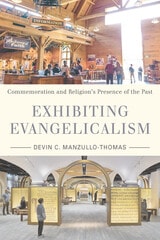
Exhibiting Evangelicalism
Commemoration and Religion’s Presence of the PastDevin C. Manzullo-Thomas
University of Massachusetts Press, 2022
Religion is a subject often overlooked or ignored by public historians. Whether they are worried about inadvertent proselytizing or fearful of contributing to America’s ongoing culture wars, many heritage professionals steer clear of discussing religion’s formative role in the past when they build collections, mount exhibits, and develop educational programming. Yet religious communities have long been active contributors to the nation’s commemorative landscape.
Exhibiting Evangelicalism provides the first account of the growth and development of historical museums created by white evangelical Christians in the United States over the twentieth and twenty-first centuries. Exploring the histories of the Museum of the Bible, the Billy Graham Center Museum, the Billy Sunday Home, and Park Street Church, Devin C. Manzullo-Thomas illustrates how these sites enabled religious leaders to develop a coherent identity for their fractious religious movement and to claim the centrality of evangelicalism to American history. In their zeal to craft a particular vision of the national past, evangelicals engaged with a variety of public history practices and techniques that made them major players in the field—including becoming early adopters of public history’s experiential turn.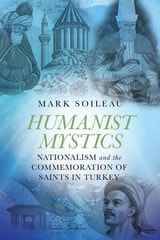
Humanist Mystics
Nationalism and the Commemoration of Saints in TurkeyMark Soileau
University of Utah Press, 2018
Humanist Mystics is the first book to examine Islam and secularism within Turkish nationalist ideology through the lens of commemorated saints. Soileau surveys Anatolian and Turkish religious and political history as the context for his closer attention to the lives and influence of these three Sufi saints. By comparing premodern hagiographic and scholarly representations with twentieth-century monographs, literary works, artistic media, and commemorative ceremonies, he shows how the saints have been transformed into humanist mystics and how this change has led to debates about their character and relevance.
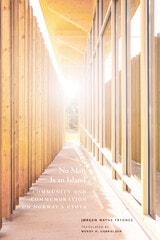
No Man Is An Island
Community and Commemoration on Norway's UtøyaJørgen Watne Frydnes, translated by Wendy H. Gabrielsen
University of Massachusetts Press, 2025
On July 22, 2011, a white supremacist killed eight people at Oslo’s Government Center in Norway and then terrorized the idyllic island of Utøya, where he executed sixty-nine more people, mostly teenagers. The country had never suffered such a massacre, and in the aftermath, the entire population was reeling.
Utøya, the Norwegian Labor Party’s summer camp for youth, a beloved place where many Norwegians learned about democratic values and processes, made lifelong friendships, and developed a vision for a just society, became mired in grief and discord. When Jørgen Watne Frydnes took on the daunting task of rebuilding the island and charting its future, he had to figure out a compassionate and just way forward. He made a radical decision: he set out to talk with each family of a murdered person, seeking to understand their needs and their hopes so that the future of the island could include their wishes and concerns. This emotionally grueling work, which was never considered in the scholarly literature on commemoration, led to a true renewal of Utøya, resulting in a meaningful memorial to those who were lost as well as beautiful surroundings for campers who come there to study democracy and peace.
Frydnes’s narrative, originally published in Norwegian, is structured around the seasons of the year and the landscape of the island, and tracks one person’s account of learning how to remember, commemorate, and honor the dead, and acknowledge a mass tragedy, and yet also create a nurturing, aspirational space for hope.
Screening Auschwitz
Wanda Jakubowska's The Last Stage and the Politics of CommemorationMarek Haltof
Northwestern University Press, 2018
Screening Auschwitz examines the classic Polish Holocaust film The Last Stage (Ostatni etap), directed by the Auschwitz survivor Wanda Jakubowska (1907–1998). Released in 1948, The Last Stage was a pioneering work and the first narrative film to portray the Nazi concentration and extermination camp complex of Auschwitz-Birkenau. Marek Haltof’s fascinating book offers English-speaking readers a wealth of new materials, mostly from original Polish sources obtained through extensive archival research.
With its powerful dramatization of the camp experience, The Last Stage established several quasi-documentary themes easily discernible in later film narratives of the Shoah: dark, realistic images of the camp, a passionate moral appeal, and clear divisions between victims and perpetrators. Jakubowska’s film introduced images that are now archetypal—for example, morning and evening roll calls on the Appelplatz, the arrival of transport trains at Birkenau, the separation of families upon arrival, and tracking shots over the belongings left behind by those who were gassed. These and other images are taken up by a number of subsequent American films, including George Stevens’s The Diary of Anne Frank (1959), Alan Pakula’s Sophie’s Choice (1982), and Steven Spielberg’s Schindler’s List (1993).
Haltof discusses the unusual circumstances that surrounded the film's production on location at Auschwitz-Birkenau and summarizes critical debates surrounding the film’s release. The book offers much of interest to film historians and readers interested in the Holocaust.
Selective Remembrances
Archaeology in the Construction, Commemoration, and Consecration of National PastsEdited by Philip L. Kohl, Mara Kozelsky, and Nachman Ben-Yehuda
University of Chicago Press, 2008
Examining such relatively new or reconfigured nation-states as Iran, Iraq, Turkey, Israel, Russia, Ukraine, India, and Thailand, Selective Remembrances shows how states invoke the remote past to extol the glories of specific peoples or prove claims to ancestral homelands. Religion has long played a key role in such efforts, and the contributors take care to demonstrate the tendency of many people, including archaeologists themselves, to view the world through a religious lens—which can be exploited by new regimes to suppress objective study of the past and justify contemporary political actions.
The wide geographic and intellectual range of the essays in Selective Remembrances will make it a seminal text for archaeologists and historians.

Unbecoming Nationalism
From Commemoration to Redress in CanadaHelene Vosters
University of Manitoba Press, 2019