Results by title
5 books match the query 'Commonwealth countries'
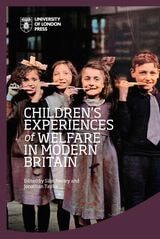
Children’s Experiences of Welfare in Modern Britain
Edited by Siân Pooley and Jonathan Taylor
University of London Press, 2021
Children’s Experiences of Welfare in Modern Britain demonstrates how the young have been integral to the creation, delivery, and impact of welfare. The book brings together the very latest research on welfare as provided by the state, charities, and families in nineteenth- and twentieth-century Britain. The ten chapters consider a wide range of investments in young people’s lives, including residential institutions, Commonwealth emigration schemes, hospitals and clinics, schools, social housing, and familial care. Drawing upon thousands of personal testimonies and oral histories—including a wealth of writing by children themselves—the book shows that we can only understand the history and impact of welfare if we listen to children’s experiences.
Electronic Evidence and Electronic Signatures
Stephen Mason and Daniel Seng
University of London Press, 2021
In this updated edition of a well-established practitioner text, Stephen Mason and Daniel Seng have brought together a team of experts in the field to provide an exhaustive treatment of electronic evidence and electronic signatures. This fifth edition continues to follow the tradition in English evidence textbooks by basing the text on the law of England and Wales, with appropriate citations of relevant case law and legislation from other jurisdictions.

Envisioning Global LGBT Human Rights
(Neo)colonialism, Neoliberalism, Resistance and HopeEdited by Nancy Nicol, Adrian Jjuuko, Richard Lusimbo, Nick Mulé, Susan Ursel, Amar Wahab, and Phyllis Waugh
University of London Press, 2018
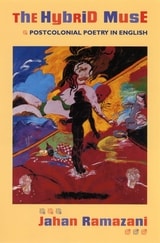
The Hybrid Muse
Postcolonial Poetry in EnglishJahan Ramazani
University of Chicago Press, 2001
In The Hybrid Muse, Jahan Ramazani argues that postcolonial poets have also dramatically expanded the atlas of literature in English, infusing modern and contemporary poetry with indigenous metaphors and creoles. A rich and vibrant poetry, he contends, has issued from the hybridization of the English muse with the long resident muses of Africa, India, and the Caribbean. Starting with the complex case of Ireland, Ramazani closely analyzes the work of leading postcolonial poets and explores key questions about the relationship between poetry and postcolonialism. As inheritors of both imperial and native cultures, poets such as W. B. Yeats, Derek Walcott, Louise Bennett, A. K. Ramanujan, and Okot p'Bitek invent compelling new forms to articulate the tensions and ambiguities of their cultural in-betweeness. They forge hybrid figures, vocabularies, and genres that embody the postcolonial condition.
Engaging an array of critical topics, from the aesthetics of irony and metaphor to the politics of nationalism and anthropology, Ramazani reconceptualizes issues central to our understanding of both postcolonial literatures and twentieth-century poetry. The first book of its kind, The Hybrid Muse will help internationalize the study of poetry, and in turn, strengthen the place of poetry in postcolonial studies.
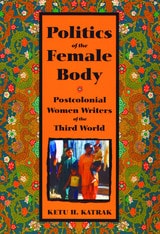
The Politics of the Female Body
Postcolonial Women WritersKetu H. Katrak
Rutgers University Press, 2006
Is it possible to simultaneously belong to and be exiled from a community? In Politics of the Female Body, Ketu H. Katrak argues that it is not only possible, but common, especially for women who have been subjects of colonial empires.
Through her careful analysis of postcolonial literary texts, Katrak uncovers the ways that the female body becomes a site of both oppression and resistance. She examines writers working in the English language, including Anita Desai from India, Ama Ata Aidoo from Ghana, and Merle Hodge from Trinidad, among others. The writers share colonial histories, a sense of solidarity, and resistance strategies in the on-going struggles of decolonization that center on the body.
Bringing together a rich selection of primary texts, Katrak examines published novels, poems, stories, and essays, as well as activist materials, oral histories, and pamphlets—forms that push against the boundaries of what is considered strictly literary. In these varied materials, she reveals common political and feminist alliances across geographic boundaries.
A unique comparative look at women’s literary work and its relationship to the body in third world societies, this text will be of interest to literary scholars and to those working in the fields of postcolonial studies and women’s studies.