Results by title

4 books match the query 'Communalism'
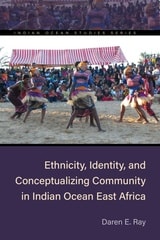
cover of Ethnicity, Identity, and Conceptualizing Community in Indian Ocean East Africa

Ethnicity, Identity, and Conceptualizing Community in Indian Ocean East Africa

Daren E. Ray

Ohio University Press, 2023

This volume explores how the people of littoral East Africa imagined and reimagined their communities over two millennia of engagement with Indian Ocean transformations—from the settlement of Bantu speakers near the coast around the first century CE to their participation in transoceanic commerce, imperial rivalries, colonial projects, and decolonization movements in the mid-twentieth century. Like other histories of the Indian Ocean, it emphasizes the circulation of people and ideas, but its cis-oceanic approach demonstrates how these littoral communities continued to integrate strategies from those in Africa’s interior as well as from people who traveled the ocean. The book also clarifies the precise relationship between ethnicity and other kinds of identities by expanding the conventional focus on Swahili people to speakers of Sabaki Bantu languages, as well as to Mijikenda, Pokomo, and Elwana communities, whom Indian Ocean scholars often overlook. By examining all these groups’ shared linguistic heritage, the book outlines their forebears’ innovation and transformation of lineages, clans, confederations, councils, title societies, age sets, moieties, religious sects, and tribes. Drawing together evidence from linguistics, archaeology, ethnography, oral traditions, travelers’ accounts, and colonial records, the book explores how the speakers of Sabaki languages continuously reconceptualized their identities in littoral East Africa as the political topography of the Indian Ocean world changed around them. Moving seamlessly across multiple precolonial and colonial eras and beyond, this deep history of collaboration and political imagination leads readers through the transitions of identity that mattered to littoral East Africans. The book fills the need for an updated synthesis of East Africans’ engagements with diasporic communities in Indian Ocean and world history courses. In addition, since most African history publications for classroom use in recent years have focused exclusively on modern times, it satisfies the demand for works that span the early and modern eras. Beyond the classroom, the book will interest specialists in the history of the Indian Ocean, Africa, Islam, imperialism, and ethnohistory. A major contribution of this multidisciplinary work is to present the research of archaeologists, anthropologists, linguists, and historians to one another in an accessible, jargon-free manner. While Africanists will appreciate how the book expands the boundaries of the Indian Ocean to include oft-ignored communities, Indian Ocean specialists will find models for investigating the construction of ethnicity and other collective identities across multiple centuries.
[more]
cover of Fraternal Critique: The Politics of Muslim Community in France

Fraternal Critique

The Politics of Muslim Community in France

Kirsten Wesselhoeft

University of Chicago Press, 2025

An exploration of ways that discord binds rather than divides communal life, through an ethnography of French Muslim activism.
 
The conversation about Islam in France is framed by the presumption that Muslim communities are a threat to secular solidarity or fraternité. In the face of state repression, French Muslims have not closed ranks around a narrow range of voices; instead, Kirsten Wesselhoeft finds that young Muslim activists have continued to purposefully spark debate about the values that anchor community life. Wesselhoeft argues that such disagreements, far from dividing communities, actually constitute a form of belonging. Some activists call this ethic “fraternal critique,” and Wesselhoeft finds in it profound insights about the place for critique in civic life. The French state has reacted to Muslim solidarity with repression, but Wesselhoeft argues that unity need not come at the expense of dissent. Instead, fraternal critique can teach us how to build communities that are worth fighting over and fighting for.
[more]
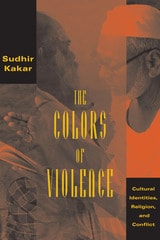
cover of The Colors of Violence: Cultural Identities, Religion, and Conflict

The Colors of Violence

Cultural Identities, Religion, and Conflict

Sudhir Kakar

University of Chicago Press, 1996

For decades India has been intermittently tormented by brutal outbursts of religious violence, thrusting thousands of ordinary Hindus and Muslims into bloody conflict. In this provocative work, psychoanalyst Sudhir Kakar exposes the psychological roots of Hindu-Muslim violence and examines with grace and intensity the subjective experience of religious hatred in his native land.

With honesty, insight, and unsparing self-reflection, Kakar confronts the profoundly enigmatic relations that link individual egos to cultural moralities and religious violence. His innovative psychological approach offers a framework for understanding the kind of ethnic-religious conflict that has so vexed social scientists in India and throughout the world.

Through riveting case studies, Kakar explores cultural stereotypes, religious antagonisms, ethnocentric histories, and episodic violence to trace the development of both Hindu and Muslim psyches. He argues that in early childhood the social identity of every Indian is grounded in traditional religious identifications and communalism. Together these bring about deep-set psychological anxieties and animosities toward the other. For Hindus and Muslims alike, violence becomes morally acceptable when communally and religiously sanctioned. As the changing pressures of modernization and secularism in a multicultural society grate at this entrenched communalism, and as each group vies for power, ethnic-religious conflicts ignite. The Colors of Violence speaks with eloquence and urgency to anyone concerned with the postmodern clash of religious and cultural identities.
[more]
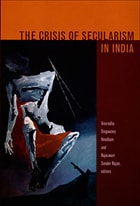
cover of The Crisis of Secularism in India

The Crisis of Secularism in India

Anuradha Dingwaney Needham and Rajeswari Sunder Rajan, eds.

Duke University Press, 2007

While secularism has been integral to India’s democracy for more than fifty years, its uses and limits are now being debated anew. Signs of a crisis in the relations between state, society, and religion include the violence directed against Muslims in Gujarat in 2002 and the precarious situation of India’s minority religious groups more generally; the existence of personal laws that vary by religious community; the affiliation of political parties with fundamentalist religious organizations; and the rallying of a significant proportion of the diasporic Hindu community behind a resurgent nationalist Hinduism. There is a broad consensus that a crisis of secularism exists, but whether the state can resolve conflicts and ease tensions or is itself part of the problem is a matter of vigorous political and intellectual debate. In this timely, nuanced collection, twenty leading Indian cultural theorists assess the contradictory ideals, policies, and practices of secularism in India.

Scholars of history, anthropology, religion, politics, law, philosophy, and media studies take on a broad range of concerns. Some consider the history of secularism in India; others explore theoretical issues such as the relationship between secularism and democracy or the shortcomings of the categories “majority” and “minority.” Contributors examine how the debates about secularism play out in schools, the media, and the popular cinema. And they address two of the most politically charged sites of crisis: personal law and the right to practice and encourage religious conversion. Together the essays inject insightful analysis into the fraught controversy about the shortcomings and uncertain future of secularism in the world today.

Contributors. Flavia Agnes, Upendra Baxi, Shyam Benegal, Akeel Bilgrami, Partha Chatterjee, V. Geetha, Sunil Khilnani, Nivedita Menon, Ashis Nandy, Anuradha Dingwaney Needham, Gyanendra Pandey, Gyan Prakash, Arvind Rajagopal, Paula Richman, Sumit Sarkar, Dwaipayan Sen, Rajeswari Sunder Rajan, Shabnum Tejani, Romila Thapar, Ravi S. Vasudevan, Gauri Viswanathan

[more]