Results by title
16 books match the query 'Communicable diseases'

Avian Reservoirs
Virus Hunters and Birdwatchers in Chinese Sentinel PostsFrédéric Keck
Duke University Press, 2020

Breeding Bio Insecurity
How U.S. Biodefense Is Exporting Fear, Globalizing Risk, and Making Us All Less SecureLynn C. Klotz and Edward J. Sylvester
University of Chicago Press, 2009
In the years since the 9/11 attacks—and the subsequent lethal anthrax letters—the United States has spent billions of dollars on measures to defend the population against the threat of biological weapons. But as Lynn C. Klotz and Edward J. Sylvester argue forcefully in Breeding Bio Insecurity, all that money and effort hasn’t made us any safer—in fact, it has made us more vulnerable.
Breeding Bio Insecurity reveals the mistakes made to this point and lays out the necessary steps to set us on the path toward true biosecurity. The fundamental problem with the current approach, according to the authors, is the danger caused by the sheer size and secrecy of our biodefense effort. Thousands of scientists spread throughout hundreds of locations are now working with lethal bioweapons agents—but their inability to make their work public causes suspicion among our enemies and allies alike, even as the enormous number of laboratories greatly multiplies the inherent risk of deadly accidents or theft. Meanwhile, vital public health needs go unmet because of this new biodefense focus. True biosecurity, the authors argue, will require a multipronged effort based in an understanding of the complexity of the issue, guided by scientific ethics, and watched over by a vigilant citizenry attentive to the difference between fear mongering and true analysis of risk.
An impassioned warning that never loses sight of political and scientific reality, Breeding Bio Insecurity is a crucial first step toward meeting the evolving threats of the twenty-first century.

City Of Plagues
Disease, Poverty, And Deviance In San FranciscoSusan Craddock
University of Minnesota Press, 2004
An eye-opening discussion of the ways disease shapes urban society
Disease may not discriminate, but it helps those who do. In this fascinating book, Susan Craddock examines the role of disease and health policy in the construction of race, gender, and class, and in urban development in nineteenth- and twentieth-century San Francisco. An absorbing look at the role of disease and health policy in the construction of race, gender, and class in urban development during nineteenth- and twentieth-century San Francisco. Susan Craddock considers tuberculosis, plague, smallpox, and syphilis as diseases whose devastations were derived in part from their use as political tools and disciplinary mechanisms
Epidemic of Rumors
How Stories Shape Our Perception of DiseaseJon D. Lee
Utah State University Press, 2014
Folklore studies brings important and useful perspectives to understanding cultural responses to the outbreak of disease. Through this etiological study Lee shows the similarities between the narratives of the SARS outbreak and the narratives of other contemporary disease outbreaks like AIDS and the H1N1 virus. His analysis suggests that these disease narratives do not spring up with new outbreaks or diseases but are in continuous circulation and are recycled opportunistically. Lee also explores whether this predictability of vernacular disease narratives presents the opportunity to create counter-narratives released systematically from the government or medical science to stymie the negative effects of the fearful rumors that so often inflame humanity.
With potential for practical application to public health and health policy, An Epidemic of Rumors will be of interest to students and scholars of health, medicine, and folklore.
Fevered Measures
Public Health and Race at the Texas-Mexico Border, 1848–1942John Mckiernan-González
Duke University Press, 2012

Geographic Medicine for the Practitioner
Algorithms in the Diagnosis and Management of Exotic DiseasesKenneth D. Warren and Adel A. F. Mahmoud
University of Chicago Press, 1978
"The algorithms in this book have been developed by Drs. Warren and Mahmoud, as the result of a systematic effort to produce such guides. The book is presented as another in the series "Studies in Infectious Disease Research" and is a most welcome addition, certain to supply a major and hitherto inadequately fulfilled need."—from the Foreword, by Edward H. Kass, M. D., Ph.D
Hives of Sickness
Public Health and Epidemics in New York CityRosner, David
Rutgers University Press, 1995
An 1865 report on public health in New York painted a grim picture of "high brick blocks and closely-packed houses . . . literally hives of sickness" propagating epidemics of cholera, smallpox, typhoid, typhus, and yellow fever, which swept through the whole city. In this stimulating collection of essays, nine historians of American medicine explore New York's responses to its public health crises from colonial times to the present. The essays illustrate the relationship between the disease environment of New York and changes in housing, population, social conditions, and the success of medical science, linking such factors to New York's experiences with smallpox, polio, and AIDS.
The volume is essential reading for anyone interested in American public health and the social history of New York.
The contributors are Ronald Bayer, Elizabeth Blackmar, Gretchen A. Condran, Elizabeth Fee, Daniel M. Fox, Evelynn M. Hammonds, Alan M. Kraut, Judith Walzer Leavitt, and Naomi Rogers. David Rosner is a professor of history at Baruch College and The Graduate School of the City University of New York. Robert R. Macdonald is the director of the Museum of the City of New York.
A publication of the Museum of the City of New York
Choice Reviews 1995 November
This is one of a series of books focusing on the impact of disease intended to enhance the understanding of both past and present regarding reactions to periodic epidemics. Robert B. Macdonald, director of the Museum of the City of New York, which supports this series, states: "The individual and collective responses to widespread sickness are mirrors to the cultural, religious, economic, political, and social histories of cities and nations." Rosner selected eight renowned and respected individuals to describe the reactions and responses to smallpox, polio, and AIDS epidemics in New York City since 1860, and the efforts of officials and professionals to deal with the impact of disease. Essayists present disease broadly from economic, social, political, and health perspectives. Causes of epidemics include the expected and usual: thousands of immigrants pouring into the city, inadequate water and food supplies, lack of sewage disposal, unemployment leading to poverty. An unexpected cause was the avarice of real estate investors, inexorably driving up housing costs.
Highly recommended for all students of history, public health, health policy, and sociology. Upper-division undergraduate through professional. Copyright 1999 American Library Association
In Contagion's Wake
Black Writers and the Development of Modern Outbreak NarrativesKelly L. Bezio
University of Massachusetts Press, 2026
An examination of early American literature that highlights how racial divides exacerbated—and were exacerbated by—the spread of infection
In April of 1721, the HMS Seahorse arrived in Boston from the West Indies, causing a smallpox epidemic that would plague the city for the next year. Of its 12,000 inhabitants, nearly fifty percent were infected, and 900 people died. Like the coronavirus pandemic that began in 2020, the outbreak also brought to the surface deep divides in the social fabric of colonial New England and laid the groundwork for racialized political inequities that we continue to grapple with today.
In Contagion’s Wake examines a range of American outbreak narratives, both historical and fictional, written between the early 1700s and the early 1900s—from the rise of inoculation through the advent of germ theory. Author Kelly L. Bezio argues that during this period, literature about communicable disease was dominated by white authors, such as Cotton Mather and Edgar Allen Poe, who tended to privilege white suffering and survival while obscuring Black suffering and vulnerability. Black authors, however, such as Olaudah Equiano and Frances E.W. Harper, developed variations on plot structures, metaphors, and imagery that drew upon contagion to represent racial injustice and further the cause of Black liberation.
The diverse texts Bezio analyzes vary extensively in genre and geographical location, and in the illnesses that feature in their pages. Significant disorders from the era, including yellow fever, smallpox, consumption, and cholera, make frequent appearances, as do less culturally dominant diseases such as St. Anthony’s Fire. In Contagion’s Wake contends that representations of communicable disease should not be understood only as within their own historical moment; rather, they function more like a DNA code for our present time.
Infectious Disease Emergencies
Preparedness and ResponseEdited by Dale Fisher
National University of Singapore Press, 2025
For too long, the theory and practice of infectious disease outbreak response have been the domain of a small number of experienced responders. The COVID-19 pandemic brought global attention to the requirements of effective outbreak response, and the need for preparation across the key pillars. Decisionmakers, early career practitioners, and those in the field now have access to a comprehensive text that brings together evidence-based and practical insights from the best in the business.
Dale Fisher, Professor of Medicine at the National University of Singapore, was chair of WHO’s Global Outbreak Alert and Response Network before and during most of the pandemic. In this massive collaborative effort, he marshals nearly one hundred top public health leaders and experts from the front lines to present thirty-seven chapters on pandemic preparedness and response, drawing heavily on experiences from COVID-19, but also from Ebola, MERS, SARS-1, influenza, and other outbreaks of modern times. The contributors include experts from health ministries and Centres for Disease Control and national public health institutions around the world; from international organizations like the WHO, MSF, IFRC, and UNICEF; and research institutions and various NGOs from dozens of countries, adding to the diversity and richness of the descriptions.
Kiss of Death
Contagion, Contamination, and FolkloreAndrea Kitta
Utah State University Press, 2019
Using ethnographic, media, and narrative analysis, this book explores the vernacular explanatory models used in decisions concerning contagion to better understand the real fears, risks, concerns, and doubts of the public. Kitta explores immigration and patient zero, zombies and vampires, Slender Man, HPV, and the kiss of death legend, as well as systematic racism, homophobia, and misogyny in North American culture, to examine the nature of contagion and contamination.
Conversations about health and risk cannot take place without considering positionality and intersectionality. In The Kiss of Death, Kitta isolates areas that require better communication and greater cultural sensitivity in the handling of infectious disease, public health, and other health-related disciplines and industries.

Medical Misinformation in Early Modern Germany
Christopher Hutchinson
University of Delaware Press, 2026
Medical Misinformation in Early Modern Germany examines how doctors, writers, and printers in sixteenth-century Germany responded to the rapid expansion of print and its implications for medical knowledge. The spread of printed texts generated widespread suspicion about print’s reliability as a conduit of information and led writers to reflect on questions of audience, vernacularity, and medical authority in their responses to disease. The book investigates literary texts alongside popular vernacular medical pamphlets on the major epidemic diseases of the period––plague, syphilis, and the English sweating sickness––to reveal a widespread concern with the impact of printed texts on public health. During the 1529 outbreak of the English sweating sickness, this concern culminated in writers’ use of a “rhetoric of virality,” explicitly comparing the circulation of texts to the spread of disease, as they confronted the parallel contagions of disease and information.
No Germs Allowed!
How to Avoid Infectious Diseases At Home and on the RoadWeinberg, Winkler G
Rutgers University Press, 1996
AIDS, tuberculosis, hepatitis, chickenpox, malaria, Lyme disease, salmonella, strep throat-no matter where you go or where you live, you are at risk from infectious disease. But there are ways you can protect yourself and your family!
The revised and expanded edition of this classic guide explains what you need to know to keep the germs away. From the infections of daily life, like the common cold and traveler's diarrhea, to dangerous, rare diseases such as plague, hantavirus, and invasive strep bacteria, to recent threats of mad cow disease, West Nile virus, SARS, and bioterrorism, this unique guide tells you:
- your chances of getting sick
- simple precautions you can take
- which vaccinations and shots are worthwhile
- how to avoid catching infections in the hospital
- special precautions to take if you are pregnant
- how to ward off infections even if you have chronic health problems or are HIV positive
- how to keep well while traveling
- what to eat-and not eat-on the road
- symptoms that signal trouble
- what illnesses you can get from bug bites and animals
- how to prevent sexually transmitted diseases
- who should get flu shots and why
- why you should see your doctor before you get sick
Dr. Winkler G. Weinberg lets you know what you need to worry about and what you don't.
Raw Material
Producing Pathology in Victorian CultureErin O'Connor
Duke University Press, 2000
O’Connor focuses on how four particularly troubling physical conditions were represented in a variety of literature. She begins by exploring how Asiatic cholera, which reached epidemic proportions on four separate occasions between 1832 and 1865, was thought to represent the dangers of cultural contamination and dissolution. The next two chapters concentrate on the problems breast cancer and amputation posed for understanding gender. After discussing how breast cancer was believed to be caused by the female body’s intolerance to urban life, O'Connor turns to men’s bodies, examining how new prosthetic technology allowed dismembered soldiers and industrial workers to reconstruct themselves as productive members of society. The final chapter explores how freak shows displayed gross deformity as the stuff of a new and improved individuality. Complicating an understanding of the Victorian body as both a stable and stabilizing structure, she elaborates how Victorians used disease as a messy, often strategically unintelligible way of articulating the uncertainties of chaotic change. Over the course of the century, O’Connor shows, the disfiguring process of disease became a way of symbolically transfiguring the self. While cholera, cancer, limb loss, and deformity incapacitated and even killed people, their dramatic symptoms provided opportunities for imaginatively adapting to a world where it was increasingly difficult to determine not only what it meant to be human but also what it meant to be alive.
Raw Material will interest an audience of students and scholars of Victorian literature, cultural history, and the history of medicine.
Strategies for Primary Health Care
Technologies Appropriate for the Control of Disease in the Developing WorldEdited by Julia A. Walsh and Kenneth S. Warren
University of Chicago Press, 1986
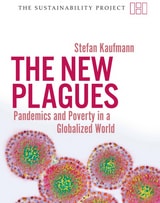
The New Plagues
Pandemics and Poverty in a Globalized WorldStefan Kaufmann
Haus Publishing, 2009
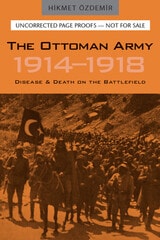
The Ottoman Army 1914 - 1918
Disease and Death on the BattlefieldHikmet Ozdemir
University of Utah Press, 2008
What kind of relationship exists between wars and epidemics? It is widely held that epidemics affected the outcomes of many wars and, until World War II, more victims of war died of disease than of battle wounds. Many disease vectors are present in times of conflict, including mass movements of people across borders and increased contact between persons of different geographic regions, yet disease is rarely treated in depth in histories of war.
Hikmet Özdemir’s The Ottoman Army, 1914–1918 provides extensive documentation of disease and death across the Ottoman Empire during World War I, when epidemic diseases annihilated armies and caused civilians to perish en masse. Drawing on hospital records and information on regional disease prevalence, Özdemir examines the effects that disease and epidemic had on the outcome of the war.
The information on disease mortality explains much that has never been properly understood about wartime events and government actions, events that only begin to make sense when the disease factor is considered. Rich in detail, this is an extremely valuable book that illuminates a facet of the war that has not been adequately considered until now.