Results by title
12 books match the query 'Communication in medicine'
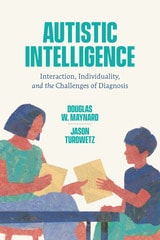
Autistic Intelligence
Interaction, Individuality, and the Challenges of DiagnosisDouglas W. Maynard and Jason Turowetz
University of Chicago Press, 2022
Winner 2024 Outstanding Recent Contribution in Social Psychology Award, Social Psychology Section, American Sociological Association
Winner 2024 Melvin Pollner Prize, Ethnomethodology and Conversation Analysis Section, American Sociological Association
As autism has grown in prevalence, so too have our attempts to make sense of it. From placing unfounded blame on vaccines to seeking a genetic cause, Americans have struggled to understand what autism is and where it comes from. Amidst these efforts, however, a key aspect of autism has been largely overlooked: the diagnostic process itself. That process is the central focus of Autistic Intelligence. The authors ask us to question the norms by which we measure autistic behavior, to probe how that behavior can be considered sensible rather than disordered, and to explore how we can better appreciate the individuality of those who receive the diagnosis.Drawing on hundreds of hours of video recordings and ethnographic observations at a clinic where professionals evaluated children for autism, the authors’ analysis of interactions among clinicians, parents, and children demystifies the categories, tools, and practices involved in the diagnostic process. Autistic Intelligence shows that autism is not a stable category; it is the outcome of complex interactional processes involving professionals, children, families, and facets of the social and clinical environments they inhabit. The authors suggest that diagnosis, in addition to carefully classifying children, also can highlight or include unique and particular contributions those with autism potentially can make to the world around us.
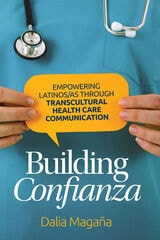
Building Confianza
Empowering Latinos/as Through Transcultural Health Care CommunicationDalia Magaña
The Ohio State University Press, 2021
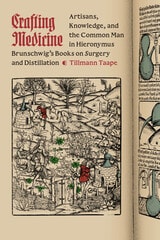
Crafting Medicine
Artisans, Knowledge, and the Common Man in Hieronymus Brunschwig's Books on Surgery and DistillationTillmann Taape
University of Chicago Press, 2025
Between 1497 and 1512, Hieronymus Brunschwig (ca. 1450–ca. 1530), an obscure craftsman from Strasbourg, wrote books on surgery and pharmacy that transformed medical expertise, how it was codified in print, and how it was communicated to new audiences. Brunschwig was an unlikely author. He apprenticed as a surgeon in the local guild and dispensed medicines from his own shop. But he was remarkably well-read in surgery, alchemy, and medical theory, even if he lacked a university education. His unique authorial voice spoke to the healing practices of craftsmen and common people in a down-to-earth German dialect.
Crafting Medicine, by Tillmann Taape, is the first in-depth study of Brunschwig and his works. In it, Taape argues that Brunschwig’s writings shaped a nascent tradition of vernacular medicine. Brunschwig’s books represent a key moment in the history of medical print, for they conveyed medical expertise to a new readership of nonacademic practitioners, who became a key audience for a flood of vernacular medical publications during the sixteenth century. Using Brunschwig’s books as a unique window into the past, Crafting Medicine beautifully reconstructs the world of science inhabited by Brunschwig, his fellow craftsmen, his translators, and his readers.
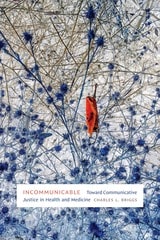
Incommunicable
Toward Communicative Justice in Health and MedicineCharles L. Briggs
Duke University Press, 2024
Living Chronic
Agency and Expertise in the Rhetoric of DiabetesLora Arduser
The Ohio State University Press, 2017
Diabetes, referred to as an epidemic for more than a decade, remains one of our most significant health issues in the twenty-first century. Because self-management is an important component of living with the disease, the biomedical concept of patient agency has long stressed notions of individual responsibility and autonomy. However, dramatic shifts in both health care and cultural practices call for a reassessment of traditional definitions of patient agency.
Lora Arduser’s Living Chronic: Agency and Expertise in the Rhetoric of Diabetes answers this call with a unique rhetorical examination of one of the most critical issues in contemporary health: how we live and work with being chronic. Through her perceptive analysis of the discourse of both people with diabetes and health care providers, Arduser presents a new model for patient agency—one that advocates for a relational, fluid concept of agency that blurs the boundaries between medical experts and patients. Her thought-provoking use of bodily and rhetorical plasticity crafts a multidimensional picture of patient agency that profoundly affects how rhetorical scholars, people living with chronic illness, and health care providers can forge patient-centered discourse and practices.

Medical Misinformation in Early Modern Germany
Christopher Hutchinson
University of Delaware Press, 2026
Medical Misinformation in Early Modern Germany examines how doctors, writers, and printers in sixteenth-century Germany responded to the rapid expansion of print and its implications for medical knowledge. The spread of printed texts generated widespread suspicion about print’s reliability as a conduit of information and led writers to reflect on questions of audience, vernacularity, and medical authority in their responses to disease. The book investigates literary texts alongside popular vernacular medical pamphlets on the major epidemic diseases of the period––plague, syphilis, and the English sweating sickness––to reveal a widespread concern with the impact of printed texts on public health. During the 1529 outbreak of the English sweating sickness, this concern culminated in writers’ use of a “rhetoric of virality,” explicitly comparing the circulation of texts to the spread of disease, as they confronted the parallel contagions of disease and information.
Patient Listening
A Doctor's GuideLoreen Herwaldt
University of Iowa Press, 2008
Herwaldt skillfully pares each narrative down to its most basic elements, rendering them into powerful found poems that she has used successfully in her role as a teacher and in her own practice. Drawing from narratives by writers who are both emerging and well known, including Oliver Sacks, Richard Selzer, and Mary Swander, each poem reveals the experience of illness and treatment from the patient's perspective. Patient Listening includes a detailed general introduction and a how-to guide that will prove invaluable in the classroom and in clinical practice.
This book will inspire thoughtfulness in everyone who reads it. It is also designed to foster discussions about all aspects of the patient experience from ethics to stigmatization to health insurance. Patient Listening is not just about bedside manner but also about how health care providers can gain the most from their interactions with patients and in turn offer more appropriate treatments, develop more cooperative and responsive relationships with their patients, and thus become better doctors.
Rhetoric of Health and Medicine As/Is
Theories and Approaches for the FieldEdited by Lisa Melonçon, S. Scott Graham, Jenell Johnson, John A. Lynch, and Cynthia Ryan
The Ohio State University Press, 2020
With a foreword by Judy Segal and in sections that address interdisciplinary perspectives, representations of health and illness in online spaces, and health activism and advocacy, this volume proceeds in a unique format: essays tackle these key topic areas through case studies ranging from food and its relation to public health, to apps that track fertility, to mental health and disability, to racial disparities that exist in public health campaigns about sudden infant death syndrome (SIDS). The essays within each section are then followed by responses from prominent scholars in the rhetoric of health and medicine—including John Lyne, J. Blake Scott, and Lisa Keränen—who take on the central theme and discuss how the theory or concept under study can and should evolve in the next stages of research. Unifying the essays is a consideration of RHM as a theoretical construct guiding research and thinking alongside the conceptual parameters that constitute what RHM is and can be in practice. In asking questions about the role of rhetoric—both as analytic and productive framework—in health and medicine, this volume engages with broader theoretical and ethical concerns about our current healthcare system and how healthcare and medical issues circulate in all the social, cultural, economic, and political aspects of our world.
Sex, Shame, and Violence
A Revolutionary Practice of Public Storytelling in Poor CommunitiesKathleen Cash
Vanderbilt University Press, 2016
For more than three decades, Kathleen Cash has lived and worked with impoverished people, learning about their lives. Listening to them talk about their feelings of shame, Cash heard how people suffered from being unable to change what was happening to them--HIV infection, sexual and domestic violence, violence toward children, and environmental degradation. She saw that many interventions lacked emotional and cultural integrity and thus did little to alleviate these hardships. So Cash went outside the conventional approaches to health promotion and social justice and devised a community narrative practice, a strategy for engaging people through storytelling. From numerous ethnographic interviews, she pieced together cultural stories in a way that resonated with community people and revealed the paradoxes in their suffering. Cash recruited local artists to illustrate the stories in a form resembling a graphic novel and distributed these booklets for community discussion. (This book includes excerpts from these illustrated stories.)
In Thailand, Bangladesh, Haiti, Uganda, and the United States, people learned to talk about forbidden subjects and say what they could never say before. They stood up to each other, reconciled, and made health-seeking decisions. By helping others, they repaired themselves. In cathartic conversations they acknowledged shame, which led to acts of courage and generosity.

The Medical Library Association Guide to Health Literacy at the Library
American Library Association, 2008

What Do I Say?
Talking with Patients about SpiritualityElizabeth Johnston-Taylor
Templeton Press, 2007
•How do I answer a "why" question?
•What do I say to a patient who believes a miracle will happen to cure them?
•What if I'm not religious? How can I talk about it?
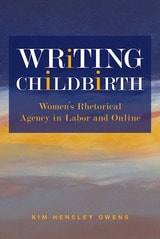
Writing Childbirth
Women’s Rhetorical Agency in Labor and OnlineKim Hensley Owens
Southern Illinois University Press, 2015
Women seeking to express concerns about childbirth or to challenge institutionalized medicine by writing online birth plans or birth stories exercise rhetorical agency in undeniably feminist ways. In Writing Childbirth: Women’s Rhetorical Agency in Labor and Online, author Kim Hensley Owens explores how women create and use everyday rhetorics in planning for, experiencing, and writing about childbirth.
Drawing on medical texts, popular advice books, and online birth plans and birth stories, as well as the results of a childbirth writing survey, Owens considers how women’s agency in childbirth is sanctioned, and how it is not. She examines how women’s rhetorical choices in writing interact with institutionalized medicine and societal norms. Writing Childbirth reveals the contradictory messages women receive about childbirth, their conflicting expectations about it, and how writing and technology contribute to and reconcile these messages and expectations.
Demonstrating the value of extending rhetorical investigations of health and medicine beyond patient-physician interactions and the discourse of physicians, Writing Childbirth offers fresh insight into feminist rhetorical agency and technology and expands our understanding of the rhetorics of health and medicine.