Results by title
5 books match the query 'Communist International'
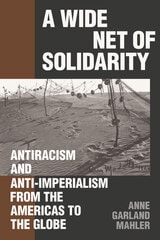
A Wide Net of Solidarity
Antiracism and Anti-Imperialism from the Americas to the GlobeAnne Garland Mahler
Duke University Press, 2025
In A Wide Net of Solidarity, Anne Garland Mahler traces the impact of the Anti-Imperialist League of the Americas (LADLA, Liga Antimperialista de las Américas) on racial justice and anti-extractive struggles from the early twentieth century to the present. Founded in 1925 in Mexico City by a group of multinational activists, LADLA brought together trade unions, agrarian organizations, and artist groups across fourteen chapters in the Americas, with highest activity in the Greater Caribbean and United States. Within two years, LADLA activists joined the League Against Imperialism, formed at the 1927 Brussels Congress, where they met with US Black activists and anticolonial leaders from Africa and Asia. Drawing on extensive archival research, Mahler uncovers LADLA’s role in fostering Black, Indigenous, and immigrant-led resistance movements while positioning these struggles within a broader hemispheric and global struggle against the racialized accumulation of capital. By unearthing LADLA’s multiracial analysis of capitalist exploitation as well as its emphasis on mutual solidarity across difference, Mahler shows us how the organization provides vital insight for social movements fighting racial and economic injustice today.
[more]
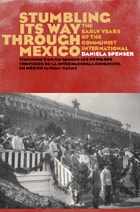
Stumbling Its Way through Mexico
The Early Years of the Communist InternationalDaniela Spenser, translated by Peter Gellert
University of Alabama Press, 2011
Stumbling Its Way through Mexico records the early attempts by the Moscow-based Communist International to organize and direct a revolutionary movement in Mexico. The period studied, from 1919 to 1929, was characterized at the beginning by a wave of revolutions in Europe that the Bolsheviks expected to grow into an international phenomenon. However, contrary to their expectations, the revolutionary tide ebbed, and the new age they had expected receded into an uncertain future. In response, Moscow sent agents and recruited local leaders worldwide to sustain and train local revolutionary movements and to foment what they saw as an inevitable seizure of power by Communist-led workers.
Unlike the Soviet seizure of power in Russia, the Mexican Revolution of 1910–1920 had not changed the fundamental character of the nation-state. However, it did represent a sea change in the relationship between the state and society. When the Bolshevik Revolution broke out in Russia in 1917, Mexican workers already had generations of experience in the struggle against oppression, in forming class solidarity, in organizing strikes, and had tasted both success and failure. For decades in their workplaces, Mexicans had debated how to end the exploitation of labor and practice international solidarity. Mexico had an indigenous labor movement acting with some success to establish a place in a new Mexico. The agents that Moscow chose to lead the Communist movement in Mexico lacked an understanding of the local situation and presumed a lack of indigenous confidence and experience that doomed to failure their efforts to impose external control over the labor movement.
Based on documents found principally in the Soviet archives recently opened to the public, Stumbling Its Way through Mexico is an invitation to rethink the history of Communism in Mexico and Latin America.
Copublication with the Centro de Investigaciones y Estudios Superiores en Antropologia Social.
[more]
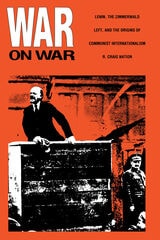
War on War
Lenin, the Zimmerwald Left, and the Origins of Communist InternationalismR. Craig Nation
Duke University Press, 1989
The outbreak of World War I precipitated a schism in the international socialist movement that endures today. Heeding calls for "rational defense," the leading European socialist democratic parties abandoned their vision of peace and internationalism as an integral part of the struggle for social justice and set aside their view of interstate war as the clearest example of the irrational essence of competitive capitalism. Only the Zimmerwald Left, led by Lenin, continued to speak out for internationalism. R. Craig Nation utilizes sources in Dutch, French, German, Italian, Russian, and Swedish to provide the first comprehensive history of the Zimmerwald Left as an international political tendency.
[more]
World Communism
A History of the Communist InternationalF. Borkenau
University of Michigan Press, 1962
World Communism: A History of The Communist International by F. Borkenau with a New Introduction by Raymond Aron covers topics such as the Russian Revolutionary Movement, Bolshevism, labor in the war, the German revolution, the foundation and various phases of the Communist International, China's revolution and soviets, and significant historical events up to the rise of Hitler and the role of the Comintern in colonial contexts. In the new introduction, Aron emphasizes the historical context of Borkenau's original work, written in 1939. He discusses the significance of the book's conclusions, its enduring relevance, and Borkenau's sound analysis of Bolshevik ideology and its incompatibility with Western proletarian movements. Aron reflects on the phases of the Comintern’s influence and its broader implications on revolutions in Europe and Asia, particularly noting the distinct revolutionary circumstances in China. The book includes significant chapter coverage of key historical moments and analyses the systematic echoes between Bolshevik principles and their global impact. It is an essential read for those studying the intricate developments and historical contexts of international Communism and Marxism.
[more]
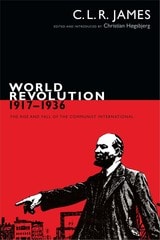
World Revolution, 1917–1936
The Rise and Fall of the Communist InternationalC. L. R. James
Duke University Press, 2017
Originally published in 1937, C. L. R. James's World Revolution is a pioneering Marxist analysis of the history of revolutions during the interwar period and of the fundamental conflict between Trotsky and Stalin. James, who was a leading Trotskyist activist in Britain, outlines Russia's transition from Communist revolution to a Stalinist totalitarian state bureaucracy. He also provides an account of the ideological contestations within the Communist International while examining its influence on the development of the Soviet Union and its changing role in revolutions in Spain, China, Germany, and Central Europe. Published to commemorate the centenary of the Russian Revolution, this definitive edition of World Revolution features a new introduction by Christian Høgsbjerg and includes rare archival material, selected contemporary reviews, and extracts from James's 1939 interview with Trotsky.
[more]