Results by title

11 books match the query 'Communist countries'
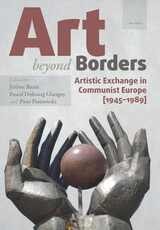
cover of Art beyond Borders: Artistic Exchange in Communist Europe (1945-1989)

Art beyond Borders

Artistic Exchange in Communist Europe (1945-1989)

Jérôme Bazin

Central European University Press, 2016
This book presents and analyzes artistic interactions both within the Soviet bloc and with the West between 1945 and 1989. During the Cold War the exchange of artistic ideas and products united Europe’s avant-garde in a most remarkable way. Despite the Iron Curtain and national and political borders there existed a constant flow of artists, artworks, artistic ideas and practices. The geographic borders of these exchanges have yet to be clearly defined. How were networks, centers, peripheries (local, national and international), scales, and distances constructed? How did (neo)avant-garde tendencies relate with officially sanctioned socialist realism? The literature on the art of Eastern Europe provides a great deal of factual knowledge about a vast cultural space, but mostly through the prism of stereotypes and national preoccupations. By discussing artworks, studying the writings on art, observing artistic evolution and artists’ strategies, as well as the influence of political authorities, art dealers and art critics, the essays in Art beyond Borders compose a transnational history of arts in the Soviet satellite countries in the post war period.
[more]
cover of Catholicism and Politics in Communist Societies

Catholicism and Politics in Communist Societies

Pedro Ramet, ed.

Duke University Press, 1990

This book is volume two of a three-volume work, Christianity Under Stress, which focuses on the experiences of Christian churches in contemporary communist and socialist societies. In this volume a distinguished group of experts examines the changing relationship of the Catholic church to contemporary communist and socialist societies in Eastern Europe, Latin America, and Asia.
Catholicism has, on the one hand, traditionally regarded earthly life as of secondary importance—as an instrument of spiritual transformation—and, on the other, has ascribed great value to the early institutions of the church, taking great interest in temporal matters that affects its institutional concerns. Against the backdrop of this duality, the church has changed over the centuries, adapting to local and national conditions. Catholicism and Politics in Communist Societies surveys these local and national adaptations in their historical contexts, linking the past experience of the church to its present circumstances. Organized around themes of tradition vs. modernity, hierarchy vs. lower clergy, and institutional structure vs. grass-roots organization, this comprehensive volume presents a detailed, country-by-country portrait of the political and social status of the church today in communist and socialist settings.

Contributors. Pedro Ramet, Arthur F. McGovern, Roman Solchanyk, Ivan Hvat, Robert F. Goeckel, C. Chrypinski, Milan J. Reban, Leslie Laszlo, Janice Broun, Eric O. Hanson, Stephen Denney, Thomas E. Quigley, Humberto Belli, Hansjakob Stehle, George H. Williams

[more]
cover of Controlling East-West Trade and Technology Transfer: Power, Politics, and Policies

Controlling East-West Trade and Technology Transfer

Power, Politics, and Policies

Gary K. Bertsch, ed.

Duke University Press, 1988
Western efforts to control trade and technological relations with communist countries affect many interests and political groups in both Eastern and Western blocs. Although there is general agreement within the Western alliance that government-imposed controls are necessary to prevent material having military importance from falling in the hands of the Soviet Union and its Warsaw Pact allies, there is considerable controversy over the specifics: the exact definition of "militarily significant" material, how the Western nations should administer controls, the implications of glasnost, and other matters.
[more]
cover of Hot Books in the Cold War: The CIA-Funded Secret Western Book Distribution Program Behind the Iron Curtain

Hot Books in the Cold War

The CIA-Funded Secret Western Book Distribution Program Behind the Iron Curtain

Alfred A. Reisch

Central European University Press, 2013
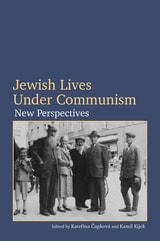
This study reveals the hidden story of the secret book distribution program to Eastern Europe financed by the CIA during the Cold War. At its height between 1957 and 1970, the book program was one of the least known but most effective methods of penetrating the Iron Curtain, reaching thousands of intellectuals and professionals in the Soviet Bloc. Reisch conducted thorough research on the key personalities involved in the book program, especially the two key figures: S. S. Walker, who initiated the idea of a “mailing project,” and G. C. Minden, who developed it into one of the most effective political and psychological tools of the Cold War. The book includes excellent chapters on the vagaries of censorship and interception of books by communist authorities based on personal letters and accounts from recipients of Western material. It will stand as a testimony in honor of the handful of imaginative, determined, and hard-working individuals who helped to free half of Europe from mental bondage and planted many of the seeds that germinated when communism collapsed and the Soviet bloc disintegrated.
[more]
cover of Jewish Lives under Communism: New Perspectives

Jewish Lives under Communism

New Perspectives

Katerina Capková

Rutgers University Press, 2022
This volume provides new, groundbreaking views of Jewish life in various countries of the pro-Soviet bloc from the end of the Second World War until the collapse of Communism in late 1989. The authors, twelve leading historians and anthropologists from Europe, Israel and the United States, look at the experience of Jews under Communism  by digging beyond formal state policy and instead examining the ways in which Jews creatively seized opportunities to develop and express their identities, religious and secular, even under great duress. The volume shifts the focus from Jews being objects of Communist state policy (and from anti-Jewish prejudices in Communist societies) to the agency of Jews and their creativity in Communist Europe after the Holocaust. The examination of Jewish history from a transnational vantage point challenges a dominant strand in history writing today, by showing instead the wide variety of Jewish experiences in law, traditions and institutional frameworks as conceived from one Communist country to another and even within a single country, such as Poland, Czechoslovakia, Hungary, East Germany, and the Soviet Union. By focusing on networks across east-central Europe and beyond and on the forms of identity open to Jews in this important period, the volume begins a crucial rethinking of social and cultural life under Communist regimes.
 
[more]
cover of John Updike and the Cold War: Drawing the Iron Curtain

John Updike and the Cold War

Drawing the Iron Curtain

D. Quentin Miller

University of Missouri Press, 2001

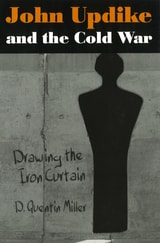
One of the most enduring and prolific American authors of the latter half of the twentieth century, John Updike has long been recognized by critics for his importance as a social commentator. Yet, John Updike and the Cold War is the first work to examine how Updike's views grew out of the defining context of American culture in his time—the Cold War. Quentin Miller argues that because Updike's career began as the Cold War was taking shape in the mid-1950s, the world he creates in his entire literary oeuvre—fiction, poetry, and nonfiction prose—reflects the optimism and the anxiety of that decade.

Miller asserts that Updike's frequent use of Cold War tension as a metaphor for domestic life and as a cultural reality that affects the psychological security of his characters reveals the inherent conflict of his fictional world. Consequently, this conflict helps explain some of the problematic relationships and aimless behavior of Updike's characters, as well as their struggles to attain spiritual meaning.

By examining Updike's entire career in light of the historical events that coincide with it, Miller shows how important the early Cold War mind-set was to Updike's thinking and to the development of his fiction. The changes in Updike's writing after the 1950s confirm the early Cold War era's influence on his ideology and on his celebrated style. By the Cold War's end in the late 1980s, Updike's characters look back fondly to the Eisenhower years, when their national identity seemed so easy to define in contrast to the Soviet Union. This nostalgia begins as early as his writings in the 1960s, when the breakdown of an American consensus disillusions Updike's characters and leaves them yearning for the less divisive 1950s.

While underscoring how essential history is to the study of literature, Miller demonstrates that Updike's writing relies considerably on the growth of the global conflict that defined his time. Cogent and highly readable, John Updike and the Cold War makes an important contribution to Updike scholarship.
[more]
cover of Red Star Over the Third World

Red Star Over the Third World

Vijay Prashad

Pluto Press, 2019

“An original and much needed analysis of an important but neglected aspect of the legacy of the Russian Revolution…. Essential reading.”—Mary Davis, Marx Memorial Library
 
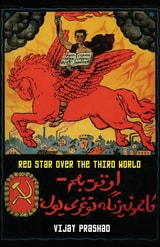
From Cuba to Vietnam, China to South Africa, the October Revolution of 1917 inspired millions of people beyond the territory of Russia. It proved that the masses could not only overthrow autocratic governments, but that they could also form an opposing government in their own image.
 
The new idea that the working class and the peasantry could be allied, combined with the clear strength and necessity of a vanguard party, guided multiple revolutions across the globe.  Here is much-needed antidote to all the glum histories written on the demise of the Soviet Union. Vijay Prashad throws a spotlight on the way the Russian Revolution was seen and received in the countries colonized by European empires. With Russia as an inspiration and providing support, suddenly workers and peasants, those left out of capitalist prosperity, organized and attempted to create for themselves real socialist revolution. Prashad’s chapters include:
 
*Eastern Graves
*Red October
*Follow the Path of the Russians
*The Lungs of Russia
*Soviet Asia
*Enemy of Imperialism
*Eastern Marxism
*Colonial Fascism
*Polycentric Communism
*Memories of Communism
 
The author writes in this Preface, “It has been a quarter-century since the demise of the USSR. And yet, the marks of the October Revolution remain—not just in the territories of the USSR but more so in what used to be known as the Third World. From Cuba to Vietnam, from China to South Africa, the October Revolution remains as an inspiration. After all, that Revolution proved that the working class and the peasantry could not only overthrow an autocratic government but it could form its own government.”
 
This book explains the power of the October Revolution in the Global South. From Ho Chí Minh to Fidel Castro, reflections on polycentric communism, and collective memories of communism, it shows how, for a brief moment, another world was possible.   
[more]
cover of The End and the Beginning: The Revolutions of 1989 and the Resurgence of History

The End and the Beginning

The Revolutions of 1989 and the Resurgence of History

Vladimir Tismaneanu

Central European University Press, 2012
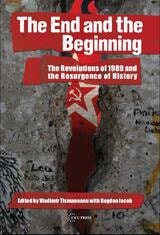
A fresh interpretation of the contexts, meanings, and consequences of the revolutions of 1989, coupled with state of the art reassessment of the significance and consequences of the events associated with the demise of communist regimes. The book provides an analysis that takes into account the complexities of the Soviet bloc, the events' impact upon Europe, and their re-interpretation within a larger global context. Departs from static ways of analysis (events and their significance) bringing forth approaches that deal with both pre-1989 developments and the 1989 context itself, while extensively discussing the ways of resituating 1989 in the larger context of the 20th century and of its lessons for the 21st.Emphasizes the possibility for re-thinking and re-visiting the filters and means that scholars use to interpret such turning point. The editors perceive the present project as a challenge to existing readings on the complex set of issues and topics presupposed by a re-evaluation of 1989 as a symbol of the change and transition from authoritarianism to democracy.
[more]
cover of Transatlantic Central Europe: Contesting Geography and Redifining Culture beyond the Nation

Transatlantic Central Europe

Contesting Geography and Redifining Culture beyond the Nation

Jessie Labov

Central European University Press, 2019
While there are still occasional uses of it today, the term "Central Europe" carries little of the charge that it did in the 1980s and early 1990s, and as a political and intellectual project it has receded from the horizon. Proponents of a distinct cultural profile of these countries—all involved now in the process of Transatlantic integration—used "Central European", as a contestation with the geo-political label of Eastern Europe. This book discusses the transnational set of practices connecting journals with other media in the mid-1980s, disseminating the idea of Central Europe simultaneously in East and West. A range of new methodologies, including GIS-mapping visualization, is used, repositing the political-cultural journal as one central node of a much larger cultural system. What has happened to the liberal humanist philosophy that "Central Europe" once evoked? In the early years of the transition era, the liberal humanist perspective shared by Havel, Konrád, Kundera, and Michnik was quickly replaced by an economic liberalism that evolved into neoliberal policies and practices. The author follows the trajectories of the concept into the present day, reading its material and intellectual traces in the postcommunist landscape. She explores how the current use of transnational, web-based media follows the logic and practice of an earlier, 'dissident' generation of writers.
[more]
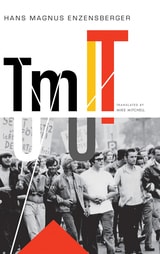
cover of Tumult

Tumult

Hans Magnus Enzensberger

Seagull Books, 2016

A collection of writings based on Enzensberger’s personal experience as a left-wing sympathizer during the 1960s. 

Hans Magnus Enzensberger, widely regarded as Germany’s greatest living poet, was already well known in the 1960s, the tempestuous decade of which Tumult is an autobiographical record. Derived from old papers, notes, jottings, photos, and letters that the poet stumbled upon years later in his attic, the volume is not so much about the man, but rather the many places he visited and people whom he met on his travels through the Soviet Union and Cuba during the 1960s. The book is made up of four long-form pieces written from 1963 to 1970, each episode concluding with a poem and postscript written in 2014. Translated by Mike Mitchell, the book is a lively and deftly written travelogue offering a glimpse into the history of leftist thought. Dedicated to “those who disappeared,” Tumult is a document of that which remains one of humanity’s headiest times.
 
[more]
cover of Vatican II Behind the Iron Curtain

Vatican II Behind the Iron Curtain

Piotr H. Kosicki

Catholic University of America Press, 2016

The goal of this volume is to begin writing Central and Eastern Europe back into the story of the Second Vatican Council, its origins, and its consequences. This volume assembles - for the first time in any language - a broad overview of the place of four different Communist-run countries - Czechoslovakia, Hungary, Poland, and Yugoslavia - in the story of the Council. Framing these is an account of how the Cold War impacted the Council and its reception. The book engages with both English-language scholarship and the national historiographies of the countries that it examines, offering a global lens on the present state of research (covering all relevant languages) and seeking to propel that research forward. All of the chapters draw on both non-English secondary literature and original primary sources - some published, some archival.
[more]