Results by title

16 books match the query 'Competition, International'

cover of Across The Pacific: Asian Americans and Globalization

Across The Pacific

Asian Americans and Globalization

Evelyn Hu-Dehart, E

Temple University Press, 2000

If Asian Americans are to assume the role of bridge builders across the Pacific, what are the opportunities, the risks, the promises, and the perils? The answer to this question comes in eight groundbreaking essays in which contributors to Across the Pacific address issues of contemporary growth and diversification of Asian America in relation to the increasingly globalized economy. New meanings and  practices of Asian Americans are considered in the atmosphere of global transformation that is present in the post-Civil Rights, post-Cold War, postmodern, and postcolonial era. This book explores, in descriptive and critical ways, how transnational relationships and interactions in Asian American communities are manifested, exemplified, and articulated within the international context of the Pacific Rim.

Members of the Asian American community have always been trans-Pacific, but are now more than ever, since the 1965 change in U.S. immigration law. Entering the U.S. at the culmination of the Civil Rights movement, Asians becoming Asian Americans have joined a self-consciously multicultural society. Asian economies roared onto the world stage, creating new markets while circulating capital and labor at an unprecedented scale and intensity, thereby helping drive the forces of modern globalization. These essays by well-known scholars in the field of Asian American studies consider such topics as the impact of new migrations on Asian American subjectivity and politics, Asian American activism and U.S. foreign policy, and the role of Asian Americans in Pacific Rim economies.

Considering issues of diaspora, transmigrancy, assimilation, institutionalized racism, and community, Across the Pacific covers such cutting-edge subjects as the cultural expressions of dislocation among contemporary Asian American writers, as well as the impact of the new migrations on Asian American subjectivity and politics.
[more]
cover of American Universities in a Global Market

American Universities in a Global Market

Edited by Charles T. Clotfelter

University of Chicago Press, 2010
In higher education, the United States is the preeminent global leader, dominating the list of the world’s top research universities. But there are signs that America’s position of global leadership will face challenges in the future, as it has in other realms of international competition. American Universities in a Global Market addresses the variety of issues crucial to understanding this preeminence and this challenge. The book examines the various factors that contributed to America’s success in higher education, including openness to people and ideas, generous governmental support, and a tradition of decentralized friendly competition. It also explores the advantages of holding a dominant position in this marketplace and examines the current state of American higher education in a comparative context, placing particular emphasis on how market forces affect universities. By discussing the differences in quality among students and institutions around the world, this volume sheds light on the singular aspects of American higher education.

[more]
cover of Automobiles and the Future: Competition, Cooperation, and Change

Automobiles and the Future

Competition, Cooperation, and Change

Robert E. Cole, Editor

University of Michigan Press, 1983
At the time of the U.S.-Japan auto conferences in March 1983, the hoped-for economic recovery as manifested in auto sales had revealed itself quite modestly. Three months later, the indicators were more robust and certainly long overdue for those whose livelihood depends on the health of the industry--some of whom are university professors.
With Japanese import restrictions in place until March 1984 and drastically reduced break-even points for domestic manufactures, rising consumer demand holds great promise for the industry. The rapidly rising stock prices of the auto-makers captures well the sense of heightened optimism, as do the various forecasts for improved profits.
While the news is certainly welcome, it nevertheless should be greeted with caution. As Mr. Perkins noted at the conference, "we have a tendency to forget things very quickly. If we have a boom market this year, there is a good chance that a lot of things we learned will be forgotten."
To put the matter differently and more bluntly, with growing prosperity there is the risk that management will fall back into old habits, making impossible the achievement of sustained quality and productivity improvement. Similarly, the commitment to develop cooperative relations with workers and suppliers will weaken. The union will be under membership pressure to retrieve concessions rather than to take the longer-term view. This longer-term view recognizes that "up-front increases" and adherence to existing work rules increasingly come at the sacrifice of future job security. Government policymakers will turn their attention away from the industry. This may not mean a great deal given how weakly focused their attentions has been during the last three years and how mixed and contradictory government auto policies have been for over a decade.
[more]
cover of Catching Up with the Competition: Trade Opportunities and Challenges for Arab Countries

Catching Up with the Competition

Trade Opportunities and Challenges for Arab Countries

Bernard Hoekman and Jamel Zarrouk, Editors

University of Michigan Press, 2000
At a time when countries in the Middle East and North Africa (MENA) are joining the World Trade Organization, the lack of an economically sound analysis of trade policies in the region is especially notable. This volume remedies the situation by bringing together a distinguished group of applied trade economists to provide a broad view of the state of trade in and among the region's nations. The contributors provide original empirical analyses on key reform issues, and their work reflects deep knowledge of government concerns and policies.
Part 1 sets the scene by comparing the performance of the MENA region with the rest of the world on a large number variables and indicators. Part 2 contains a number of CGE model-based analyses of trade policy reform options. Part 3 focuses on specific policy areas: standards as nontariff barriers and red tape, trade facilitation, an assessment of the impact of protecting intellectual property using partial equilibrium techniques, and a review of the existing Euro-Med agreements. Part 4 discusses how the region could benefit from WTO membership and from changing the existing regional integration schemes into arrangements that help promote a growth enhancing reform agenda.
The volume will be essential reading for economists and policymakers working in and with the MENA nations, as well as officials at the multilateral and regional institutions.
Contributors are A. Halis Akder, Benita Cox, Dean De Rosa, Hana'a Kheir El Din, Sherine El Ghoneim, Oleh Havrylyshyn, Bernard Hoekman, Denise Konan, Peter Kunzel, Will Martin, Keith Maskus, Mustapha Nabli, Thomas Rutherford, Elisabet Rutstrom, David Tarr, Subidey Togan, L. Alan Winters, Alexander Yeats, and Jamel Zarrouk.
Bernard Hoekman is an Economist with the Development Research Group's Trade team of the World Bank. Jamel Zarrouk is an Economist with the Arab Monetary Fund.
[more]
cover of Choke Points: Logistics Workers Disrupting the Global Supply Chain

Choke Points

Logistics Workers Disrupting the Global Supply Chain

Edited by Jake Alimahomed-Wilson and Immanuel Ness

Pluto Press, 2017

Global capitalism is a precarious system. Relying on the steady flow of goods across the world, trans-national companies such as Wal-Mart and Amazon depend on the work of millions in docks, warehouses and logistics centres to keep their goods moving. 

This is the global supply chain, and, if the chain is broken, capitalism grinds to a halt. This book looks at case studies across the world to uncover a network of resistance by these workers who, despite their importance, often face vast exploitation and economic violence. 

Experiencing first hand wildcat strikes, organised blockades and boycotts, the authors explore a diverse range of case studies, from South China dockworkers to the transformation of the port of Piraeus in Greece, and from the Southern California logistics sector, to dock and logistical workers in Chile and unions in Turkey.
[more]
cover of Competitiveness Matters: Industry and Economic Performance in the U.S.

Competitiveness Matters

Industry and Economic Performance in the U.S.

Candace Howes and Ajit Singh, Editors

University of Michigan Press, 2000
This book argues, against the current view, that competitiveness--that is, the competitiveness of the manufacturing sector--matters to the long-term health of the U.S. economy and particularly to its long-term capacity to raise the standard of living of its citizens. The book challenges the arguments popularized most recently by Paul Krugman that
competitiveness is a dangerous obsession that distracts us from the question most central to solving the problem of stagnant real income growth, namely, what causes productivity growth, especially in the service sector.
The central argument is that, if the U.S. economy is to achieve full employment with rising real wages, it is necessary to enhance the competitiveness of its tradable goods sector. The book shows that current account deficits cannot be explained by macroeconomic mismanagement but are rather the consequence of an uncompetitive manufacturing sector. It finds that the long-term health of the manufacturing sector requires not only across-the-board policies to remedy problems of low or inefficient investment, but also sectoral policies to address problems that are strategic to resolving the balance of payments problems. Lessons are drawn from the experience of some European and Asian countries.
This book will be of interest to economists, political scientists, and business researchers concerned with the place of the manufacturing sector in overall health of the U.S. economy, with issues of industrial policy and industrial restructuring, and with the conditions for rising standards of living.
Candace Howes is Associate Professor, Barbara Hogate Ferrin Chair, Connecticut College. Ajit Singh is Professor of Economics, Queens College, Cambridge.
[more]
cover of Deregulation and Interdependence in the Asia-Pacific Region

Deregulation and Interdependence in the Asia-Pacific Region

Edited by Takatoshi Ito and Anne O. Krueger

University of Chicago Press, 2000
Recently, real and artificial barriers to international transactions have fallen sharply, causing a rise in the overall volume of international trade. East Asia has been particularly affected by the economic stresses and gains derived from deregulation. Deregulation and Interdependence in the Asia-Pacific Region explores the broadly similar experiences of certain economies in the region—China, Hong Kong, Japan, Korea—in dealing with the potentially volatile process of deregulation, and examines the East Asian response to a rapidly transforming economic environment.
[more]
cover of Empirical Studies of Commercial Policy

Empirical Studies of Commercial Policy

Edited by Robert E. Baldwin

University of Chicago Press, 1991

The need for careful research on trade policy is particularly acute, and this volume empirically addresses these and many other important issues. The contributors offer studies which integrate the institutional details of current trade policy with creative economic analyses.

Marked by a shift from a traditional reliance on simulation models, these papers take their inspiration from recent changes in the assumptions traditionally underlying research in international trade theory. No longer are government policies viewed as being somehow "given" to the researcher; in part 1, "Analyses with a Political Economy Perspective," four papers treat such policies as endogenous and explicable in terms of political economy. Neither are product and factor markets seen as perfectly competitive; instead, the three papers in part 2, "Trade Policy Effects under Imperfectly Competitive Market Conditions," assume that firms consider the actions of other companies when formulating their decisions. In part 3, "A New Measure of Trade Restrictiveness and Estimates of Trade Policy Effects with CGE Models," the first essay explores the quantitative restrictions on cheese to develop and implement a new model of restrictive trade. Two final contributions address problems for which simulation modeling is especially useful. The first considers the effectiveness of an import surcharge in reducing the U.S. trade deficit and the second treats the welfare effects of liberalization in South Korea where increasing returns to scale are significant

These innovative studies focus on economic behavior that will provide valuable insights for policymakers, academic economists, and students.
[more]
cover of The Dynamics of Enduring Rivalries

The Dynamics of Enduring Rivalries

Edited by Paul F. Diehl

University of Illinois Press, 1998
It's hard to think of Israel without also remembering the country's long-standing problems with its Arab neighbors. Similarly, India and Pakistan have long been less than cordial to each other. The concept of enduring rivalries and conflicts tantamount to militarized competition between two states is rapidly emerging as a subject of research in international relations. The nine contributors to The Dynamics of Enduring Rivalries place the concept in its empirical and theoretical context, exploring how such rivalries arise, what influences their development, and when and how they may escalate to war.
[more]
cover of The Power of Productivity: Wealth, Poverty, and the Threat to Global Stability

The Power of Productivity

Wealth, Poverty, and the Threat to Global Stability

William W. Lewis

University of Chicago Press, 2004

A powerfully simple explanation of a complex problem: How productivity is the key to global economic growth
 
The disparity between rich and poor countries is the most serious, intractable problem facing the world today. The chronic poverty of many nations affects more than the citizens and economies of those nations; it threatens global stability as the pressures of immigration become unsustainable and rogue nations seek power and influence through extreme political and terrorist acts. To address this tenacious poverty, a vast array of international institutions has pumped billions of dollars into these nations in recent decades, yet despite this infusion of capital and attention, roughly five billion of the world's six billion people continue to live in poor countries. What isn't working? And how can we fix it? 

The Power of Productivity provides powerful and controversial answers to these questions. William W. Lewis, the director emeritus of the McKinsey Global Institute, here draws on extensive microeconomic studies of thirteen nations over twelve years—conducted by the Institute itself—to counter virtually all prevailing wisdom about how best to ameliorate economic disparity. Lewis's research, which included studying everything from state-of-the-art auto makers to black-market street vendors and mom-and-pop stores, conclusively demonstrates that, contrary to popular belief, providing more capital to poor nations is not the best way to help them. Nor is improving levels of education, exchange-rate flexibility, or government solvency enough. Rather, the key to improving economic conditions in poor countries, argues Lewis, is increasing productivity through intense, fair competition and protecting consumer rights.

As The Power of Productivity explains, this sweeping solution affects the economies of poor nations at all levels—from the viability of major industries to how the average consumer thinks about his or her purchases. Policies must be enacted in developing nations that reflect a consumer rather than a producer mindset and an attendant sense of consumer rights. Only one force, Lewis claims, can stand up to producer special privileges—consumer interests.

The Institute's unprecedented research method and Lewis's years of experience with economic policy combine to make The Power of Productivity the most authoritative and compelling view of the global economy today, one that will inform political and economic debate throughout the world for years to come.

[more]
cover of The Struggle for Control of Global Communication: The Formative Century

The Struggle for Control of Global Communication

The Formative Century

Jill Hills

University of Illinois Press, 2002

Tracing the development of communication markets and the regulation of international communications from the 1840s through World War I, Jill Hills examines the political, technological, and economic forces at work during the formative century of global communication. 

Hills analyzes power relations within the arena of global communications from the inception of the telegraph through the successive technologies of submarine telegraph cables, ship-to-shore wireless, broadcast radio, shortwave wireless, the telephone, and movies with sound. As she shows, global communication began to overtake transportation as an economic, political, and social force after the inception of the telegraph, which shifted communications from national to international. From that point on, information was a commodity and ownership of the communications infrastructure became valuable as the means of distributing information. The struggle for control of that infrastructure occurred in part because British control of communications hindered the growing economic power of the United States. 

Hills outlines the technological advancements and regulations that allowed the United States to challenge British hegemony and enter the global communications market. She demonstrates that control of global communication was part of a complex web of relations between and within the government and corporations of Britain and the United States. Detailing the interplay between American federal regulation and economic power, Hills shows how these forces shaped communications technologies and illuminates the contemporary systems of power in global communications.
[more]
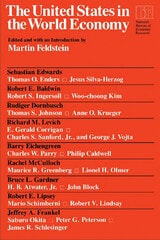
cover of The United States in the World Economy

The United States in the World Economy

Edited by Martin Feldstein

University of Chicago Press, 1988
The United States in the World Economy offers the results of a conference organized by the National Bureau of Economics in 1987. The volume includes background papers prepared by nine academic economists, personal statements by individuals prominent in government and business, and summaries of the discussion that followed the presentations. Among the topics considered are foreign competition in Latin America and the Asian Pacific Rim, Third World debts, innovations in international financial markets, changing patterns of international investment, international capital flows, and international competition in goods, services, and agriculture. Prepared for a sophisticated but non-technical audience, these papers present complicated economic issues clearly, indicating the many ways in which the American economy influences and is influenced by economic events and conditions around the world.
[more]
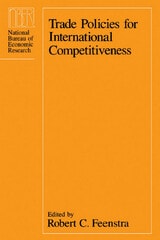
cover of Trade Policies for International Competitiveness

Trade Policies for International Competitiveness

Edited by Robert C. Feenstra

University of Chicago Press, 1989

Once unquestionably the world's leading economic and industrial power, the United States now views with growing dismay the impressive industrial efficiency, vigorous work ethics, and large American holdings of various other nations. Is the United States truly lagging in its ability to compete effectively in world markets? Concern over this question has been voiced in both the business and government sectors, as well as by academic economists. A recent conference, sponsored by the National Bureau of Economic Research, explored the effects of trade policies on a nation's ability to compete in international markets.

In Trade Policies for International Competitiveness, Robert C. Feenstra collects seven papers from the conference, each accompanied by discussants' comments, and adds a helpful introduction. Some of the issues considered by contributors are effects of macroeconomic and strategic foreign policies on competitiveness; the recent influx of foreign direct investment in the United States, primarily from Japan; the extent to which Japanese trade patterns are a reflection of underlying factor and endowments rather than trade barriers; and the market structure of Canadian industries, including applications for ongoing U.S.-Canadian free trade negotiations. Topical and provocative, these papers will be of value to economists, policymakers, and those in the business world.

[more]
cover of Turbulence Across the Sea: Transatlantic Relations and Strategic Competition

Turbulence Across the Sea

Transatlantic Relations and Strategic Competition

Edited by Elie Baranets and Andrew Novo

University of Michigan Press, 2024

Great Power competition is back. On the two sides of the Atlantic, however, this concept often means different things. While the United States is focused on China, Europe is preoccupied with Russia. Yet shifting American priorities toward Asia requires reconceptualizing the future role of NATO. In Europe, this shift has led to serious thought about how to achieve strategic autonomy that will allow Europe to guarantee its own security regardless of strategic choices made in Washington. As Chinese strategy focuses on dividing European actors and making them more economically dependent on Beijing, these developments may undermine Washington’s influence in Europe while limiting potential European action against Chinese interests.

With a mix of research methodologies applied by scholars from both sides of the Atlantic, Turbulence Across the Sea offers a comprehensive analysis of relations among European and North American actors in the context of strategic competition among the United States, Europe, Russia, and China. In doing so, it demonstrates that a reaffirmation of transatlantic cooperation is necessary to maintain security in the face of aggressive moves by both Russia and China. By analyzing attitudes from the perspective of both the various actors (Britain, France, Germany, and the European Union) and various sectors (intelligence cooperation, foreign direct investments, technology, and the defense industry), this book provides readers with a comprehensive perspective on the challenges and opportunities in the shifting landscape of security in the twenty-first century.

[more]
cover of Vehicle of Influence: Building a European Car Market

Vehicle of Influence

Building a European Car Market

Roland Stephen

University of Michigan Press, 2000

This study examines a crucial period in European integration, ending in the early 1990s, when significant progress was made towards the dream of a unified European market. It shows how European automakers were part of these changes and how their influence within the institutions of the European Union (EU) yielded a wide range of policy compromises governing a single European car market.
The book begins by reviewing the history of the EU and the logic of regional free trade, and goes on to develop a political explanation for the kinds of changes that actually occurred. The author argues that European automakers enjoyed a privileged place in the political arena, albeit one much transformed by the new institutions of the EU. Therefore, these firms often significantly influenced regional policy outcomes. The argument is applied to policymaking in the important areas of environmental regulation, trade, subsidies, and anti-trust regulation.
This work lies at the intersection of business, economics, and political science and is of interest to both experts and non-specialists with an interest in the tremendous economic and political changes brought about by the creation of a united Europe and, more generally, by the worldwide process of regional economic integration. Academics, professionals, businessmen, and leaders in government all have something to learn from the way in which firms and governments combined to build the largest car market in the world.
Roland Stephen is Assistant Professor in the Department of Political Science, North Carolina State University.
[more]
cover of Wrecked: How the American Automobile Industry Destroyed Its Capacity to Compete

Wrecked

How the American Automobile Industry Destroyed Its Capacity to Compete

Joshua Murray

Russell Sage Foundation, 2019

At its peak in the 1950s and 1960s, automobile manufacturing was the largest, most profitable industry in the United States and residents of industry hubs like Detroit and Flint, Michigan had some of the highest incomes in the country. Over the last half-century, the industry has declined, and American automakers now struggle to stay profitable. How did the most prosperous industry in the richest country in the world crash and burn? In Wrecked, sociologists Joshua Murray and Michael Schwartz offer an unprecedented historical-sociological analysis of the downfall of the auto industry. Through an in-depth examination of labor relations and the production processes of automakers in the U.S. and Japan both before and after World War II, they demonstrate that the decline of the American manufacturers was the unintended consequence of their attempts to weaken the bargaining power of their unions.
 
Today Japanese and many European automakers produce higher quality cars at lower cost than their American counterparts thanks to a flexible form of production characterized by long-term sole suppliers, assembly and supply plants located near each other, and just-in-time delivery of raw materials. While this style of production was, in fact, pioneered in the U.S. prior to World War II, in the years after the war, American automakers deliberately dismantled this system. As Murray and Schwartz show, flexible production accelerated innovation but also facilitated workers’ efforts to unionize plants and carry out work stoppages. To reduce the efficacy of strikes and combat the labor militancy that flourished between the Depression and the postwar period, the industry dispersed production across the nation, began maintaining large stockpiles of inventory, and eliminated single sourcing. While this restructuring of production did ultimately reduce workers’ leverage, it also decreased production efficiency and innovation. The U.S. auto industry has struggled ever since to compete with foreign automakers, and formerly thriving motor cities have suffered the consequences of mass deindustrialization.
 
Murray and Schwartz argue that new business models that reinstate flexible production and prioritize innovation rather than cheap labor could stem the outsourcing of jobs and help revive the auto industry. By clarifying the historical relationships between production processes, organized labor, and industrial innovation, Wrecked provides new insights into the inner workings and decline of the U.S. auto industry.
 
[more]