Results by title
7 books match the query 'Complexity (Philosophy)'
Complex Systems in the Social and Behavioral Sciences
Theory, Method and ApplicationEuel Elliott and L. Douglas Kiel, eds.
University of Michigan Press, 2021
Complexity Systems in the Social and Behavioral Sciences provides a sophisticated yet accessible account of complexity science or complex systems research. Phenomena in the behavioral, social, and hard sciences all exhibit certain important similarities consistent with complex systems. These include the concept of emergence, sensitivity to initial conditions, and interactions between agents in a system that yield unanticipated, nonlinear outcomes. The topics discussed range from the implications for artificial intelligence and computing to questions about how to model complex systems through agent-based modeling, to complex phenomena exhibited in international relations, and in organizational behavior. This volume will be an invaluable addition for both the general reader and the specialist, offering new insights into this fascinating area of research.

Complexities
Social Studies of Knowledge PracticesJohn Law and Annemarie Mol, eds.
Duke University Press, 2002
Individual essays study complexity from a variety of perspectives, addressing market behavior, medical interventions, aeronautical design, the governing of supranational states, ecology, roadbuilding, meteorology, the science of complexity itself, and the psychology of childhood trauma. Other topics include complex wholes (holism) in the sciences, moral complexity in seemingly amoral endeavors, and issues relating to the protection of African elephants. With a focus on such concepts as multiplicity, partial connections, and ebbs and flows, the collection includes narratives from Kenya, Great Britain, Papua New Guinea, the Netherlands, France, and the meetings of the European Commission, written by anthropologists, economists, philosophers, psychologists, sociologists, and scholars of science, technology, and society.
Contributors. Andrew Barry, Steven D. Brown, Michel Callon, Chunglin Kwa, John Law, Nick Lee, Annemarie Mol, Marilyn Strathern, Laurent Thévenot, Charis Thompson
Complexity
Life at the Edge of ChaosRoger Lewin
University of Chicago Press, 2000
"[Complexity] is that curious mix of complication and organization that we find throughout the natural and human worlds: the workings of a cell, the structure of the brain, the behavior of the stock market, the shifts of political power. . . . It is time science . . . thinks about meaning as well as counting information. . . . This is the core of the complexity manifesto. Read it, think about it . . . but don't ignore it."—Ian Stewart, Nature
This second edition has been brought up to date with an essay entitled "On the Edge in the Business World" and an interview with John Holland, author of Emergence: From Chaos to Order.
Multiplicity
On Constraint and Agency in Contemporary ArchitectureEdited by Pari Riahi, Laure Katsaros, and Michael T. Davis
University of Massachusetts Press, 2024
Today, the field of architecture faces a reckoning. While there is no longer consensus on what defines an architectural work, theorists, historians, and practitioners are grappling with urgent issues—among them the impact of climate change, the dynamics of power and race in relation with the built environment, and the technological, practical, and ethical dimensions of architecture. As established practices, academic objectives, and professional expectations come under scrutiny, architecture is in search of new definitions, identities, and voices.
Inspired by Italo Calvino’s memos about literature in the twenty-first century, this volume—the second in a series— situates architecture within a broad framework, exploring its complex interactions with environmental, cultural, political, social, artistic, and technological forces. The editors’ objective is to spur conversation across the boundaries that divide architecture’s theorists and historians from practitioners. In addition to the editors, the contributors include Sanford Kwinter, Aleksandra Jaeschke, Jennifer Mack, Rahul Mehrotra, Charles Waldheim, Kristi Cheramie, Jesse Reiser, Julian Harake, Jenny E. Sabin, Charles Davis, Esra Akcan, and David Karmon.
Simplicity and Complexity
Pondering Literature, Science, and PaintingFloyd Merrell
University of Michigan Press, 1998
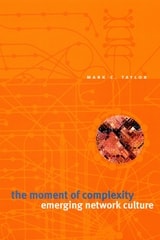
The Moment of Complexity
Emerging Network CultureMark C. Taylor
University of Chicago Press, 2001
The science of complexity accounts for that inscrutable mix of chaos and order that governs our natural world. Complexity explains how networks emerge and function, how species organize into ecosystems, how stars form into galaxies, and how just a few sequences of DNA can account for so many different life forms. Recently, the idea of complexity has taken the worlds of business and politics by storm. The concept is used to account for phenomena as varied as the behavior of the stock market, the response of voting populations, and the effects of risk management. Even Disney has used complexity theory to manage crowd control at its theme parks.
Given the startling development of new information technologies, we now live in a moment of unprecedented complexity, an era in which change occurs faster than our ability to comprehend it. With The Moment of Complexity, Mark C. Taylor offers a timely map for this unfamiliar terrain opening in our midst, unfolding an original philosophy through a remarkable synthesis of science and culture. According to Taylor, complexity is not just a breakthrough scientific concept, but the defining quality of the post-Cold War era. The flux of digital currents swirling around us, he argues, has created a new network culture with its own distinctive logic and dynamic.
Drawing on resources from information theory and evolutionary biology, Taylor explains the operation of complex adaptive systems in social and cultural processes and captures a whole new zeitgeist in the making. To appreciate the significance of our emerging network culture, he claims, we need not only to understand contemporary scientific and technological transformations, but also to explore the subtle influences of art, architecture, philosophy, religion, and higher education. The Moment of Complexity, then, is a remarkable work of cultural analysis on a scale rarely seen today. To follow its trajectory is to learn how we arrived at this critical moment in our culture, and to know where we might head in the twenty-first century.

Unsimple Truths
Science, Complexity, and PolicySandra D. Mitchell
University of Chicago Press, 2009
The world is complex, but acknowledging its complexity requires an appreciation for the many roles context plays in shaping natural phenomena. In Unsimple Truths, Sandra Mitchell argues that the long-standing scientific and philosophical deference to reductive explanations founded on simple universal laws, linear causal models, and predict-and-act strategies fails to accommodate the kinds of knowledge that many contemporary sciences are providing about the world. She advocates, instead, for a new understanding that represents the rich, variegated, interdependent fabric of many levels and kinds of explanation that are integrated with one another to ground effective prediction and action.
Mitchell draws from diverse fields including psychiatry, social insect biology, and studies of climate change to defend “integrative pluralism”—a theory of scientific practices that makes sense of how many natural and social sciences represent the multi-level, multi-component, dynamic structures they study. She explains how we must, in light of the now-acknowledged complexity and contingency of biological and social systems, revise how we conceptualize the world, how we investigate the world, and how we act in the world. Ultimately Unsimple Truths argues that the very idea of what should count as legitimate science itself should change.