Results by title
11 books match the query 'Computer Vision & Pattern Recognition'

Access Control and Security Monitoring of Multimedia Information Processing and Transmission
Zhihan Lyu
The Institution of Engineering and Technology, 2024

Artificial Intelligence, Art and Indigeneity
Between Dreams and HallucinationsEdited by Thea Pitman, Sandra De Berduccy, and Andreas Rauh
University of London Press, 2026
This book explores the cultural and ethical implications of generative AI through the lens of Indigenous visual culture in Latin America.
Responding to the rise of tools like DALL·E 2 and Midjourney, this groundbreaking volume documents the AIAI project (2023–), which invited a group of Indigenous artists and writers from Argentina, Bolivia, Brazil, Chile, and Peru to critically engage with image generation technologies. Through collaborative experimentation with a range of both commercial and bespoke tools, contributors reflect on the promises and pitfalls of AI—from its potential for ‘dreaming,’ for imagining Indigenous futures, to the frustration of its ability to ‘hallucinate,’ to distort, and misrepresent Indigenous cultures.
Bringing together artists, writers, and scholars, the book challenges dominant narratives around AI and representation, using a decolonial framework rooted in Indigenous epistemologies. Structured in three parts—context and theory, creative reflections, and generative critique—it foregrounds multivocal and multilingual perspectives, resisting homogenization and reframing participatory research. This is the first book-length study of generative AI’s impact on Indigenous visual culture in Latin America, making a timely and vital contribution to global debates on AI, art, and cultural sovereignty.
Computer Vision and Recognition Systems Using Machine and Deep Learning Approaches
Fundamentals, technologies and applicationsChiranji Lal Chowdhary
The Institution of Engineering and Technology, 2021
Deep Learning in Medical Image Processing and Analysis
Khaled Rabie
The Institution of Engineering and Technology, 2023

Imaging and Sensing for Unmanned Aircraft Systems
Control and Performance, Volume 1Vania V. Estrela
The Institution of Engineering and Technology, 2020
Imaging and Sensing for Unmanned Aircraft Systems
Deployment and Applications, Volume 2Vania V. Estrela
The Institution of Engineering and Technology, 2020

Intelligent Distributed Video Surveillance Systems
Sergio A. Velastin
The Institution of Engineering and Technology, 2006

Intelligent Multimedia Processing and Computer Vision
Techniques and applicationsShyam Singh Rajput
The Institution of Engineering and Technology, 2023

Knowledge and Computing
Computer Epistemology and Constructive SkepticismTibor Vámos
Central European University Press, 2010
Machine Learning in Medical Imaging and Computer Vision
Amita Nandal
The Institution of Engineering and Technology, 2024
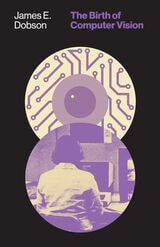
The Birth of Computer Vision
James E. Dobson
University of Minnesota Press, 2023
A revealing genealogy of image-recognition techniques and technologies
Today’s most advanced neural networks and sophisticated image-analysis methods come from 1950s and ’60s Cold War culture—and many biases and ways of understanding the world from that era persist along with them. Aerial surveillance and reconnaissance shaped all of the technologies that we now refer to as computer vision, including facial recognition. The Birth of Computer Vision uncovers these histories and finds connections between the algorithms, people, and politics at the core of automating perception today.
James E. Dobson reveals how new forms of computerized surveillance systems, high-tech policing, and automated decision-making systems have become entangled, functioning together as a new technological apparatus of social control. Tracing the development of a series of important computer-vision algorithms, he uncovers the ideas, worrisome military origins, and lingering goals reproduced within the code and the products based on it, examining how they became linked to one another and repurposed for domestic and commercial uses. Dobson includes analysis of the Shakey Project, which produced the first semi-autonomous robot, and the impact of student protest in the early 1970s at Stanford University, as well as recovering the computer vision–related aspects of Frank Rosenblatt’s Perceptron as the crucial link between machine learning and computer vision.
Motivated by the ongoing use of these major algorithms and methods, The Birth of Computer Vision chronicles the foundations of computer vision and artificial intelligence, its major transformations, and the questionable legacy of its origins.
Cover alt text: Two overlapping circles in cream and violet, with black background. Top is a printed circuit with camera eye; below a person at a 1977 computer.