Results by title

8 books match the query 'Computer algorithms'
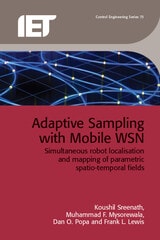
cover of Adaptive Sampling with Mobile WSN: Simultaneous robot localisation and mapping of paramagnetic spatio-temporal fields

Adaptive Sampling with Mobile WSN

Simultaneous robot localisation and mapping of paramagnetic spatio-temporal fields

Koushil Sreenath

The Institution of Engineering and Technology, 2011
Adaptive Sampling with Mobile WSN develops algorithms for optimal estimation of environmental parametric fields. With a single mobile sensor, several approaches are presented to solve the problem of where to sample next to maximally and simultaneously reduce uncertainty in the field estimate and uncertainty in the localisation of the mobile sensor while respecting the dynamics of the time-varying field and the mobile sensor. A case study of mapping a forest fire is presented. Multiple static and mobile sensors are considered next, and distributed algorithms for adaptive sampling are developed resulting in the Distributed Federated Kalman Filter. However, with multiple resources a possibility of deadlock arises and a matrix-based discrete-event controller is used to implement a deadlock avoidance policy. Deadlock prevention in the presence of shared and routing resources is also considered. Finally, a simultaneous and adaptive localisation strategy is developed to simultaneously localise static and mobile sensors in the WSN in an adaptive manner. Experimental validation of several of these algorithms is discussed throughout the book.
[more]
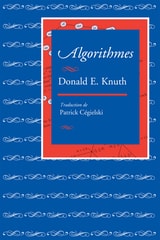
cover of Algorithmes

Algorithmes

Donald E. Knuth

CSLI, 2011

This book is a French translation of seventeen papers by Donald Knuth on algorithms both in the field of analysis of algorithms and in the design of new algorithms. They cover fundamental concepts and techniques and numerous discrete problems such as sorting, searching, data compression, theorem-proving, and cryptography, as well as methods for controlling errors in numerical computations.
[more]
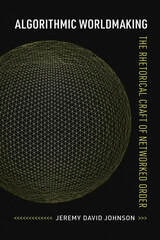
cover of Algorithmic Worldmaking: The Rhetorical Craft of Networked Order

Algorithmic Worldmaking

The Rhetorical Craft of Networked Order

Jeremy David Johnson

University of Alabama Press, 2025

Illuminates how algorithms, intertwined with human biases, damage political discourse and civic engagement.

Algorithmic Worldmaking is an urgent exploration of the dynamic relationship between algorithms that encode their human creators’ assumptions and the humans whose choices are shaped by these algorithms in search engines, social media, and other digital spaces. Transcending discussions of one or the other, Jeremy David Johnson traces the corrupting political and social influences that arise from their mutual interaction.

Johnson uses the concept of kosmos in its sense of a dynamic order to frame the interplay between algorithms, humans, and their environments. He first shows how algorithms, far from being objective or unbiased, perpetuate human errors. Johnson then suggests a framework of four parts—navigation, exploration, maintenance, and monetization—to map the variety of political consequences to a society influenced by these four factors.

Citing controversies at major platforms such as Google, YouTube, and Facebook, Johnson demonstrates how algorithms limit and shape human thought. He makes several persuasive arguments. First, algorithms and humans share agency but humans have exceptional responsibility. Second, the algorithmic kosmos mirrors and shapes social oppression. Third, algorithms incentivize capitalist exploitation. Last, these influences damage democratic deliberation.

This landmark study is essential for scholars and students of political science, media studies, and those interested in the perilous implications of algorithmic systems on civic and political life.
[more]
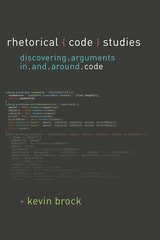
cover of Rhetorical Code Studies: Discovering Arguments in and around Code

Rhetorical Code Studies

Discovering Arguments in and around Code

Kevin Brock

University of Michigan Press, 2019

Winner of the 2017 Sweetland Digital Rhetoric Collaborative Book Prize
                                                                                        
Software developers work rhetorically to make meaning through the code they write. In some ways, writing code is like any other form of communication; in others, it proves to be new, exciting, and unique. In Rhetorical Code Studies, Kevin Brock explores how software code serves as meaningful communication through which software developers construct arguments that are made up of logical procedures and express both implicit and explicit claims as to how a given program operates.

Building on current scholarly work in digital rhetoric, software studies, and technical communication, Brock connects and continues ongoing conversations among rhetoricians, technical communicators, software studies scholars, and programming practitioners to demonstrate how software code and its surrounding discourse are highly rhetorical forms of communication. He considers examples ranging from large, well-known projects like Mozilla Firefox to small-scale programs like the “FizzBuzz” test common in many programming job interviews. Undertaking specific examinations of code texts as well as the contexts surrounding their composition, Brock illuminates the variety and depth of rhetorical activity taking place in and around code, from individual differences in style to changes in large-scale organizational and community norms.

Rhetorical Code Studies holds significant implications for digital communication, multimodal composition, and the cultural analysis of software and its creation. It will interest academics and students of writing, rhetoric, and software engineering as well as technical communicators and developers of all types of software.

[more]
cover of Swarm Intelligence: Applications, Volume 3

Swarm Intelligence

Applications, Volume 3

Ying Tan

The Institution of Engineering and Technology, 2018

Swarm Intelligence (SI) is one of the most important and challenging paradigms under the umbrella of computational intelligence. It focuses on the research of collective behaviours of a swarm in nature and/or social phenomenon to solve complicated and difficult problems which cannot be handled by traditional approaches. Thousands of papers are published each year presenting new algorithms, new improvements and numerous real world applications. This makes it hard for researchers and students to share their ideas with other colleagues; follow up the works from other researchers with common interests; and to follow new developments and innovative approaches. This complete and timely collection fills this gap by presenting the latest research systematically and thoroughly to provide readers with a full view of the field of swarm. Students will learn the principles and theories of typical swarm intelligence algorithms; scholars will be inspired with promising research directions; and practitioners will find suitable methods for their applications of interest along with useful instructions.
[more]
cover of Swarm Intelligence: Innovation, new algorithms and methods, Volume 2

Swarm Intelligence

Innovation, new algorithms and methods, Volume 2

Ying Tan

The Institution of Engineering and Technology, 2018

Swarm Intelligence (SI) is one of the most important and challenging paradigms under the umbrella of computational intelligence. It focuses on the research of collective behaviours of a swarm in nature and/or social phenomenon to solve complicated and difficult problems which cannot be handled by traditional approaches. Thousands of papers are published each year presenting new algorithms, new improvements and numerous real world applications. This makes it hard for researchers and students to share their ideas with other colleagues; follow up the works from other researchers with common interests; and to follow new developments and innovative approaches. This complete and timely collection fills this gap by presenting the latest research systematically and thoroughly to provide readers with a full view of the field of swarm. Students will learn the principles and theories of typical swarm intelligence algorithms; scholars will be inspired with promising research directions; and practitioners will find suitable methods for their applications of interest along with useful instructions.
[more]
cover of Swarm Intelligence: Principles, current algorithms and methods, Volume 1

Swarm Intelligence

Principles, current algorithms and methods, Volume 1

Ying Tan

The Institution of Engineering and Technology, 2018

Swarm Intelligence (SI) is one of the most important and challenging paradigms under the umbrella of computational intelligence. It focuses on the research of collective behaviours of a swarm in nature and/or social phenomenon to solve complicated and difficult problems which cannot be handled by traditional approaches. Thousands of papers are published each year presenting new algorithms, new improvements and numerous real world applications. This makes it hard for researchers and students to share their ideas with other colleagues; follow up the works from other researchers with common interests; and to follow new developments and innovative approaches. This complete and timely collection fills this gap by presenting the latest research systematically and thoroughly to provide readers with a full view of the field of swarm. Students will learn the principles and theories of typical swarm intelligence algorithms; scholars will be inspired with promising research directions; and practitioners will find suitable methods for their applications of interest along with useful instructions.
[more]
cover of Éléments pour une histoire de l'informatique

Éléments pour une histoire de l'informatique

Donald E. Knuth

CSLI, 2011

This translation focuses on publications by Donald E. Knuth, one of the world’s leading computer programmers, that were addressed primarily to a general audience rather than to specialists. These fifteen papers discuss the history of computer science from ancient Babylon to modern times and survey the field of computer science and the nature of algorithms.

[more]