Results by title
7 books match the query 'Computer literacy'

60 Ready-to-Use Coding Projects
Ellyssa Kroski
American Library Association, 2020
Becoming a Media Mentor
A Guide for Working with Children and FamiliesCen Campbell
American Library Association, 2016
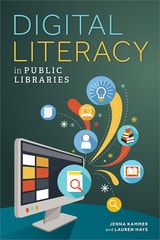
Digital Literacy in Public Libraries
Jenna Kammer and Lauren Hays
American Library Association, 2026
- delve into the concept of digital literacy, the ways in which it empowers individuals in digital systems of information, and how it fits in with other kinds of literacy;
- find ideas for effective digital literacy technical support, programming, services, spaces, collection development, outreach, and more;
- learn how to measure the impact of digital literacy initiatives, identify gaps within the community where the library can make an impact, and overcome challenges;
- discover guidance on building partnerships, both internal and external, and finding additional sources of funding to expand digital literacy opportunities within the scope of what is already available;
- receive practical advice from the "Ask the Expert" sidebars throughout the book, where practitioners share their knowledge and experience; and
- get adaptable tools such as sample language, an expenditure budget, an individual needs assessment, a digital literacy readiness checklist, survey instruments, and a lesson plan template that can be used for digital literacy programming.
Multiliteracies for a Digital Age
Stuart A. Selber
Southern Illinois University Press, 2004
Just as the majority of books about computer literacy deal more with technological issues than with literacy issues, most computer literacy programs overemphasize technical skills and fail to adequately prepare students for the writing and communications tasks in a technology-driven era. Multiliteracies for a Digital Age serves as a guide for composition teachers to develop effective, full-scale computer literacy programs that are also professionally responsible by emphasizing different kinds of literacies and proposing methods for helping students move among them in strategic ways.
Defining computer literacy as a domain of writing and communication, Stuart A. Selber addresses the questions that few other computer literacy texts consider: What should a computer literate student be able to do? What is required of literacy teachers to educate such a student? How can functional computer literacy fit within the values of teaching writing and communication as a profession? Reimagining functional literacy in ways that speak to teachers of writing and communication, he builds a framework for computer literacy instruction that blends functional, critical, and rhetorical concerns in the interest of social action and change.
Multiliteracies for a Digital Age reviews the extensive literature on computer literacy and critiques it from a humanistic perspective. This approach, which will remain useful as new versions of computer hardware and software inevitably replace old versions, helps to usher students into an understanding of the biases, belief systems, and politics inherent in technological contexts. Selber redefines rhetoric at the nexus of technology and literacy and argues that students should be prepared as authors of twenty-first-century texts that defy the established purview of English departments. The result is a rich portrait of the ideal multiliterate student in a digital age and a social approach to computer literacy envisioned with the requirements for systemic change in mind.
Redefining Geek
Bias and the Five Hidden Habits of Tech-Savvy TeensCassidy Puckett
University of Chicago Press, 2022
A surprising and deeply researched look at how everyone can develop tech fluency by focusing on five easily developed learning habits.
Picture a typical computer geek. Likely white, male, and someone you’d say has a “natural instinct” for technology. Yet, after six years teaching technology classes to first-generation, low-income middle school students in Oakland, California, Cassidy Puckett has seen firsthand that being good with technology is not something people are born with—it’s something they learn. In Redefining Geek, she overturns the stereotypes around the digitally savvy and identifies the habits that can help everyone cultivate their inner geek.
Drawing on observations and interviews with a diverse group of students around the country, Puckett zeroes in on five technology learning habits that enable tech-savvy teens to learn new technologies: a willingness to try and fail, management of frustration and boredom, use of models, and the abilities to use design logic and identify efficiencies. In Redefining Geek, she shows how to measure and build these habits, and she demonstrates how many teens historically marginalized in STEM are already using these habits and would benefit from recognition for their talent, access to further learning opportunities, and support in career pathways. She argues that if we can develop, recognize, and reward these technological learning habits in all kids—especially girls and historically marginalized racial and ethnic groups—we can address many educational inequities and disparities in STEM.
Revealing how being good with technology is not about natural ability but habit and persistence, Redefining Geek speaks to the ongoing conversation on equity in technology education and argues for a more inclusive technology learning experience for all students.
Technology and Literacy
21st Century Library Programming for Children and TeensJennifer Nelson
American Library Association, 2012
Writing on the Social Network
Digital Literacy Practices in Social Media's First DecadeAmber M. Buck
Utah State University Press, 2023
Through qualitative case study research, Buck explores how literate activities on social network sites coalesced around three areas crucial for writing in digital environments: (1) a heightened awareness of audience and an ability to tailor messages to specific audiences; (2) an understanding of how personal data is collected and circulated in online spaces; and (3) a means through which to use the first two skills for self-promotion and self-presentation in both personal and professional settings. She identifies several distinct literacy practices and strategies used by participants to communicate effectively and addresses how these strategies can help writing researchers and internet scholars understand the impact of social media’s first decade and can inform the ways they will research and understand social media’s second decade.
Social media platforms represent important locations where the different influences on writing become visible. Writing on the Social Network is a close study of the rich literate practices individuals have engaged in on social network sites over the last ten years that allows for a better understanding of the role social media plays in shaping digital literacy.