Results by title
15 books match the query 'Computers & Information Technology'

Blockchain Foundations
For the Internet of ValueMary C. Lacity
Epic Books, 2020

Cyber-Proletariat
Global Labour in the Digital VortexNick Dyer-Witheford
Pluto Press, 2015
Cyber-Proletariat brings Marxist analysis to bear on a range of modern informational technologies. The result is a book indispensable to social theorists and hacktivists alike and essential reading for anyone who wants to understand how Silicon Valley shapes the way we live today.

Cyberchiefs
Autonomy and Authority in Online TribesMathieu O'Neil
Pluto Press, 2009
People are inventing new ways of working together on the internet. Decentralised production thrives on weblogs, wikis and free software projects. In Cyberchiefs, Mathieu O’Neil focuses on the regulations of these working relationships. He examines the transformation of leadership and expertise in online networks, and the emergence of innovative forms of participatory politics.
What are the costs and benefits of alternatives to hierarchical organisation? Using case studies of online projects or ‘tribes’ such as the radical Primitivism archive, the Daily Kos political weblog, the Debian free software project, and Wikipedia, O’Neil shows that leaders must support maximum autonomy for participants, and he analyses the tensions generated by this distribution of authority.
Cyberfutures
Culture and Politics on the Information SuperhighwayEdited by Ziauddin Sardar
Pluto Press, 1996

Digital Depression
Information Technology and Economic CrisisDan Schiller
University of Illinois Press, 2014

Dream Lovers
The Gamification of RelationshipsAlfie Bown
Pluto Press, 2022
'An exciting, astute analysis of how our capacity for desire has been slotted into the grooves of digital capitalism, and made to work for profit - from porn to Pokémon' - Richard Seymour
We are in the middle of a 'desirevolution' - a fundamental and political transformation of the way we desire as human beings. Perhaps as always, new technologies - with their associated and inherited political biases - are organizing and mapping the future. What we don't seem to notice is that the primary way in which our lives are being transformed is through the manipulation and control of desire itself.
Our very impulses, drives and urges are 'gamified' to suit particular economic and political agendas, changing the way we relate to everything from lovers and friends to food and politicians. Digital technologies are transforming the subject at the deepest level of desire - re-mapping its libidinal economy - in ways never before imagined possible.
From sexbots to smart condoms, fitbits to VR simulators and AI to dating algorithms, the 'love industries' are at the heart of the future smart city and the social fabric of everyday life. This book considers these emergent technologies and what they mean for the future of love, desire, work and capitalism.

Ethereum for Business
A Plain-English Guide to the Use Cases that Generate Returns from Asset Management to Payments to Supply ChainsPaul Brody
Epic Books, 2023
The book is aimed at business executives who want to understand the potential of blockchain for solving real-world business problems, and readers with technical knowledge who want to understand the business use cases.
Ethereum for Business covers topics such as:
• Basics of blockchain technology and key components on wallets, tokens, and keys.
• Decentralization in digital marketplaces, smart contracts, privacy, scalability, supply chain management, trade finance, payments and asset transfers, and tokenomics.
• Transforming the world of enterprise computing by enabling companies to model and manage assets, real or digital, that exist off-chain.
• A guide for implementation that contains key success metrics for enterprises considering blockchain-based solutions.
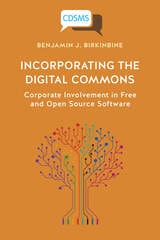
Incorporating the Digital Commons
Corporate Involvement in Free and Open Source SoftwareBenjamin J. Birkinbine
University of Westminster Press, 2020
The concept of ‘the commons’ has been used as a framework to understand resources shared by a community rather than a private entity, and it has also inspired social movements working against the enclosure of public goods and resources. One such resource is free (libre) and open source software (FLOSS). FLOSS emerged as an alternative to proprietary software in the 1980s. However, both the products and production processes of FLOSS have become incorporated into capitalist production. For example, Red Hat, Inc. is a large publicly traded company whose business model relies entirely on free software, and IBM, Intel, Cisco, Samsung, Google are some of the largest contributors to Linux, the open-source operating system. This book explores the ways in which FLOSS has been incorporated into digital capitalism. Just as the commons have been used as a motivational frame for radical social movements, it has also served the interests of free-marketeers, corporate libertarians, and states to expand their reach by dragging the shared resources of social life onto digital platforms so they can be integrated into the global capitalist system.
The book concludes by asserting the need for a critical political economic understanding of the commons that foregrounds (digital) labour, class struggle, and uneven power distribution within the digital commons as well as between FLOSS communities and their corporate sponsors.

Innovation Equity
Assessing and Managing the Monetary Value of New Products and ServicesElie Ofek, Eitan Muller, and Barak Libai
University of Chicago Press, 2016
In Innovation Equity, Elie Ofek, Eitan Muller, and Barak Libai analyze how a vast array of past innovations performed in the marketplace—from their launch to the moment they became everyday products to the phase where consumers moved on to the “next big thing.” They identify key patterns in how consumers adopt innovations and integrate these with marketing scholarship on how companies manage their customer base by attracting new customers, keeping current customers satisfied, and preventing customers from switching to competitors’ products and services. In doing so, the authors produce concrete models that powerfully predict how the marketplace will respond to innovations, providing a much more authoritative way to estimate their potential monetary value, as well as a framework for making it possible to achieve that value.

Interactive Journalism
Hackers, Data, and CodeNikki Usher
University of Illinois Press, 2016
Nikki Usher brings together a comprehensive portrait of nothing less than a new journalistic identity. Usher provides a history of the impact of digital technology on reporting, photojournalism, graphics, and other disciplines that define interactive journalism. Her eyewitness study of the field's evolution and accomplishments ranges from the interactive creation of Al Jazeera English to the celebrated data desk at the Guardian to the New York Times' Pulitzer-endowed efforts in the new field. What emerges is an illuminating, richly reported profile of the people coding a revolution that may reverse the decline and fall of traditional journalism.
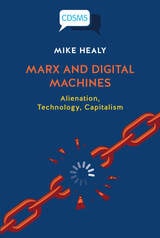
Marx and Digital Machines
Alienation, Technology, CapitalismMike Healy
University of Westminster Press, 2020
“Healy closes his marvellous book by saying that ‘alienation is a constant feature and is experienced as a norm rather than as an aberration’.” - https://marxandphilosophy.org.uk/reviews/19718_marx-and-digital-machines-alienation-technology-capitalism-by-mike-healy-reviewed-by-thomas-klikauer/
This book explores the fundamental contradiction at the heart of the digital environment: technology offers all manner of promises, yet habitually fails to deliver. This failure often arises from numerous problems: the proficiency of the technology or end-user, policy failure at various levels, or a combination of these. Solutions such as better technology and more effective end-user education are often put into place to solve these failures.
Mike Healy argues that such approaches are inherently faulty drawing upon qualitative research informed by Marx’s theory of alienation. Using Marx’s theory, he considers participants in three distinct settings: the workplace of information and communications technology (ICT) professionals; university scholars researching the ethical and societal implications of our digital environment; and a group of pensioners living in South London, UK, undertaking ICT training. By delving beneath the surface of how digital technologies are created, researched and experienced, this study illustrates the contradictory nature of our digital lives, as they directly arise from the needs of capitalism.
The book also places Marx’s theory in contrast to the mainstream approaches derived from Seaman and Blauner. In researching and comprehending ICT, this book reaffirms the superior explanatory power of Marx’s theory of alienation.

Signal Traffic
Critical Studies of Media InfrastructuresEdited by Lisa Parks and Nicole Starosielski
University of Illinois Press, 2015
Some contributors explore the physical objects and industrial relations that make up an infrastructure. Others venture into the marginalized communities orphaned from the knowledge economies, technological literacies, and epistemological questions linked to infrastructural formation and use. The wide-ranging insights delineate the oft-ignored contrasts between industrialized and developing regions, rich and poor areas, and urban and rural settings, bringing technological differences into focus.
Contributors include Charles R. Acland, Paul Dourish, Sarah Harris, Jennifer Holt and Patrick Vonderau, Shannon Mattern, Toby Miller, Lisa Parks, Christian Sandvig, Nicole Starosielski, Jonathan Sterne, and Helga Tawil-Souri.

Technological Turf Wars
A Case Study of the Computer Antivirus IndustryJessica Johnston
Temple University Press, 2008
In Technological Turf Wars, Jessica Johnston analyzes the tensions and political dilemmas that coexist in the interrelationship among science, technology and society. Illustrating how computer security is as concerned with social relationships as it is with technology, Johnston provides an illuminating ethnography that considers corporate culture and the workplace environment of the antivirus industry.
Using a qualitative, interdisciplinary approach, which combines organizational and security studies with critical and social analysis of science and technology, Johnston questions the motivations, contradictions and negotiations of antivirus professionals. She examines the tensions between the service ethics and profit motives—does the industry release viruses to generate demand for antivirus software?—and considers the dynamics within companies by looking at facets such as gender bias and power politics. Technological Turf Wars is an informed, enlightened and entertaining view of how the production of computer security technology is fraught with social issues.

The Economics of Artificial Intelligence
Health Care ChallengesEdited by Ajay Agrawal, Joshua Gans, Avi Goldfarb, and Catherine E. Tucker
University of Chicago Press, 2024
A timely investigation of the potential economic effects, both realized and unrealized, of artificial intelligence within the United States healthcare system.
In sweeping conversations about the impact of artificial intelligence on many sectors of the economy, healthcare has received relatively little attention. Yet it seems unlikely that an industry that represents nearly one-fifth of the economy could escape the efficiency and cost-driven disruptions of AI.
The Economics of Artificial Intelligence: Health Care Challenges brings together contributions from health economists, physicians, philosophers, and scholars in law, public health, and machine learning to identify the primary barriers to entry of AI in the healthcare sector. Across original papers and in wide-ranging responses, the contributors analyze barriers of four types: incentives, management, data availability, and regulation. They also suggest that AI has the potential to improve outcomes and lower costs. Understanding both the benefits of and barriers to AI adoption is essential for designing policies that will affect the evolution of the healthcare system.
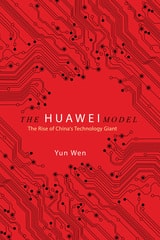
The Huawei Model
The Rise of China's Technology GiantYun Wen
University of Illinois Press, 2020
Yun Wen uses the Huawei story as a microcosm to understand China's evolving digital economy and the global rise of the nation's corporate power. Rejecting the idea of the transnational corporation as a static institution, she explains Huawei's formation and restructuring as a historical process replete with contradictions and complex consequences. She places Huawei within the international political economic framework to capture the dynamics of power structure and social relations underlying corporate China's globalization. As she explores the contradictions of Huawei's development, she also shows the ICT firm's complicated interactions with other political-economic forces.
Comprehensive and timely, The Huawei Model offers an essential analysis of China's dynamic development of digital economy and the global technology powerhouse at its core.